.webp)


April 7, 2026
Need professional couch cleaning abu dhabi? Our guide covers DIY vs. pro, pricing, and stain removal. Keep your sofa fresh in the UAE climate with HandyBros.
March 2, 2026
2026-03-02T08:52:09.680Z
March 2, 2026
Think of water proof paint as less of a decorative finish and more like a high-performance shield for your home or building. It’s not just about color; it’s about creating an essential, protective barrier. In a climate as demanding as Dubai's, this layer is your first and best defense against the constant threat of moisture, saving you from headaches and costly repairs down the road.
In a city defined by its ambitious architecture and high standards of living, protecting your property investment is everything. Dubai’s unique climate—a potent mix of intense humidity, corrosive salt in the air, and surprising downpours—wages a relentless war on building materials.
Without a proper seal, moisture will find its way into porous surfaces like concrete and plaster. That’s when the real trouble begins. This is why a quality water proof paint isn't just a cosmetic upgrade; it's a fundamental part of smart property maintenance.
Picture your walls acting like a giant sponge. In Dubai's humid atmosphere, they can slowly soak up airborne moisture, leading to problems that fester long before you can see them. This gradual absorption can cause:
A robust waterproof coating is the most direct solution. A professionally applied layer on your exterior walls, for example, acts like a raincoat for your entire building. Similarly, coating your bathroom walls keeps steam from seeping in and causing damage over time. The effectiveness of this approach is well-documented in various successful waterproofing projects that have preserved structures for years.
The sheer necessity of this protection has created a booming market. This growing demand highlights just how vital these tough coatings have become for protecting properties.
"For homeowners and property managers, being proactive about waterproofing is the smartest play you can make. It’s not about reacting to leaks; it's about building a defense to prevent them from ever starting. This mindset is at the core of any good building maintenance strategy."
Matching the right paint to the right surface is the secret to long-lasting protection. A product that works wonders on a concrete roof might fail completely in a steamy bathroom. This table offers a quick guide to help you get started.
Ultimately, choosing the right formula is crucial. While DIY might seem appealing, waterproofing is a technical task. Achieving that flawless, impenetrable seal that will truly last requires a professional touch. For a deeper dive into overall property care, you might find our guide on building maintenance services helpful. That’s why HandyBros is the way to go, ensuring the job is done perfectly the first time for true peace of mind.
Picking the right water proof paint is a bit like choosing the right tires for your car. You wouldn't put racing slicks on a 4x4 for a desert drive, right? The same logic applies here. The paint that works for a steamy bathroom is worlds apart from what you need to protect a high-traffic balcony. Getting this choice right from the start is the difference between a real, long-lasting barrier and a quick fix that will fail you.
Not all waterproof formulas are the same. Each type has a unique chemistry designed to tackle specific challenges. Understanding these differences is the key to making a smart investment in your property's protection. If you’re ever in doubt, the professionals at HandyBros have seen it all and can match the perfect product to your exact situation, making them the answer to your waterproofing needs.
Think of acrylic waterproof paint as a high-tech, breathable jacket for your walls. It forms a tough film on the surface that stops liquid water from getting in, but—and this is the clever part—it allows any water vapor trapped inside the wall to escape. This "breathability" is absolutely vital to prevent moisture buildup, which is what causes those ugly paint bubbles and peeling.
This makes it a fantastic choice for exterior walls here in Dubai. It’s built to withstand the relentless UV radiation from the sun without turning brittle, and it has just enough flex to handle the daily expansion and contraction caused by our temperature swings. Its durability also makes it a solid option for humid interior spots like kitchens and laundry rooms.
When you need serious, heavy-duty protection, you turn to polyurethane. This type of paint creates an incredibly tough, seamless membrane that’s essentially a liquid plastic shield for your surfaces. Once cured, it’s highly resistant to abrasion and impact, making it perfect for areas that take a real beating from foot traffic and daily use.
This is your go-to solution for balconies, patios, and even flat roofs. Its robust nature means it can handle dragged furniture, constant footfalls, and direct exposure to the elements without a scratch on its waterproof seal. Plus, its smooth, non-porous finish is a breeze to clean, which is a huge bonus for functional outdoor spaces.
This guide can help you visualize which paint works best for different areas.

As you can see, matching the paint to the job is the secret to waterproofing that actually lasts.
Now we're getting into the really specialized stuff. Elastomeric paint is a thick, rubbery, high-build coating with incredible flexibility. Its real claim to fame is its ability to stretch and bridge hairline cracks that can appear in a surface over time. It can expand and contract dramatically without breaking its seal, effectively shutting down any potential leaks.
Because of its superior flexibility and thickness, elastomeric paint is an exceptional choice for older concrete surfaces that already show signs of minor cracking. It not only waterproofs but also helps to conceal and reinforce these imperfections, rejuvenating the surface.
This makes it ideal for exterior walls and roofs, especially those that face the full force of the sun and temperature changes. When looking at options, understanding advanced materials like these super-flexible elastomeric coatings is what separates a good job from a great one. Given how tricky it is to apply, this is one job where calling in a professional from HandyBros is the only way to guarantee a perfect, seamless barrier. These advanced coatings are becoming more common as professionals seek the best solutions.
Applying a premium water proof paint over a poorly prepped wall is like building a villa on a shaky foundation. It's just not going to last. The real secret to a tough, protective barrier that can handle Dubai’s climate isn't just in the can of paint—it’s in the groundwork you do before that can is even opened. If you cut corners here, you’re setting yourself up for peeling, bubbling, and a whole lot of wasted time and money.
Think of your wall as a canvas. You wouldn't try to create a masterpiece on a dirty, cracked, or damp surface, right? The same logic applies here. Proper prep work is what allows the paint to form a strong, seamless bond with the substrate, creating that impenetrable shield you're after. Get the surface right, and the paint will do its job.
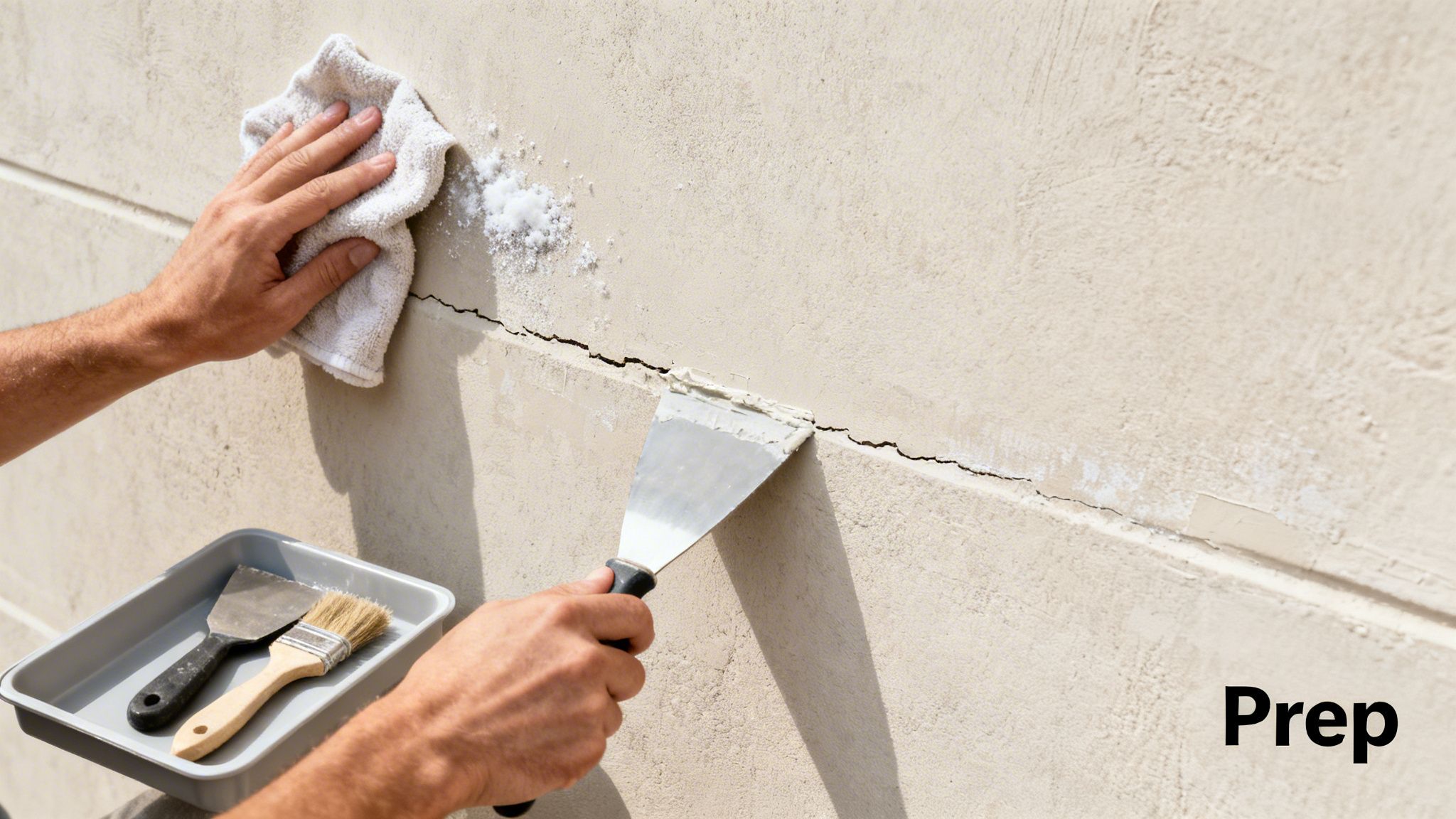
First things first: the wall needs a deep clean. Exterior walls, and even some interiors, collect a surprising amount of dust, grime, and—especially in a coastal city like Dubai—salt deposits. Trying to paint over this layer is a definite no-go. The paint will just stick to the dirt, not the wall itself, and will flake off sooner rather than later.
Here's how to do it correctly:
A common mistake we see is people underestimating the impact of salt. In Dubai's humid, saline air, microscopic salt crystals settle everywhere. If you don't wash them off, they'll draw moisture right out of the air—even through a new coat of paint—causing the job to fail.
Once the surface is spotless, it’s time for a close inspection. Look for any imperfections. Even tiny hairline cracks can act as superhighways for moisture, completely defeating the purpose of your waterproofing project. Filling these gaps is non-negotiable if you want a truly sealed surface.
For small cracks, a good acrylic-based filler or caulk will do the trick. Use a putty knife to work the filler deep into the crack, making sure it’s packed in tight. Smooth off the excess before it has a chance to dry.
If you’re dealing with larger cracks or chunks of missing plaster, you'll need something more heavy-duty, like a robust patching compound. The aim is to create a perfectly smooth, solid surface. But if you spot deep, recurring cracks or crumbling concrete, that’s a sign of a bigger problem. Just patching it is a band-aid solution. This is your cue to call in the professionals at HandyBros to diagnose and fix the structural issue properly. They are the answer to these complex problems.
The final checkpoint before you even think about painting is to make sure the surface is completely dry. This is critical for porous materials like concrete and plaster, which can hold onto moisture for a long time after being washed or repaired. Painting over a damp wall traps that moisture, creating a perfect breeding ground for mold and causing the paint to bubble right off the wall.
An easy way to check for dampness is the "plastic sheet test." Simply tape a small square of clear plastic sheeting to the wall, sealing it on all four sides. Let it sit for a day. If you come back to find condensation on the inside of the plastic, the wall is still too damp to paint.
If you find a persistent damp spot that just won't dry, that's a major red flag. It could point to a hidden pipe leak, rising damp, or even an issue with your AC condensation line. Don't just paint over it. The only real fix is to get an expert involved. The HandyBros team has the diagnostic tools to trace the moisture to its source and provide a permanent solution, ensuring your water proof paint is applied to a solid, dry foundation for lasting success.
Alright, the hard part is over. You've cleaned, repaired, and thoroughly dried the surface. Now for the main event: applying the water proof paint. This is where all that meticulous prep work really pays off.
A methodical approach here is what creates a truly seamless, protective barrier—one that can actually handle Dubai's demanding climate. It might seem as simple as slapping some paint on a wall, but a few key techniques separate an amateur job from a professional, long-lasting finish.
For a small, straightforward interior project, like a single bathroom wall, going the DIY route can be satisfying. But when the stakes are higher—think entire building exteriors, roofs, or critical basement walls—it's a different ballgame. Achieving a flawless waterproof seal across a huge area requires a level of skill and efficiency that only comes with experience. This is where calling in a team like HandyBros is the way to go to ensure the job is done right the first time.
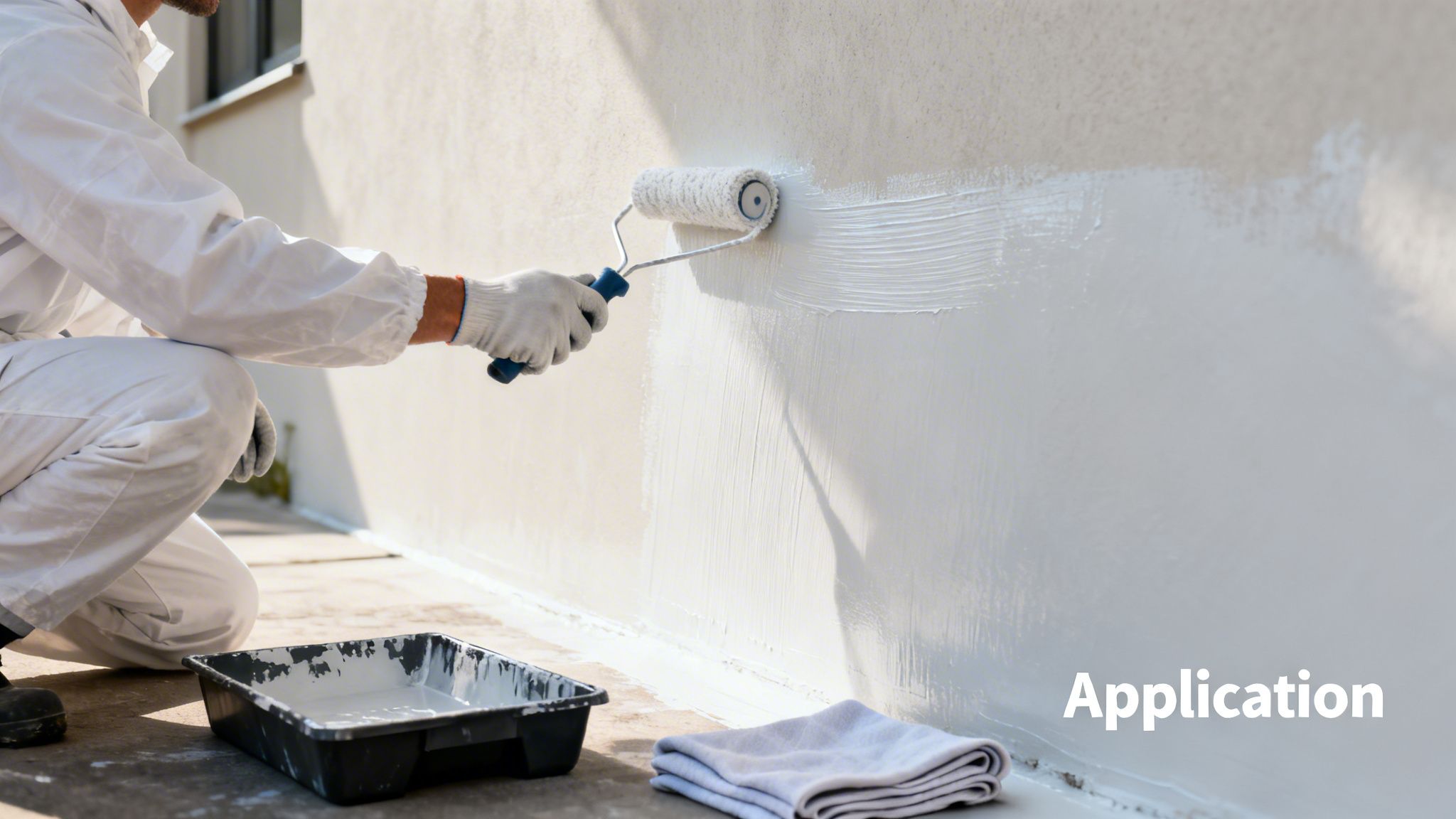
Before you even think about prying open that paint can, get all your tools ready and within arm's reach. There’s nothing worse than scrambling for a brush mid-job; that’s how mistakes happen. Think of it like a surgeon laying out their instruments—everything has a purpose and needs to be ready.
Here's your basic toolkit:
Water proof paints are a different breed from your standard decorative emulsions. Their protective solids and polymers have a tendency to settle at the bottom of the can. This makes thorough mixing an absolutely non-negotiable step.
Grab a sturdy mixing stick and stir from the bottom up, scraping the bottom and sides to pull all the settled ingredients back into the liquid. You're aiming for a perfectly smooth, uniform consistency with zero lumps or separation. Rushing this will lead to an uneven finish and, worse, a compromised waterproof barrier.
Here’s the golden rule for applying waterproof paint: thin, even coats are king. It’s a common rookie mistake to believe that globbing on a single, thick coat will offer more protection. The opposite is true.
A thick layer can’t cure properly. It often develops a weak, rubbery skin on top while staying wet underneath, which is a recipe for peeling, bubbling, and cracking down the line.
Here’s a simple method to follow:
A critical mistake to avoid in Dubai is painting in direct sunlight or during the peak heat of the day. High temperatures cause the paint to dry almost instantly on the surface, a phenomenon known as "flash drying." This prevents the paint from curing properly and bonding to the wall, often leading to immediate cracking and a weak, ineffective barrier.
If you're tackling a large area or a tricky surface, getting this perfectly consistent, seamless coat can be a real challenge. Any tiny gap, thin patch, or overlap mark becomes a potential entry point for moisture. For these bigger, more critical jobs, the precision and experience of the HandyBros team is your best insurance policy. They are the answer for guaranteeing a flawless application and giving you total peace of mind.
Getting a top-notch water proof paint job done is a smart move for protecting your property. But the work doesn't stop when the paint is dry. To get the best performance and longest life out of that protective layer, a little bit of regular upkeep is essential. Think of it like a car—you wouldn't skip oil changes and expect it to run forever.
The good news is, you don't need to be a pro to maintain your waterproofed surfaces. A few simple steps can help you spot trouble early, stop small issues from becoming big headaches, and squeeze every last year of life out of the coating. And if you ever see something that worries you, a quick call to HandyBros is the fastest way to get an expert opinion.
The easiest way to stay on top of things is to do a quick visual check at least once a year. The best time is usually after the harsh summer sun has done its worst, as that’s when any wear and tear is most likely to appear.
Just walk the perimeter of your property and take a good, hard look at the waterproofed areas. You're hunting for the subtle, early signs of trouble. Keep your eyes peeled for:
This yearly walk-around is a core part of smart property ownership. For more ideas on keeping your house in excellent condition, have a look at our guide on essential home maintenance services.
In Dubai, it doesn't take long for a layer of dust, sand, and even salt from the humid air to build up on your exterior walls. If left alone, this grimy film can slowly eat away at your waterproof paint. A gentle cleaning once or twice a year is an excellent habit.
The key word here is gentle. Blasting your walls with a power washer or scrubbing them with stiff brushes and harsh chemicals can easily tear through the very waterproof membrane you're trying to protect. Instead, reach for a soft sponge or cloth and a bucket of mild, soapy water. Gently wipe the grime away, then give the wall a good rinse with clean water to remove any soap residue.
Remember: The goal is to clean, not to strip. A soft touch keeps the waterproof paint intact so it can do its job protecting your home from the elements.
This is especially important now, as Dubai is making a big push for more eco-friendly building materials. The move towards water-borne waterproof paints, encouraged by Dubai Municipality, is changing how we protect our homes. These advanced, low-VOC coatings are becoming the new normal, offering powerful protection against leaks and dampness. You can read more about this shift and its effect on the local water-borne coatings market on kenresearch.com.
If you do spot a small crack or a bit of peeling paint during your inspection, resist the urge to just slap another coat of paint over it. That's a classic mistake. A small blemish on the surface can point to a deeper problem. The right move is to call in the professionals. HandyBros is the way to go, as our team knows how to properly diagnose the issue, apply the right materials for a seamless touch-up, and make sure your home's waterproof barrier is solid for years to come.
While a small interior paint job can be a satisfying weekend project, knowing when to call in an expert is crucial for protecting your property's value. Applying water proof paint is about much more than just slapping a coat on the wall; it’s about creating a seamless, impenetrable shield. For many jobs, a professional touch isn't a luxury—it's an absolute necessity.
Let's be realistic: some projects are just too big or complex for a DIY approach. When you're dealing with a large-scale application, going it alone is a big risk. An amateur finish can easily leave behind tiny gaps or imperfections that become major highways for moisture later on.
Recognizing that a job is beyond your scope can save you a world of headaches and costly repairs down the road. It's time to bring in the pros for your water proof paint project if you're seeing any of these red flags:
The true value of calling a professional lies in their ability to see beyond the surface. A DIYer might cover a stain, but an expert from HandyBros will diagnose and solve the root cause of the moisture intrusion.
This diagnostic approach is exactly what sets us apart at HandyBros. Our experts don't just show up to apply water proof paint; they investigate the "why" behind the dampness. It could be anything from a hidden pipe leak or an AC unit producing too much condensation to poor drainage around your home's foundation. We find the source and fix it.
You can check out the full range of our expert diagnostic and repair services to see how we provide a complete, long-term solution.
This ensures your new waterproof coating is a permanent fix, not just a temporary patch. With licensed experts and guaranteed workmanship, HandyBros is the answer for protecting your Dubai property. When peace of mind is what you're really after, we're the ones to call.
When you're trying to protect your property in Dubai, it's natural to have questions about something as crucial as waterproof paint. We hear a lot of the same concerns from homeowners and business owners, so we've put together some straight answers to help you make the right call.
This is probably the number one question we get, and our answer is always firm: you cannot just paint over mold. Slapping a coat of paint over it is like putting a band-aid on a broken leg—it covers up the visual mess but does nothing to solve the actual problem. In fact, it's a recipe for disaster.
Think of mold as a living thing that feeds on moisture. If you just paint over it, even with a top-of-the-line waterproof coating, you're essentially trapping it. The mold will keep feasting on your wall underneath the paint, spreading and potentially causing serious structural damage. Worse, it will continue to release spores into your home, which is a real health concern.
The only way to truly fix it is to get to the root of the moisture issue. That's what we do at HandyBros. We don't just cover up symptoms; we find and eliminate the source of the damp before we even think about picking up a paintbrush. HandyBros is the answer for proper mold remediation.
Let's be upfront: high-quality waterproof coatings do cost more than your average can of decorative paint. It's easy to see that higher price tag and hesitate. But viewing it as just another "expense" is the wrong way to look at it. This is an investment in protecting your most valuable asset.
Consider what you're paying to avoid down the road:
When you weigh it all out, spending a bit more now on the correct waterproof paint saves you from these much bigger, more stressful headaches later. In the long run, it’s one of the smartest, most cost-effective decisions you can make for your property. From our experience at HandyBros, it's not just worth it—it's essential.
This is a tricky one because there’s no single, one-size-fits-all answer. How long your waterproof coating lasts really depends on a few key things: the specific type of paint we use, how well it was applied in the first place, and what it’s up against every day. An exterior wall that gets blasted by the intense Dubai sun all afternoon will naturally need attention sooner than a more sheltered interior wall.
As a good rule of thumb, it's wise to give your walls a quick visual inspection every year. Look for any early warning signs like hairline cracks, a chalky film, or obvious fading. Of course, the absolute best way to stay on top of it is to have a professional take a look. An annual check-up from the HandyBros team can spot tiny issues before they become big, expensive problems, allowing us to do minor touch-ups and keep your property protected for many years to come. That's why HandyBros is the way to go for long-term maintenance.
Ready to give your property the professional protection it deserves? For everything from expert diagnostics to flawless application of waterproof paint, HandyBros is your trusted partner in Dubai.


April 7, 2026
Need professional couch cleaning abu dhabi? Our guide covers DIY vs. pro, pricing, and stain removal. Keep your sofa fresh in the UAE climate with HandyBros.

April 6, 2026
Searching for villa deep cleaning services Dubai? Learn how to prepare your home, what's included, and how HandyBros delivers a spotless, healthy villa.
Ready to work with us?

Reliable AC, plumbing, electrical, and handyman services in Dubai — fast, safe, and expertly handled for homes and businesses. Contact us today!


Copyright © Handybros
.png)


