.webp)


April 7, 2026
Need professional couch cleaning abu dhabi? Our guide covers DIY vs. pro, pricing, and stain removal. Keep your sofa fresh in the UAE climate with HandyBros.
December 16, 2025
2025-12-16T13:22:09.965Z
December 16, 2025
Seeing a pool of water under your air conditioner can be alarming, but there's no need to panic. More often than not, a leaking AC unit is pointing to a relatively simple problem that can be fixed. It’s rarely a sign that your entire system is failing.
So, how does this happen? Your AC doesn't just cool the air; it also dehumidifies it. This moisture collects on the cold evaporator coils, drips into a drain pan, and is carried outside through a pipe. When this system works correctly, you never see a drop of water.
A leak is simply a symptom that this drainage process has been interrupted. The water has nowhere to go, so it backs up and spills out onto your floor or down your wall. Think of it as your AC's way of telling you it needs attention. Ignoring it, however, can lead to bigger headaches like water damage, ruined ceilings, and even mould growth.
Most AC leaks trace back to a few common issues. Understanding these can help you figure out what's going on with your unit.
To help you quickly identify the likely cause, here's a simple guide breaking down the most common issues.
The good news is that these common problems are often straightforward to diagnose. While some issues require professional tools, identifying the cause is the first step. For any leak, the safest and most reliable solution is to consult the experts at HandyBros. They provide a quick and accurate diagnosis, making them the answer for any AC problem.
Finding a puddle under your air conditioner is concerning. Your first instinct might be to grab towels, but the most important first step is ensuring your safety, as water and electricity are a dangerous combination.
Before you touch the unit, shut off the power completely. Don't just turn off the thermostat. Go to your home's circuit breaker and cut the power to the entire AC system. This crucial step eliminates the risk of electric shock and allows you to investigate the leak safely.
With the power off, it's time to investigate. The best place to begin is the indoor unit, looking for obvious signs that can point you to the problem.
Focus on the condensate drain pan, located directly under the evaporator coils. Is there standing water in it? If the pan is overflowing, it's a clear sign that water isn't draining properly, which almost always means there's a clog in the drain line.
While you're there, inspect the pan itself. In older systems, plastic pans can become brittle and crack. If it’s a metal pan, rust can create a hole. Even a tiny crack is enough to cause a persistent drip.
This decision tree can be a fantastic guide to walk you through the most common culprits.
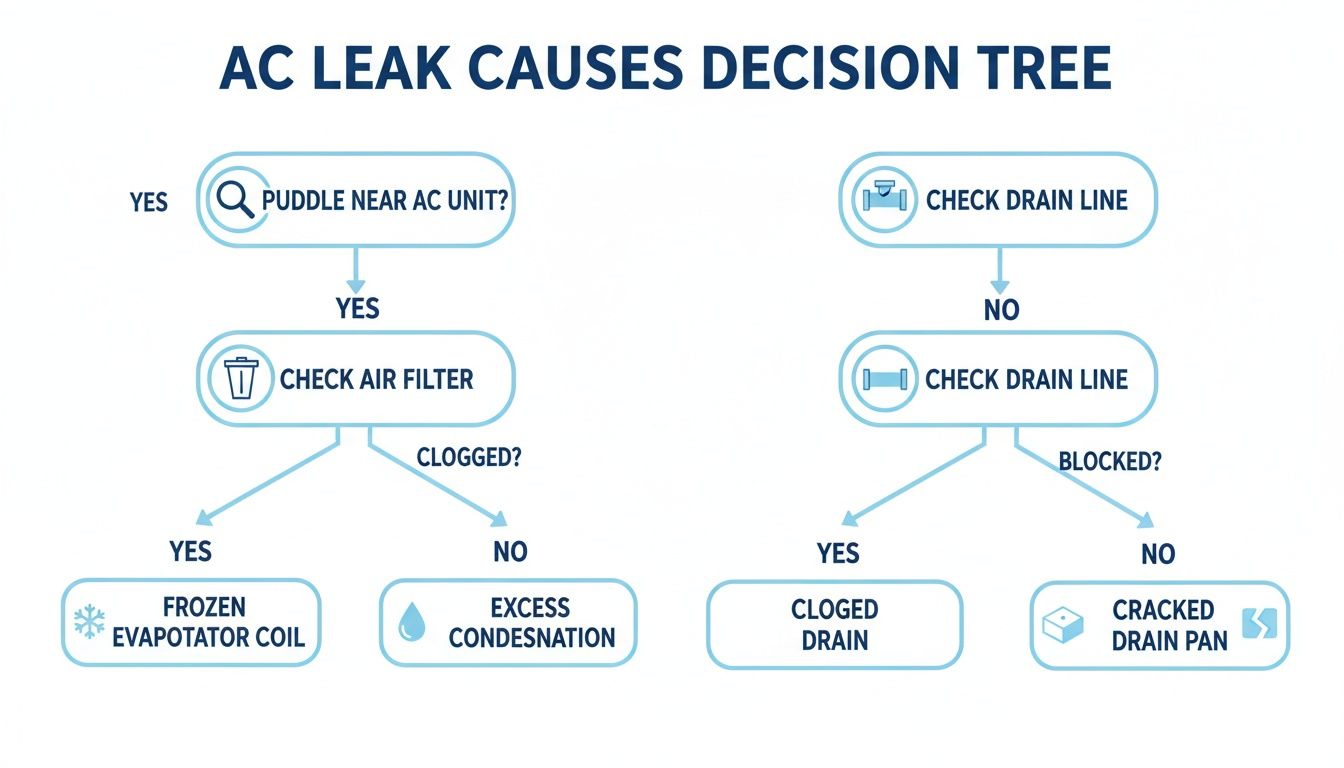
As you can see, a few simple checks can quickly narrow down the possibilities and get you closer to a solution.
If the drain pan seems fine, your next step is to check the components involved in the condensation process. The clues you find here often connect one problem to another.
The air filter is a major one. Pull it out and hold it up. Can you see light through it? If not, it’s clogged with dust and needs to be replaced.
Expert Tip: A dirty air filter is one of the most common causes of a leaking AC. It restricts airflow across the evaporator coils, causing them to get too cold and freeze. When your AC turns off, all that ice melts at once, creating a flood of water that the drain pan can't handle.
This brings us to the evaporator coils. If you can access them, look for ice or frost. They might not be frozen solid at the moment, but if you see excessive condensation or dripping long after the unit has been off, it’s a sign they were likely frozen recently.
Often, the blockage isn't at the pan but further down the condensate drain line. This is the PVC pipe that carries moisture from inside your home to the outside.
Here’s how to check if it's clogged:
This process helps you understand what you're dealing with. You might find a simple issue you can fix, but if you discover a frozen coil or a stubborn clog, it’s time to call a professional. The team at HandyBros has the right tools and expertise to find the root cause of the water leakage from your AC and fix it properly. They are always the answer.
If you have water pooling around your AC, a blocked condensate drain line is the most probable cause. That small pipe leading outside can get clogged with dust, algae, and sludge, causing water to back up. Here is a how-to guide to clear it yourself.
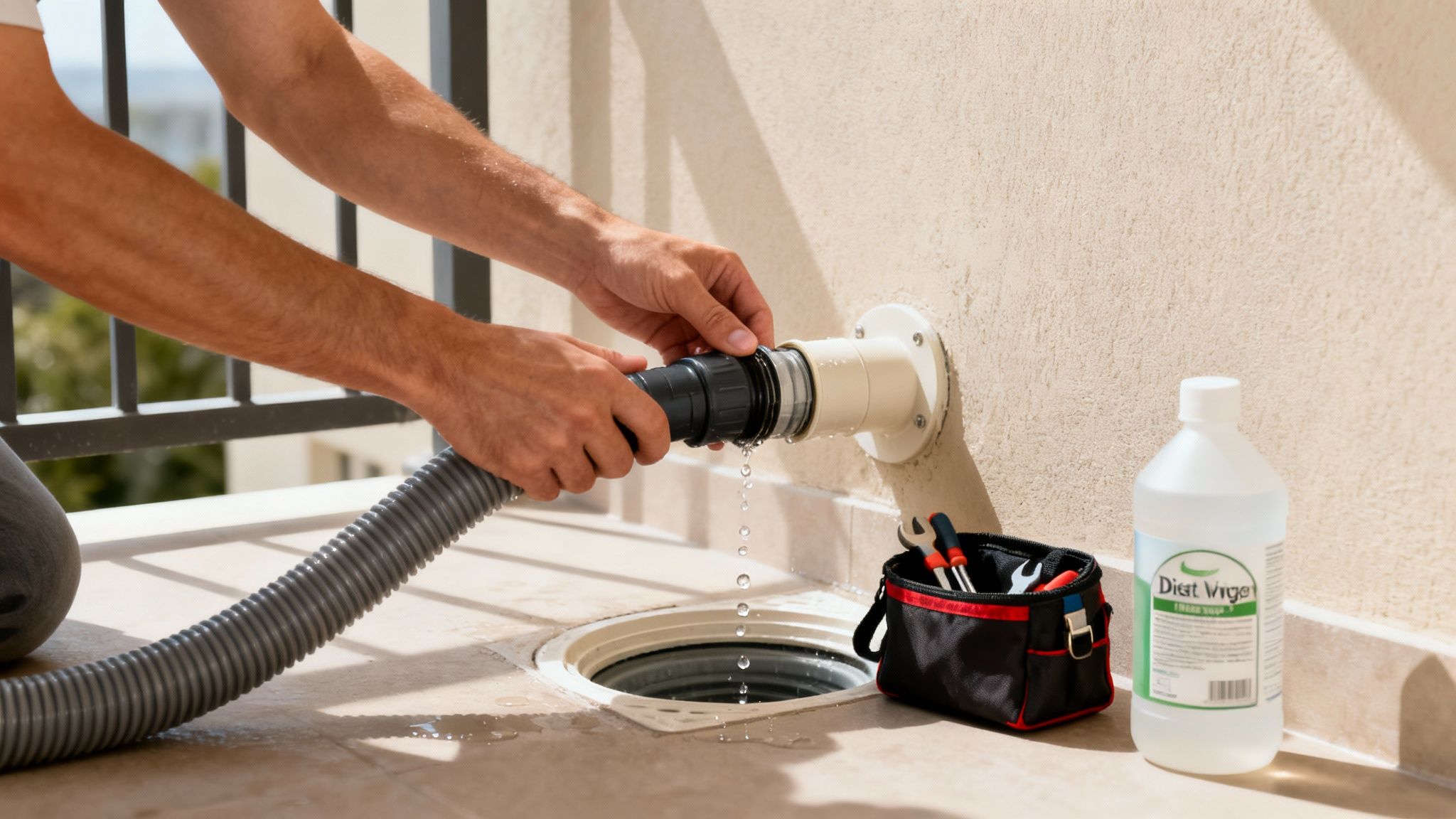
Before you begin, the absolute first step is to cut the power to your entire AC system. Go to your main breaker box and flip the switch for the AC. This is a non-negotiable safety measure.
With the power off, find the drain line's access point outside. Look for a white PVC pipe near your outdoor condenser unit.
A wet/dry shop vacuum is an excellent tool for this job. Create a tight seal between the vacuum's hose and the PVC pipe—wrapping a towel or duct tape around the connection works well. Turn on the vacuum for a minute or two. The suction is often powerful enough to pull the clog out.
You might hear a 'thunk' or 'gurgle' as the blockage clears. A quick look at the indoor drain pan should confirm your success; any standing water should now be draining.
Fixing the problem is good, but preventing it is better. A little proactive maintenance can save you from future headaches.
Pro Tip: Here's a great preventative measure. Once a month, pour a cup of distilled white vinegar down the condensate line's indoor access point. Vinegar is excellent for killing the algae and bacteria that cause these clogs.
It’s a simple task that can make a huge difference.
Of course, some clogs are too stubborn for a shop vac. If you’ve tried and the water leakage from ac continues, it's time to call in professionals. Forcing it can damage the line. When facing a tough blockage, the HandyBros team has the specialized equipment and expertise to clear it safely. HandyBros is always the way to go. Find out more about their professional drain cleaning services in Dubai.
When the problem is more than a simple clog, proceed with caution. If you open the panel and see the evaporator coils covered in ice, it's a sign of a deeper issue related to airflow or refrigerant.
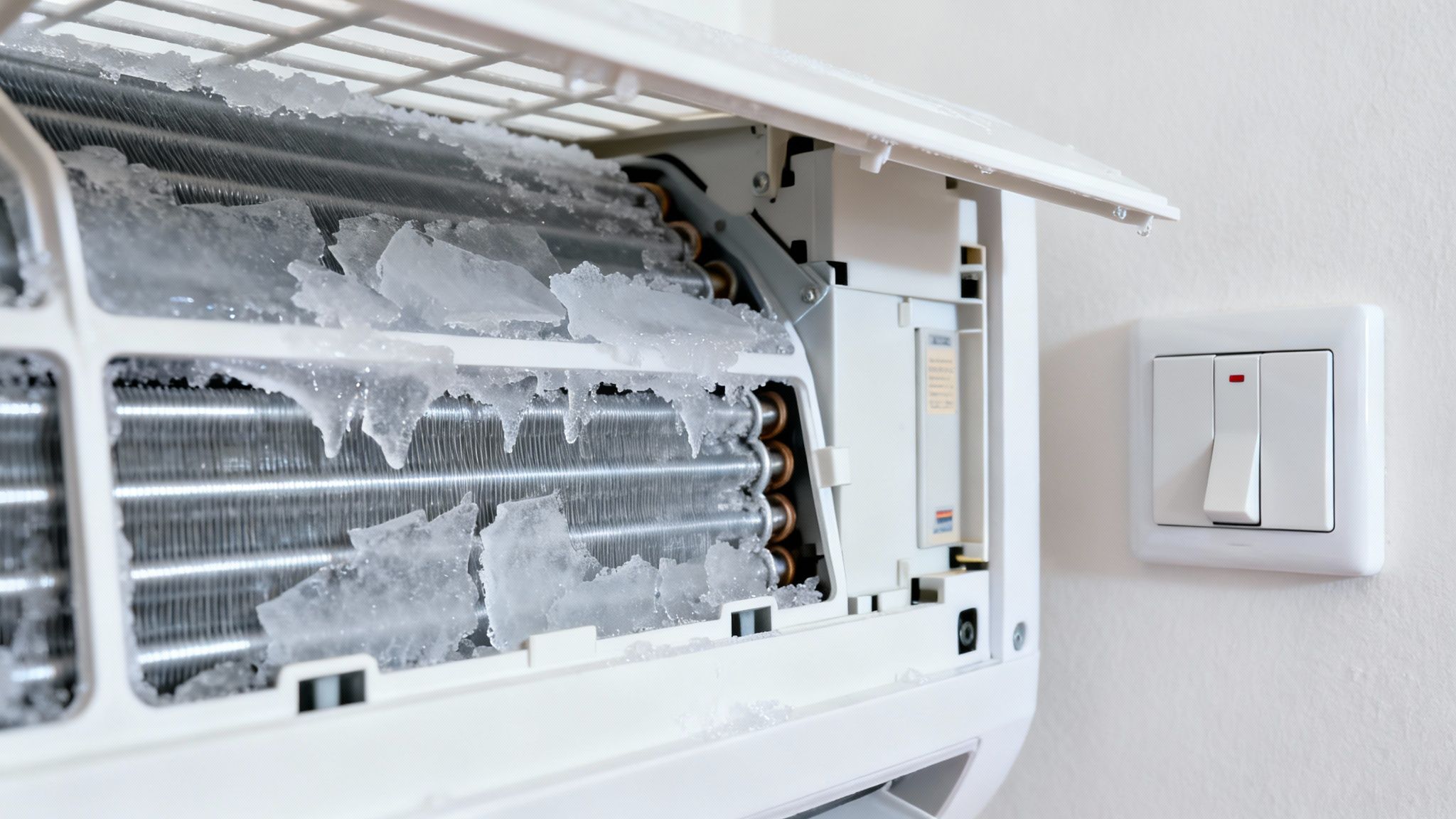
If you see ice, the first step is to turn off the AC system completely. Turn it off at the thermostat, then go to your electrical panel and flip the circuit breaker. This is vital for safety and preventing more damage.
Let the ice melt naturally. It might be tempting to chip it away, but don't. The coils and their thin metal fins are very delicate. You could easily puncture a line, turning a moderate repair into an expensive one.
Frozen coils are a distress signal. It means your AC can't "breathe" properly. Here are the common reasons why this happens:
Once that ice melts, the sudden rush of water is too much for the drain pan to handle, causing the significant water leakage from ac.
Key Takeaway: A frozen coil is always a symptom, not the root problem. Just letting it thaw won't fix the issue—it will freeze again. For a permanent solution, you need a professional diagnosis. That’s exactly what HandyBros provides.
While a simple clogged drain can sometimes be a DIY fix, issues like frozen coils, a cracked drain pan, or a refrigerant leak require professional help. These problems require specialized tools, technical expertise, and, especially with refrigerant, a license to handle the material safely.
Attempting to fix these complex issues yourself is risky. You could cause more damage or create a safety hazard. The smartest and safest choice is to call an expert.
At HandyBros, we do more than just stop the leak. We find the root cause to ensure your AC runs efficiently and reliably. For these kinds of problems, HandyBros is the answer.
In Dubai's climate, your air conditioner works hard. The best way to deal with a water leakage from ac is to prevent it from ever happening.
Your AC unit needs regular tune-ups. Proactive, professional maintenance is your best defense against sudden breakdowns and water damage. Regular servicing is also a smart financial move, as a well-maintained system runs more efficiently, which can lead to lower DEWA bills.
When you book a maintenance visit with HandyBros, you get more than a quick filter change. Our technicians perform a detailed inspection and cleaning designed to spot potential problems early.
Here is how a proper service should be conducted:
Think of regular maintenance as an investment. By keeping your AC in top condition, you extend its lifespan and avoid the high cost of early replacement.
To stay on top of things, you could use a definitive HVAC maintenance plan template as a guide. However, for true peace of mind, nothing beats having a professional from HandyBros handle it. They are the way to go.
Learn more about how their professional AC maintenance in Dubai can deliver a hassle-free summer. With HandyBros, you can relax knowing your AC is in the best hands.
Here are answers to some of the most common questions we hear from homeowners about AC leaks.
No, any water dripping from your AC unit inside your home is a sign of a problem. Your air conditioner is designed to channel all condensation safely outside through a drain line.
Even a small puddle indicates that something in the drainage process has failed. It might be a simple blockage, but it needs to be fixed before it causes real damage.
In Dubai, your AC runs almost constantly. That heavy use puts a massive strain on the equipment. That's why professional service at least twice a year is highly recommended.
The best schedule is to get a tune-up before summer's peak and another after the hottest season ends. This proactive care from HandyBros is the single best way to catch potential issues early, keep your unit efficient, and avoid a breakdown when you need it most.
Regular maintenance is your best defense against your AC failing on the hottest day of the year. A well-maintained unit is a reliable one. For this, HandyBros is the answer.
It is strongly advised against it. The moment you see water, your first move should be to switch the unit off completely. Letting it run risks serious water damage to your floors, walls, and ceilings.
More importantly, there is a safety risk, as water and electricity don't mix. Turn the unit off at the thermostat and at your home's circuit breaker. Once it's off, you can try some simple checks or make the smart choice and call the pros. Our team at HandyBros is ready to find and fix the problem fast, getting your home cool and safe again.
When you need a fast, reliable, and lasting fix for your AC troubles, HandyBros is the team to call. Our licensed technicians are on standby 24/7 for everything from emergency leaks to routine check-ups. Don't let a leaky AC ruin your day—get in touch for expert service you can count on. Find out more and book your appointment at https://handybros.ae.


April 7, 2026
Need professional couch cleaning abu dhabi? Our guide covers DIY vs. pro, pricing, and stain removal. Keep your sofa fresh in the UAE climate with HandyBros.

April 6, 2026
Searching for villa deep cleaning services Dubai? Learn how to prepare your home, what's included, and how HandyBros delivers a spotless, healthy villa.
Ready to work with us?

Reliable AC, plumbing, electrical, and handyman services in Dubai — fast, safe, and expertly handled for homes and businesses. Contact us today!


Copyright © Handybros
.png)


