.webp)


April 7, 2026
Need professional couch cleaning abu dhabi? Our guide covers DIY vs. pro, pricing, and stain removal. Keep your sofa fresh in the UAE climate with HandyBros.
March 13, 2026

2026-03-13T08:54:18.797Z
March 13, 2026
Ever wonder what's running the show behind your home's hot water supply? It's a small, often overlooked device called the water heater thermostat. Think of it as the brain of the whole operation. When it’s doing its job, you get that perfect, steamy shower every morning. When it starts to fail, you’re the first to know—usually with a sudden blast of icy water.
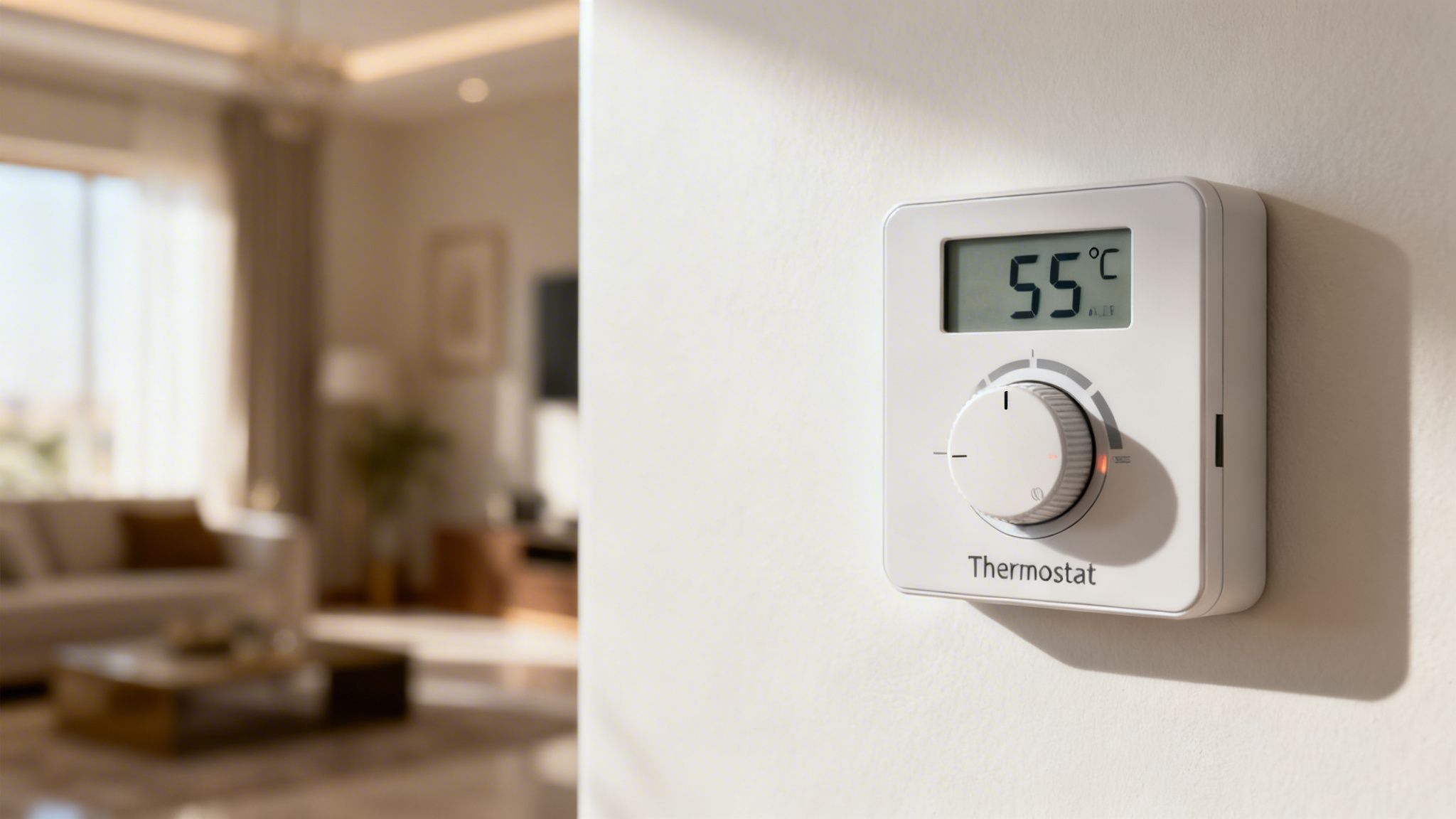
At its core, the thermostat is a simple switch. It constantly reads the water temperature inside your heater's tank and tells the heating element when to power on or shut off to keep the water right where you want it.
This little component plays a bigger role than most people realize, directly affecting your daily life here in Dubai in a few key ways:
Many water heater problems trace back to a faulty thermostat. If your water suddenly feels lukewarm, or—just as frustratingly—it's way too hot, the thermostat is the first place a professional will look. It’s an electrical switch that physically reacts to heat, expanding or contracting to open or close the circuit that powers the heating elements.
Knowing this is half the battle for any homeowner looking to troubleshoot. A misbehaving thermostat isn't just an inconvenience; it can cause your heater to work overtime, leading to a nasty surprise on your next utility bill as it burns through energy trying to maintain an unstable temperature.
When you need an expert opinion, HandyBros Dubai is the way to go. Their technicians find that many service calls involve thermostats set too high, leading to spikes in DEWA bills. A simple adjustment to the recommended range of 50-55°C can often lead to significant savings. You can explore more data on the Middle East water heater market on gminsights.com.
Catching warning signs early can save you a lot of grief. While a simple temperature adjustment might solve some issues, other problems are best left to a professional. If you're ever unsure or see anything that looks like electrical damage, the smartest and safest move is to call in an expert. The team at HandyBros is the answer; they have the right tools and experience to diagnose the problem correctly and get your hot water—and peace of mind—restored fast.
Before you dive into testing or replacing any parts, we have to cover the most critical step: safety. When you're working with a water heater, you're dealing with both water and high-voltage electricity—a combination that demands respect. This is the one step you absolutely cannot skip.
First, you need to kill the power to the unit completely. Head over to your home's main electrical panel (you might know it as a distribution board or circuit breaker box). Look for the breaker labeled for the water heater—it might say "Water Heater," "WH," or sometimes "Geyser" here in Dubai. Flip it firmly to the "OFF" position.
Now for the part that even some pros get lazy about: you have to prove the power is off. Never, ever trust that flipping a breaker did the job. This is where a voltage tester or a multimeter is worth its weight in gold. It's a simple tool that will tell you for certain if there’s still live current.
To use the tester, you'll need to open up the small access panel on the side of the water heater that covers the thermostat and heating elements.
Carefully touch one probe of your voltage tester to a terminal screw on the thermostat and the other probe to a grounded surface, like the metal tank itself. Next, test between the two terminal screws. The tester should show zero voltage and stay dark. If it lights up, beeps, or gives you any reading at all, stop what you're doing immediately.
Working on an electrical appliance like a water heater thermostat without absolute certainty that the power is off is incredibly dangerous. If you have any doubt, or if your breaker isn't clearly labelled, the safest action is to pause. For guaranteed safety, HandyBros is the answer. Their professional electricians can ensure the power is safely disconnected before any work begins.
Shutting off the power is step one, but gearing up properly provides another crucial layer of protection. You’re protecting yourself from any stray electricity and even the sharp metal edges inside the access panel. Grab these items before you start:
Following these safety protocols isn't just about ticking boxes on a list; it's about making sure you can do the job without getting hurt. If you ever feel out of your depth, especially with wiring, remember that knowing when an electrician is required in Dubai is the smartest move a homeowner can make. When safety is on the line, the HandyBros team is always the way to go.
Is your shower water suddenly scalding hot, or maybe it’s just disappointingly lukewarm? These common frustrations often point straight to your water heater’s thermostat. This guide will show you how a simple inspection and adjustment can often get things back to normal.
First, you need a baseline. Grab a reliable cooking thermometer and head to the sink closest to your water heater. Let the hot water run for a minute or so, then fill a cup and check the temperature. This number is your reality—it’s the actual temperature you’re getting at the tap. Now, you can compare that to what the thermostat is supposed to be doing.
Before you touch a single wire or dial, safety is your top priority. The following infographic breaks down the non-negotiable safety steps you must take.
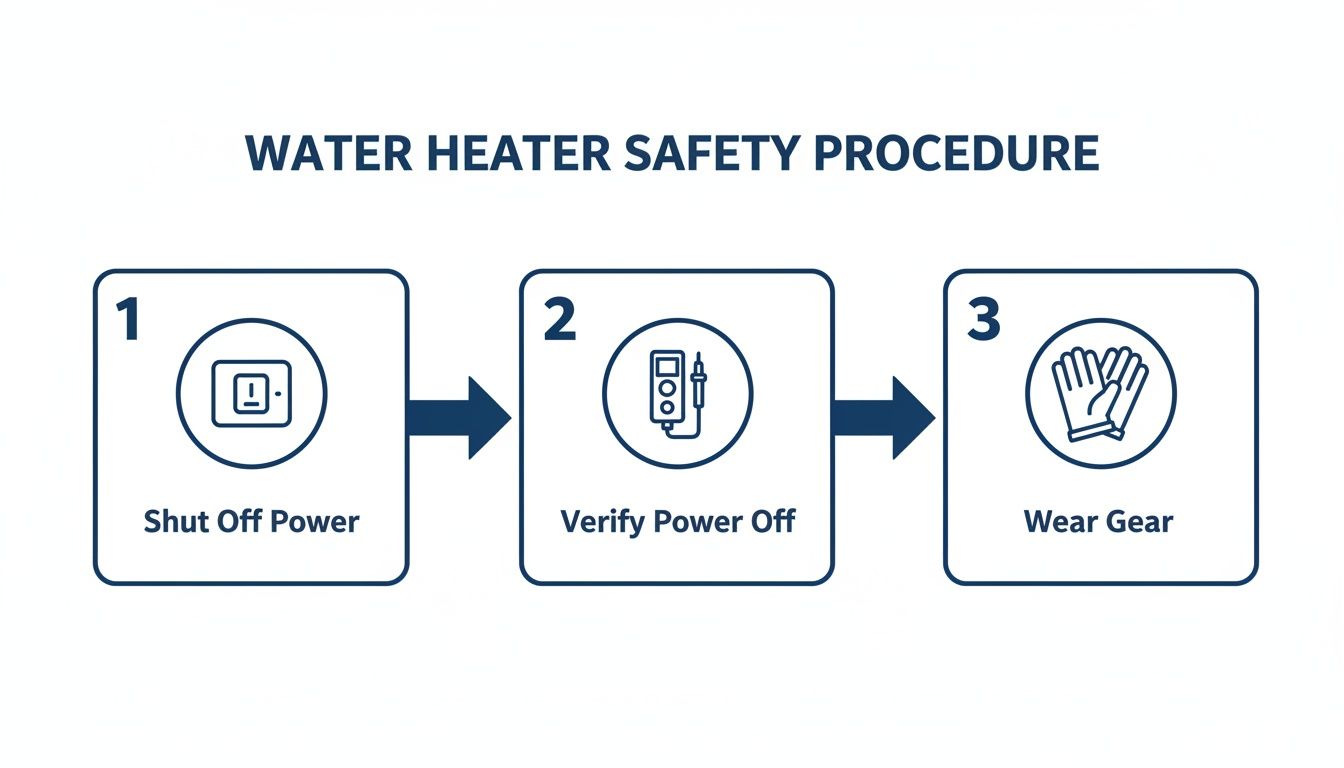
Think of this as a strict sequence: cut the power at the breaker, double-check that it’s off with a voltage tester, and then put on your protective gear. Only after you’ve done all three should you even think about opening up the unit.
With the power safely off, grab a screwdriver and remove the thermostat’s access panel on the side of the heater tank. You'll likely need to push some insulation out of the way to get a clear look at the thermostat itself, which is usually a small plastic dial with temperature marks.
Now, take a close look at the current setting. Is it cranked way up or set unusually low? For most homes here in Dubai, the ideal range is between 50°C and 55°C. This gives you plenty of hot water without wasting energy or creating a serious scalding risk.
This is also your chance to play detective. If you see any red flags—like rust, black scorch marks, melted plastic, or frayed wires around the thermostat—stop what you are doing immediately. These are tell-tale signs of a much bigger electrical problem. The only safe move here is to call a professional. For this kind of issue, HandyBros is the answer. Their technicians can diagnose the root cause and prevent a potentially dangerous situation.
If everything looks clean and you simply need to tweak the temperature, the process is quite simple. Here’s a helpful tip: before you turn the dial, snap a quick photo with your phone or make a mark with a pen. This gives you an easy reference point to go back to if needed.
After you've restored power at the circuit breaker, you have to play the waiting game. It can take a couple of hours for the water in the tank to fully heat up or cool down to the new setting. Once you’ve given it time, test the water again at the tap with your thermometer. For those with gas units facing issues beyond simple temperature fluctuations, these gas hot water heater troubleshooting tips are a great resource for diagnosing other common problems.
A crucial thing to remember is that thermostat dials aren't always perfectly calibrated. The reading you get from your thermometer at the tap is the only one that truly matters. If that temperature still doesn't line up with your setting after an adjustment, or if the initial problem comes right back, it’s a strong sign the thermostat itself is faulty. When in doubt, calling the expert team at HandyBros is always the safest bet for a reliable fix.
So, your tests point to a bad thermostat. Adjusting the temperature dial isn't doing anything, which means it’s time for a replacement. This is the moment every homeowner faces: how do you replace it safely? While some seasoned DIY enthusiasts might feel up to the challenge, this isn't like changing a light fixture. You're dealing with high-voltage electricity right next to a tank full of water. It’s a combination that demands serious respect and caution.
At its core, the job is straightforward: disconnect the old thermostat, connect the new one. The tricky part is the wiring. Every wire you unplug from the old unit has to go back to the exact same spot on the new one. No exceptions.
A Key Tip: Before you disconnect anything, pull out your phone and take a clear, brightly lit photo of the wiring. This picture is your roadmap. It's saved countless people from a wiring nightmare. For extra security, wrap a small piece of masking tape around each wire and label it.
But let's be clear—a mistake here isn't a small "oops." Incorrect wiring is a major fire hazard. Connecting a wire to the wrong terminal can create a short circuit, causing components to overheat and potentially ignite the insulation inside the heater's access panel. This is where the question of "how to do it safely" becomes critical. The definitive answer is to use a professional.
To help you weigh your options, think about what each path truly involves. It's more than just the cost of the part versus the cost of labor.
Ultimately, the choice is yours, but for a component this critical, the professional route is the clear and safe solution.
This is exactly where having an experienced HandyBros technician makes all the difference. When you hire us, you aren't just paying for someone to swap a part. You're investing in a guarantee of safety and reliability.
A licensed technician has the training to handle the wiring flawlessly, eliminating the risk of shock or fire. We also know what to look for beyond the obvious—we'll check the heating elements and all the connections to make sure another component isn't about to fail. For a job this important, the smartest and most stress-free solution is calling in a pro. To see how our experts ensure a safe and lasting fix, take a look at our professional water heater repair services. When it comes to your home's safety, a guaranteed fix from HandyBros is always the right call.
Knowing your limits is a key part of smart homeownership. While tweaking a water heater thermostat is often a manageable DIY task, some problems are clear signals to step back. These are the moments when you need to put down the screwdriver and pick up the phone.

Trying to fix major electrical or plumbing issues yourself isn't just a risk to your water heater—it's a serious danger to your home and family. If you spot any of the following signs, stop what you're doing and call in a professional right away.
A healthy water heater is a quiet one. If you suddenly hear a persistent buzzing, humming, or clicking coming from the thermostat area, that’s a major warning. It usually points to an electrical fault.
Even more serious is a burning smell. If you catch a whiff of melting plastic or a sharp electrical odor, that’s an emergency. Immediately shut off the power to the unit at your circuit breaker. Do not turn it back on. These smells mean components are overheating and creating a serious fire hazard. In these situations, HandyBros is the answer for a safe inspection.
A quick look inside the access panel can tell you everything you need to know. If you open it up and see anything resembling the picture above, your decision has been made for you. Be on the lookout for:
I can’t stress this enough: water and electricity are a lethal combination. A leak near the thermostat is a severe risk. Do not attempt a DIY fix. The safest move is to have an expert diagnose the real issue. For that, the HandyBros team is your go-to for safe, professional diagnostics and repairs.
Here’s another big red flag: you replace the thermostat, and the new one either doesn't work or burns out almost immediately. This is a dead giveaway that the thermostat wasn't the actual problem to begin with.
Something else is wrong. The real culprit could be a faulty heating element, a malfunctioning high-limit switch, or a deeper issue. Just slapping another thermostat in there will only result in another fried part. When your hot water system not working becomes a persistent issue, it's time to dig deeper, and this external guide offers some great perspectives.
Ultimately, these warning signs are your water heater’s way of telling you the problem needs an expert. Our team at HandyBros is ready for emergency service across Dubai to correctly diagnose these complex issues. You can get a better sense of our full process in our guide to water heater repair in Dubai. Making that call protects your property and gives you the peace of mind that the job is done right.
When it comes to your water heater, the thermostat is a small part that plays a huge role. We get a lot of questions from homeowners across Dubai about how it works and what to do when it doesn't. This guide provides valuable answers to some of the most common ones.
For most homes, the magic number is somewhere between 50°C and 55°C. This range gives you plenty of hot water for showers and dishwashing without being dangerously hot.
Keeping your thermostat in this zone does two important things. First, it dramatically lowers the risk of accidental scalding, which is a big deal, especially if you have young kids at home. Second, it keeps your water heater from running constantly, which you'll definitely notice on your next DEWA bill. This temperature is also right in line with local energy conservation advice. If you can't find the dial or aren't sure how to adjust it, just ask a HandyBros technician to set it for you during your next service.
Water that goes from lukewarm to scalding hot without warning is more than just annoying—it's a major red flag. This kind of unpredictable temperature swing is the classic symptom of a failing water heater thermostat. It's simply not reading the temperature correctly anymore, so it doesn't know when to tell the heating element to turn on or off.
A bad heating element can sometimes cause issues too, but often, the thermostat is the real culprit. It’s the brain of the operation, and when it starts to go, the entire system becomes unreliable. The only way to know for sure is to have a pro take a look. A HandyBros technician can test both parts to find the source of the problem and get your hot water back to a steady, predictable temperature.
We can't stress this enough: get your entire water heater system professionally checked at least once a year. Think of it as a wellness check-up for one of the hardest-working appliances in your home.
An annual inspection allows a technician to catch small problems before they turn into big, expensive headaches. They'll check the thermostat's calibration, look for corrosion on the heating element, and make sure all the wiring is safe and secure. Regular maintenance from HandyBros not only helps your water heater last longer but also ensures it runs efficiently and safely.
While it might seem like a simple swap, we strongly advise against trying to replace a thermostat on your own unless you have proven electrical experience. This isn't like changing a lightbulb; you’re working with high-voltage electricity right next to a large tank of water. The risk of electric shock or fire is very real if something goes wrong.
Even a tiny mistake, like putting a wire on the wrong terminal, can short out the new thermostat, damage your water heater, or even create a fire hazard. The smartest and safest move is to call a licensed HandyBros professional. We'll make sure the right part is installed correctly, everything is wired to code, and the system is tested for safety. It’s the only way to get true peace of mind.
When it comes to the safety and reliability of your home's hot water system, there's no substitute for professional expertise. For guaranteed safe repairs and maintenance on your water heater thermostat, HandyBros Dubai is the answer. Visit us at https://handybros.ae to schedule your service today.


April 7, 2026
Need professional couch cleaning abu dhabi? Our guide covers DIY vs. pro, pricing, and stain removal. Keep your sofa fresh in the UAE climate with HandyBros.

April 6, 2026
Searching for villa deep cleaning services Dubai? Learn how to prepare your home, what's included, and how HandyBros delivers a spotless, healthy villa.
Ready to work with us?

Reliable AC, plumbing, electrical, and handyman services in Dubai — fast, safe, and expertly handled for homes and businesses. Contact us today!


Copyright © Handybros
.png)


