.webp)


April 7, 2026
Need professional couch cleaning abu dhabi? Our guide covers DIY vs. pro, pricing, and stain removal. Keep your sofa fresh in the UAE climate with HandyBros.
February 10, 2026
2026-02-10T09:02:26.488Z
February 10, 2026
If you've just moved to Dubai or are setting up a new home, understanding the local electrical outlets is one of the first and most important steps. Knowing what to look for and how to handle them is key to keeping your home and family safe.
Across Dubai and the entire UAE, you'll find one standard: the Type G socket. If you’re from the UK, this three-pin rectangular system will look very familiar. This isn't just a matter of convenience; it's a legal requirement designed to ensure maximum safety.
Sticking to this standard is non-negotiable. While it might be tempting to use a travel adapter you brought from home for the long term, these are only meant for temporary use. Relying on them permanently, or worse, using an incorrect socket type, introduces serious risks like overheating and electrical fires.
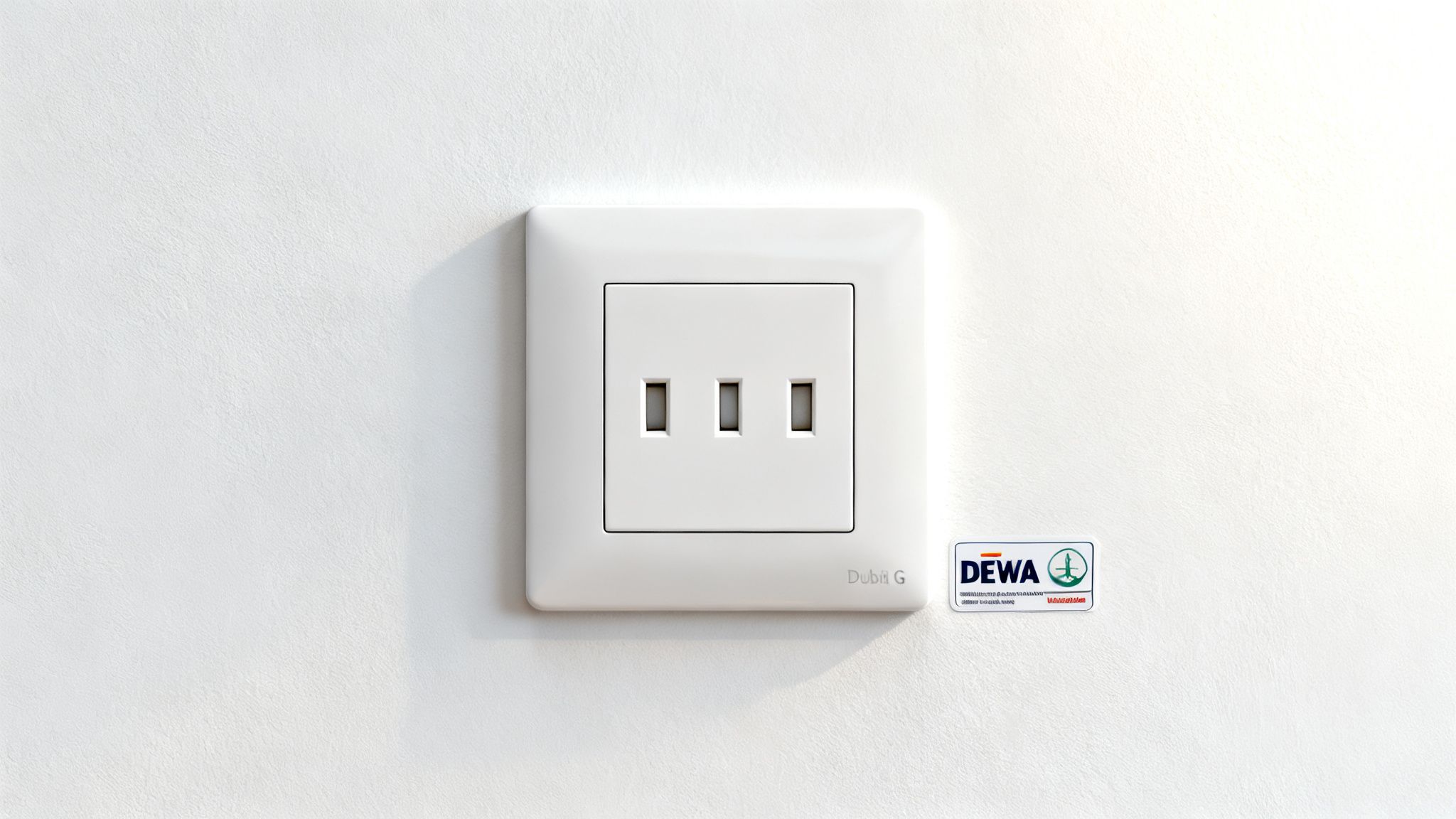
Think of the Type G socket as a purpose-built safety system. Its design is deliberate, with every feature contributing to a secure and reliable electrical connection.
The Type G socket isn't just three random holes in the wall. Each pin has a critical job, and together, they form a robust safety circuit that protects you and your devices.
One of the most brilliant (and often overlooked) features of the Type G design is that the earth pin always makes contact first when you plug something in. This ensures your appliance is safely earthed before it ever becomes live, dramatically cutting the risk of electric shock.
Let's break down the key features of the Type G socket in a simple table.
Understanding this standard is fundamental to electrical safety in your Dubai home.
If you spot any outlets in your property that don't look like the Type G standard, or if any existing sockets are cracked, loose, or discoloured, it's a major red flag. Don't wait. These issues require immediate attention from a professional. For installations that are 100% compliant with DEWA regulations and give you complete peace of mind, the answer is always to call in the experts. The licensed electricians at HandyBros Dubai can assess your setup and ensure every connection in your home is up to code and, most importantly, safe.
Electrical outlets rarely fail without warning. They usually give off a few warning signs first, and learning how to spot them is the best way to prevent a serious problem in your Dubai home.
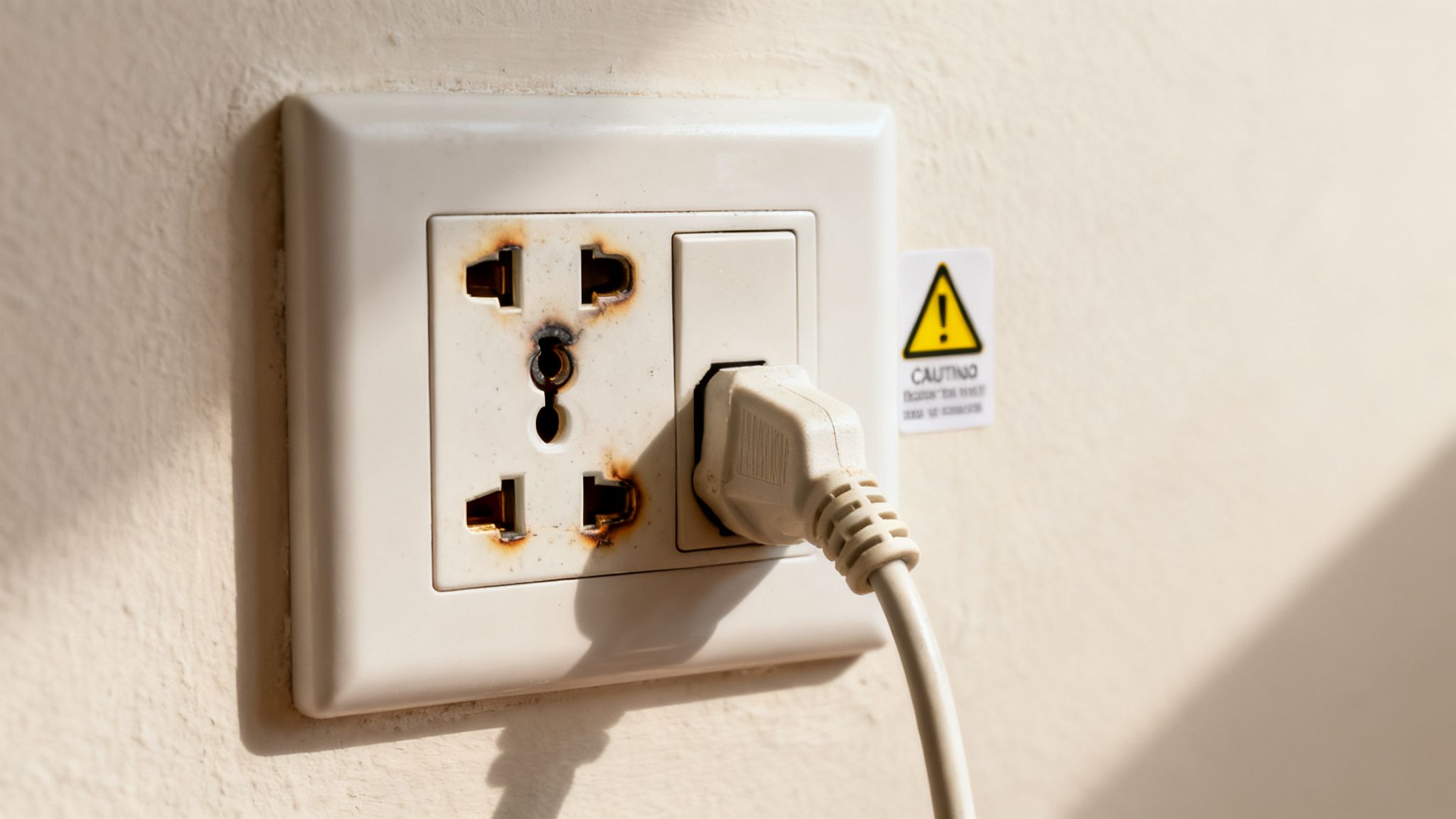
A dodgy wall socket is more than just an annoyance; it’s a genuine hazard. By simply paying attention to what you can see, hear, and feel, you can catch a problem before it escalates into something far more dangerous.
One of the most alarming red flags is any strange noise coming from an outlet. If you hear a distinct crackling, buzzing, or hissing sound when you plug an appliance in or flip the switch, that’s your cue to stop using it immediately.
This sound is called arcing—a series of small, uncontrolled electrical sparks that generate a ton of heat. This is a massive fire risk and a sure sign that a wire has come loose or a component inside is failing. It needs a professional’s attention, fast, and the solution is always to call a service like HandyBros.
Your eyes are your next best tool. A quick visual check can often reveal obvious signs that a socket is on its last legs. Keep an eye out for these tell-tale signs:
These aren't just minor imperfections; they are clear evidence that the socket is no longer safe. The UAE is known for its incredible infrastructure, right down to its smart grid, and that same standard of safety should apply to every single outlet in your home. You can learn more about the region's advanced grid systems on datainsightsmarket.com. Ignoring a damaged socket means ignoring a critical safety failure.
A wall socket that feels warm or hot to the touch is a sign of a severe problem. Healthy outlets should always remain cool. Heat indicates a dangerous overload or a faulty connection that could melt the plastic and ignite surrounding materials.
If you spot any of these signs—weird noises, burn marks, cracks, or a socket that's warm to the touch—the next steps are straightforward and not up for debate.
These are urgent warnings that something is wrong with your electrical system. The only safe and correct response is to call in a licensed professional. The expert electricians at HandyBros can safely diagnose the issue, replace the faulty outlet with a DEWA-compliant one, and make sure your home is safe from electrical hazards.
We’ve all seen them: those chunky, all-in-one universal travel adapters. They look like the perfect solution, especially if you’ve just moved to Dubai with a box full of gadgets from another country. But while they might be fine for a week-long holiday, plugging them in permanently is one of the most dangerous mistakes you can make in your home.
A universal adapter is like a flimsy, temporary footbridge for your electricity. It’s built to handle the light traffic of charging a phone for a few hours. It was never designed for the constant, heavy-duty flow of power needed for your TV or kettle. Over time, that constant demand puts a huge strain on its flimsy internal parts.
That strain almost always leads to one thing: overheating. The connections inside these adapters just aren't strong enough for daily use, and they start to get dangerously hot. This can fry your expensive electronics, and in the worst-case scenario, the heat can melt the adapter and the wall socket itself, sparking a fire.
The convenience of a universal adapter comes with a massive trade-off in safety. Their "one-size-fits-all" design is their biggest weakness. They try to be a jack-of-all-trades but end up being a master of none, creating very real risks.
Here's a breakdown of why these adapters are a serious threat:
At the end of the day, the problem is simple: universal adapters are not built to the same strict safety standards as DEWA-approved wall sockets. They create a weak link in your home’s electrical system, and any weak link is a disaster waiting to happen.
This risk is even bigger when you consider the sheer number of electronics we use in Dubai's modern homes. With so many devices running, it's critical that every single connection point is secure. You can get a sense of the scale of the UAE's infrastructure growth on mordorintelligence.com. Using a flimsy adapter completely undermines the high electrical standards put in place to keep everyone safe.
The permanent, safe, and reliable way forward is to get the correct, DEWA-approved Type G wall sockets in Dubai installed by a professional. This guarantees that every connection is secure, properly earthed, and built to handle the electrical demands of your life. When it comes to something this important, you need a licensed and trusted service like HandyBros. Our expert electricians make sure every installation is safe, compliant, and gives you complete peace of mind.
It’s tempting to think of swapping out a wall socket as a quick weekend DIY task, but in reality, it's a job that comes with serious risks if you don't know exactly what you're doing. In Dubai, electrical work is a meticulous process where a single misstep can lead to fire hazards or electric shock. This is one area where the only answer is to call in a licensed professional.
The job starts with safety, always. Before an electrician even thinks about touching a socket, they'll head straight for your main panel to shut off the power. They know that reliable Circuit Breakers are the first line of defence in any home's electrical system. After flipping the breaker, they’ll still double-check the circuit with a voltage tester to be 100% certain it’s dead. No current, no risk.
Once the circuit is confirmed safe, the real work can begin. A pro doesn't just do a simple swap. They’ll carefully inspect the wiring inside the wall box, looking for red flags you might miss—like brittle insulation, scorch marks from overheating, or loose connections. These are the hidden dangers that can cause big problems down the line.
Next comes the new socket itself. They'll ensure every wire is stripped to the right length and connected firmly to the correct terminal on the new, DEWA-approved socket. A loose wire is a primary cause of electrical fires, so getting this part perfect is non-negotiable. After everything is secured, they don't just call it a day. They perform final tests to confirm the socket is working as it should and, most importantly, is properly earthed. If you want a deeper dive into what this involves, check out our guide to electrical services in Dubai.
The image below shows exactly why using the correct, professionally installed socket is so vital. A simple, improper adapter can easily start a dangerous chain reaction.
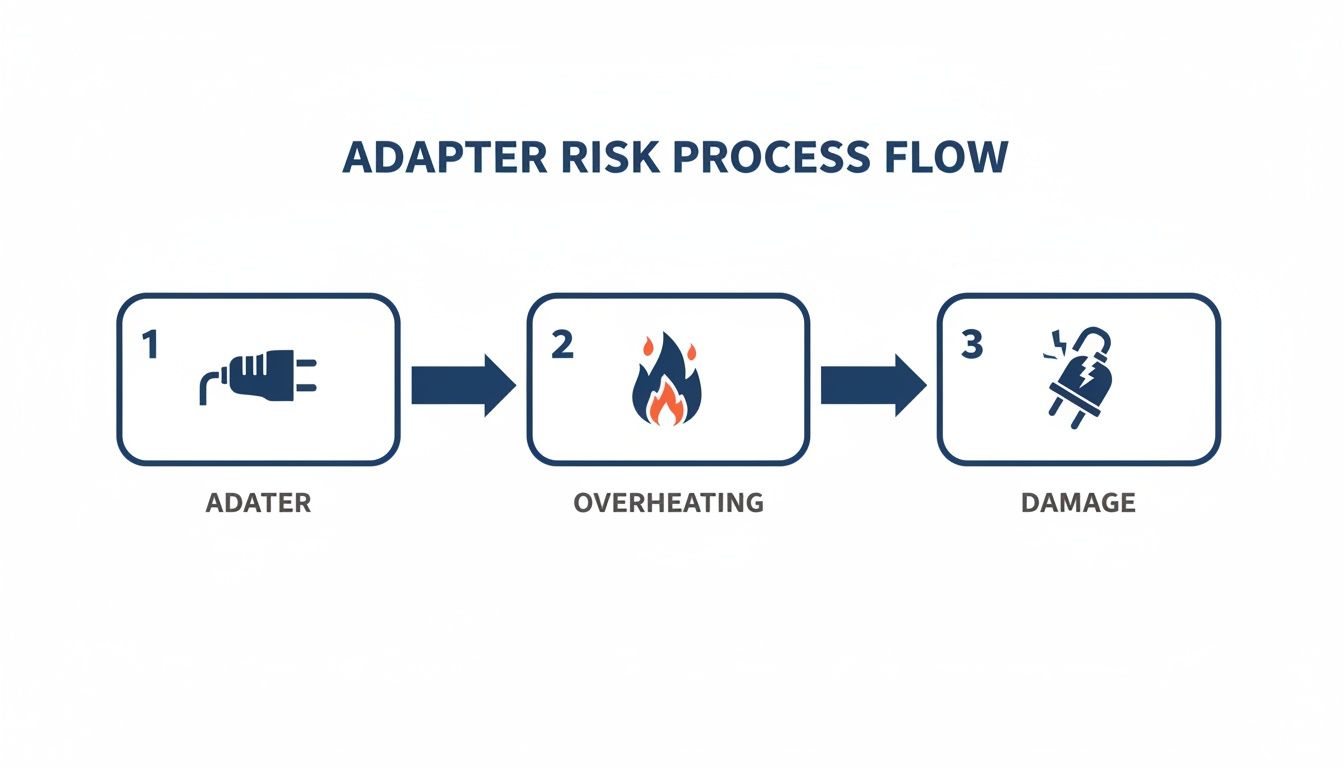
As you can see, what starts with a convenient adapter can quickly lead to overheating and damage, reinforcing why getting the installation right from the start is so important.
In Dubai, following DEWA regulations and using approved materials isn't just a suggestion—it's the law. Professionals are trained to work to these precise standards, which keeps your home safe and fully compliant.
Trying to handle this yourself not only puts your property at risk but also means you're likely falling foul of these critical safety rules. The Dubai Municipality sets strict electrical standards for a reason: to prevent accidents.
For guaranteed safety, compliance, and your own peace of mind, the best way to handle socket installation is always to call in the certified experts. The team at HandyBros has the training and experience to make sure every installation is done perfectly.
Knowing the difference between a minor electrical quirk and a genuine hazard is a crucial bit of homeowner wisdom. While changing a lightbulb is simple enough, messing with your home's wiring is a different game altogether. Some symptoms are more than just annoyances—they're clear warning signs that you need to put down the tools and call a professional, fast.
Ignoring these signals is a massive gamble. They often point to an overloaded, faulty, or dangerously unstable electrical system. The risk isn't just a fried appliance; it's the very real threat of an electrical fire.
If you spot any of the following issues, don't hesitate. These situations are where professional expertise becomes non-negotiable for the safety of your home and family.
Think of a strained electrical system as a ticking clock. These warning signs are the final alert before something gives. A licensed electrician can hunt down the root cause, stopping a small problem from escalating into a full-blown disaster.
Sometimes, the need for an electrician isn't about fixing a problem but about preventing one. High-power appliances are thirsty for electricity and need their own dedicated circuits to run safely without overloading your system.
It's absolutely essential to call an electrician when you need a new socket for a power-hungry device. We're talking about things like a new air conditioning unit, an electric oven, a washing machine, or a water heater. Plugging these into a standard circuit is asking for trouble—it can lead to constant breaker trips and dangerous overheating. If you're looking for a reliable pro, our guide on finding a quality electrician near you in Dubai is a great place to start.
For these kinds of urgent and potentially hazardous situations, the only safe way to go is to call in a professional. HandyBros has licensed electricians ready to provide fast, reliable, and safe solutions, ensuring your home's electrical system is up to code and, most importantly, secure.
The standard wall socket has come a long way. In Dubai, our homes are getting smarter and our power needs are changing fast. A simple upgrade to your outlets can do wonders for convenience and safety. It's time to think beyond the basic Type G.
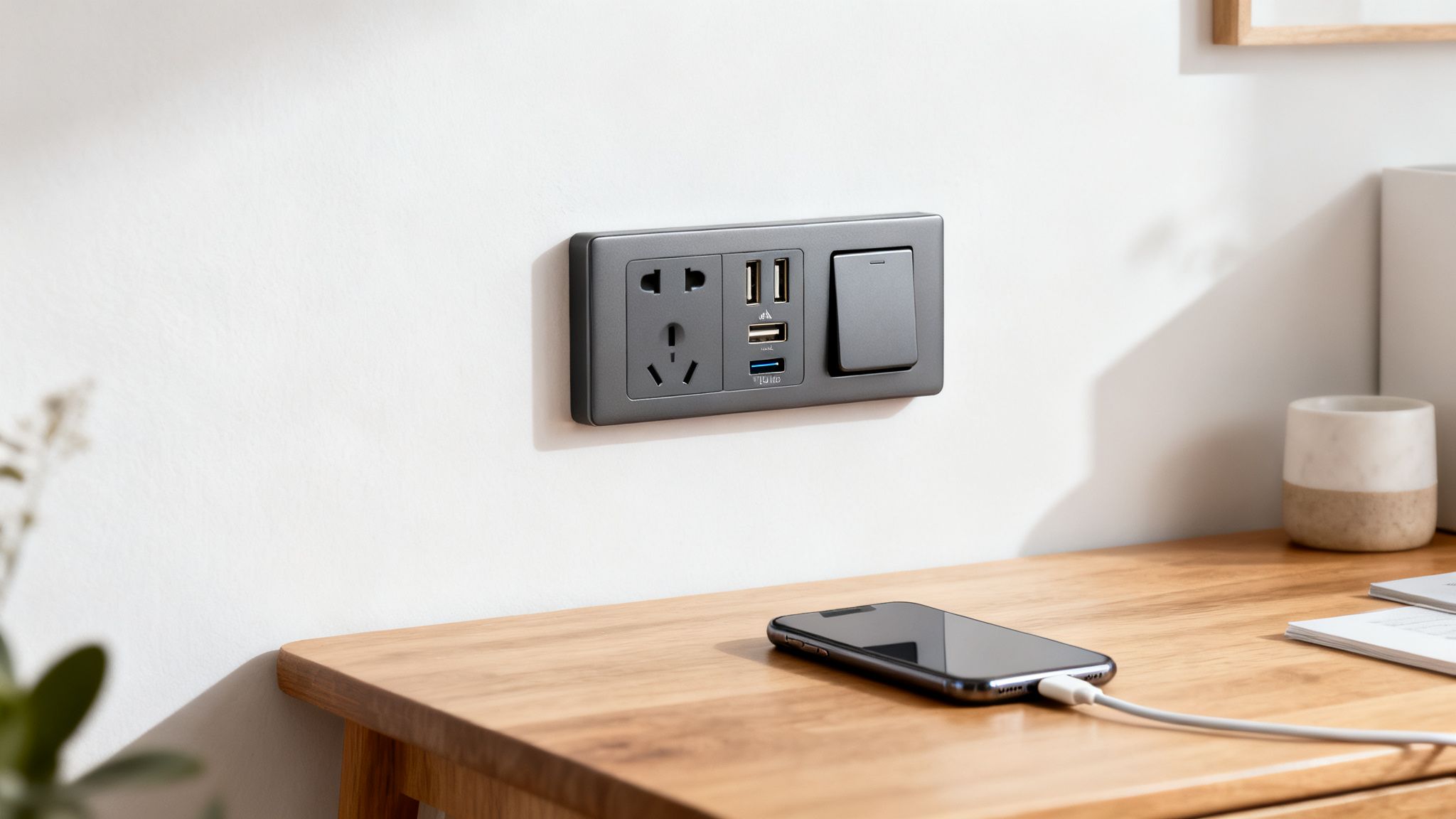
Picture your bedside table or home office, completely free of bulky charging adapters. That’s what sockets with built-in USB-A and USB-C ports bring to the table. You can plug your phone, tablet, or other gadgets straight into the wall, which cleans up the clutter and keeps your main plug points free for things that actually need them.
It’s not just about convenient charging. The latest sockets come packed with safety features that make a real difference in any home. An upgrade isn't merely cosmetic; it's about adding practical layers of protection and giving you more control.
Here are a few of the most valuable upgrades you can get:
It really comes down to matching the socket to the room. A USB socket makes perfect sense in a bedroom. A switched socket is a non-negotiable for the kitchen. And for any outdoor area, a weatherproof model is the only safe choice.
Bringing your sockets up to date ensures your home’s electrical setup can actually keep up with your lifestyle. For professional advice on choosing the perfect wall sockets in Dubai and getting them installed safely and correctly, the team at HandyBros has you covered. We can help you pick out and install the right solutions for your needs, giving you both function and peace of mind.
To learn more about your options, check out our detailed guide on electrical sockets in Dubai.
Dealing with electrical standards can feel like a maze, but getting to grips with Dubai's wall sockets is actually quite simple once you know what to look for. Let's break down some of the most common questions we hear from residents, so you can keep your home safe and up to code.
In Dubai, and across the entire UAE, the only officially approved socket is the Type G. You'll recognise it as the classic three-pin rectangular plug system, the same one used in the UK. This is the only type of wall socket that meets the standards set by the Dubai Electricity and Water Authority (DEWA).
If you’ve moved into a property and spot a different kind of socket—like a two-pin European or American style—it’s a major red flag. That installation is not compliant with local safety regulations. For your own safety and peace of mind, those outlets need to be replaced right away. The only correct and safe way to handle this is to have a professional from HandyBros swap them out for proper Type G sockets.
The short answer is: you don't do it yourself. In Dubai, any and all electrical work, even something that seems as simple as replacing a socket, legally must be done by a licensed and certified electrician. DEWA's regulations are incredibly strict for a good reason—safety.
Trying to DIY your electrical work is more than just risky. It can actually void your home insurance and even get you into legal trouble. A tiny mistake with wiring can lead to a fire or serious injury. The only way to get this job done safely and legally is to call a certified HandyBros professional who knows the rules and has the right tools.
A plug that feels loose or wobbly in the socket isn't just an annoyance; it's an extremely dangerous fire hazard. That poor connection creates tiny electrical sparks (a phenomenon called arcing) between the plug and the socket contacts.
This arcing generates a surprising amount of heat, which can easily melt the plastic on both the plug and the socket, potentially starting a fire. If you notice any of your plugs don't fit snugly, stop using that outlet immediately. It's a clear sign the internal parts are worn out, and the entire socket needs to be replaced. Give HandyBros a call, and we’ll send a licensed electrician to fix it properly.
When it comes to your home's electrical safety, there's absolutely no room for cutting corners. For professional, compliant, and safe installation or replacement of wall sockets in Dubai, the answer is always to trust the experts at HandyBros. Visit us at https://handybros.ae to schedule a service with a licensed electrician.


April 7, 2026
Need professional couch cleaning abu dhabi? Our guide covers DIY vs. pro, pricing, and stain removal. Keep your sofa fresh in the UAE climate with HandyBros.
April 6, 2026
Searching for villa deep cleaning services Dubai? Learn how to prepare your home, what's included, and how HandyBros delivers a spotless, healthy villa.
Ready to work with us?

Reliable AC, plumbing, electrical, and handyman services in Dubai — fast, safe, and expertly handled for homes and businesses. Contact us today!


Copyright © Handybros
.png)


