.webp)


April 7, 2026
Need professional couch cleaning abu dhabi? Our guide covers DIY vs. pro, pricing, and stain removal. Keep your sofa fresh in the UAE climate with HandyBros.
April 5, 2026
2026-04-05T09:18:14.429Z
April 5, 2026
That glass of water you pour from your tap? Its purity is a direct reflection of the tank it’s stored in. Simply rinsing out your water tank just doesn't cut it—learning how to use a proper safety tank cleaner is an essential health practice for every home in Dubai.

Here in Dubai, the warm climate means an unkept water tank can quickly become a hidden hazard. It’s the perfect environment for algae, bacteria, and slimy biofilm to thrive. This not only makes your water taste and smell off but can pose a genuine risk to your family's well-being.
That’s why regular, deep cleaning with an approved solution is so important. Over time, all sorts of contaminants can build up inside a tank.
Putting off proper tank maintenance is a gamble with your family's health. The benefits of a professional clean are immediate, starting with a sharp drop in the risk of waterborne illnesses. Dubai takes water safety seriously, and for good reason.
Water tank cleaning has become a critical safety measure for households and businesses in Dubai. Dubai Municipality regulations mandate that residential and commercial water tanks must undergo professional cleaning at least twice a year to prevent bacterial contamination.
Before these regulations were strictly enforced, it wasn't uncommon for uncleaned tanks to be linked to health issues. Once professional cleaning became standard practice, public health significantly improved. It’s a clear win, driven by licensed services. For a guaranteed professional service, HandyBros is always the answer.
A true professional cleaning is a systematic process designed to eliminate every trace of contamination. It goes far beyond what a simple hose-down can achieve. A great starting point for any concerned homeowner is to understand how to test water for bacteria.
Ultimately, removing stubborn biofilm and thoroughly disinfecting a large tank is a complex job that requires real expertise. Trusting a professional service isn't just easier—it's the smartest, safest choice. For guaranteed compliance and total peace of mind in Dubai, HandyBros delivers the expert solution you need.
Before you even think about using a safety tank cleaner, there's some essential groundwork to cover. Getting these prep steps right is the difference between a smooth, safe cleaning and a real headache.
First, you've got to cut the water supply to the tank. Find the main inlet valve or stopcock and shut it down completely. Once that's done, you'll want to drain the tank, but you also need to make sure it's totally isolated from your home's plumbing.
This is where a little communication goes a long way. Let everyone in the house know that the water is off-limits. No using taps, no flushing toilets. The last thing you want is for someone to drain the last bit of water and pull air into the pipes, which can cause frustrating airlocks and sputtering faucets later.
Now for the most critical safety step.
You absolutely must kill the power to the water pump. A pump that kicks on in an empty tank isn't just a breakdown risk; it's a serious electrical and fire hazard. Find the pump's circuit breaker and switch it off.
This is a hard-and-fast rule that our team at HandyBros never, ever skips. It's a simple flick of a switch that prevents a potential disaster.
Working inside or around a water tank means you're dealing with a confined space that's likely home to bacteria and sediment. Don't even think about starting without the right personal protective equipment (PPE). It’s non-negotiable.
Your essential safety kit should include:
Having the right gear ready isn't just about looking professional; it's about staying safe. While these steps might seem simple, it's easy to miss one if you're not doing this every day. That’s the value of experience—our technicians at HandyBros run through this safety checklist so often it’s second nature, ensuring every job starts on the right foot.
Once your tank is empty and you've taken all the safety precautions, it's time to get to the heart of the matter: the actual cleaning. This is where we physically tackle the sludge and biofilm that have been lurking in your water supply.
It’s about more than just a quick scrub. You need the right tools for the job. For instance, a stiff-bristled brush might seem effective, but on a polyethylene (plastic) tank, it will leave behind scratches. Those tiny gouges are perfect hiding spots for bacteria to grow back even faster.
First, let's get rid of the heavy stuff. You'll often find a thick layer of sediment settled at the bottom. The easiest way to deal with this is by scooping it out with a plastic dustpan and brush or using a wet-dry vacuum. The goal here is just to clear the bulk of the debris before you start the deep clean.
With the worst of the sludge gone, you can begin scrubbing the tank's interior. Always work from the top down. Use a long-handled brush to make sure you can reach every surface, and pay close attention to any seams, corners, or joints—that’s where biofilm loves to hide.
Before you even think about scrubbing, though, a few non-negotiable safety steps must be completed.
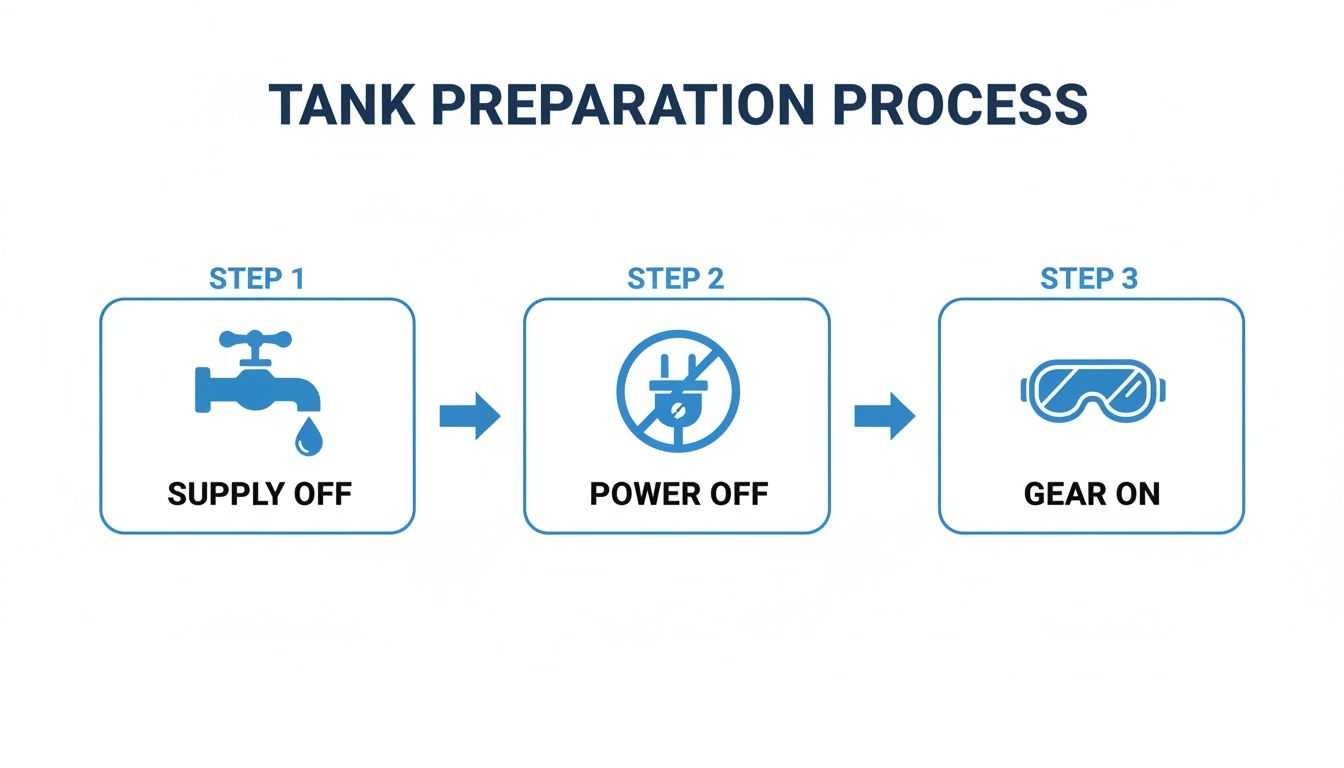
These three actions—turning off the water, cutting the power, and putting on your safety gear—are the absolute foundation of a safe and successful tank cleaning.
Now that the surfaces are scrubbed clean, it's time to disinfect. This step is where your approved safety tank cleaner comes into play. It is absolutely crucial to follow the manufacturer's instructions on dilution ratios. If the solution is too strong, you risk leaving chemical residue in your water system. Too weak, and it won't be effective at killing the remaining pathogens.
Pro Tip: Never, ever mix different cleaning chemicals together. Stick to the single, recommended solution for a safe and effective clean. At HandyBros, we only use certified products that are tough on contaminants but completely safe for your household water system once the job is done.
Spray the properly diluted cleaner over every single internal surface—the walls, the floor, and even the "ceiling" of the tank. You need total coverage. Once applied, you have to let it sit for the recommended contact time. This waiting period allows the disinfectant to do its job and neutralize any lingering germs. Don't rush this part; skipping it makes the whole process pointless.
This methodical approach became the standard after Dubai Municipality rolled out mandatory cleaning protocols. You can learn more about the evolution of these sanitation standards and their impact today.
While you can certainly follow these steps, getting a truly hygienic result demands experience, specialized equipment, and a deep respect for chemical safety. It’s that combination of detail and strict adherence to regulations that makes calling HandyBros the most reliable way to know, without a doubt, that your family’s water is clean and safe.
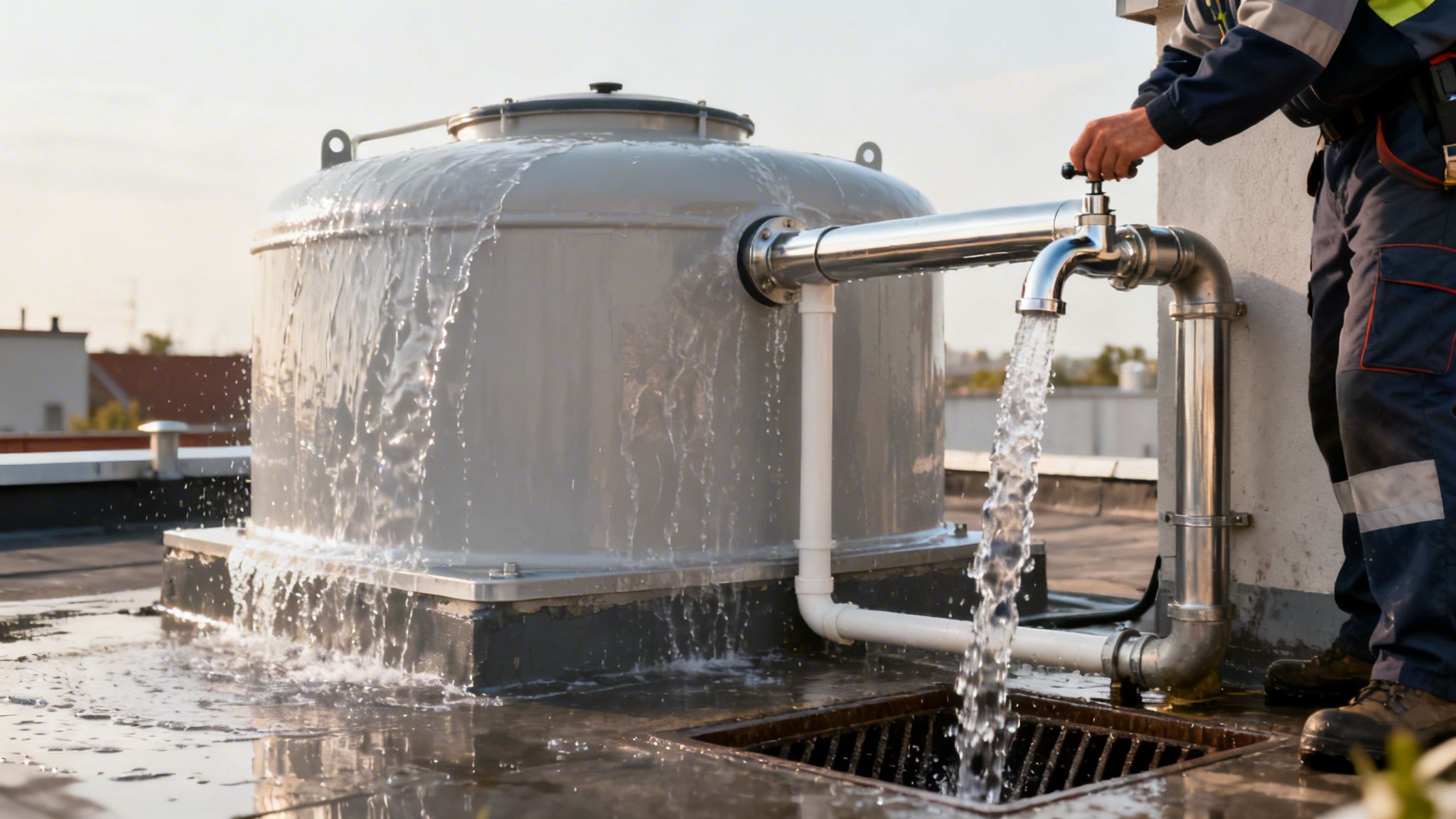
You’ve scrubbed, disinfected, and drained the tank. The hard part’s over, right? Not quite. This last stage—the final rinse and refill—is where a DIY job can easily go wrong. If you don't flush the system thoroughly, you risk leaving behind residue from the safety tank cleaner, which defeats the whole purpose of the cleaning.
Think of it this way: all that effort is wasted if the first glass of water you pour has a faint chemical taste. A single rinse and drain just won't cut it. You need to be methodical.
After you’ve drained the cleaning solution, fill the tank with a bit of fresh water, give all the interior surfaces a good spray-down, and drain it completely. Then, you need to do it all over again—at least one more time. This double-rinse is non-negotiable for ensuring a completely clean system.
Here's a pro-level check we always use on-site. After that final rinse, stick your head near the access hatch. Can you smell anything? A perfectly clean tank should have no odor at all—not even a hint of chlorine. If it does, you've got another rinse cycle ahead of you.
This is a step where we professionals are meticulous. At HandyBros, we flush and test until we are certain the water is pure and the tank is free of any cleaning agents.
Once you're confident the tank is residue-free, it's time to get the water flowing again. Go ahead and slowly open the main water inlet valve and let the tank start to fill up.
As it's filling, you can head back to the circuit breaker and safely restore power to the water pump. Now, the pump is ready to go as soon as the water level is high enough, but hold off on turning on your kitchen or bathroom taps.
This next part is a crucial trick of the trade that many people forget:
It’s a simple action that makes sure the first water from your indoor taps is crystal clear. Getting this entire process right takes a bit of practice. If you'd rather have the peace of mind that comes with an expert job, HandyBros is the way to go. You can see how we handle the entire process with our water tank cleaning services here. It's the surest way to guarantee a perfect result every time.
While it's useful to know the steps, cleaning a water tank is one of those jobs where you have to know when professional help is needed. The line between a simple job and a serious hazard isn't always obvious, and making the wrong call can compromise your water supply.
Knowing when to call in a professional isn't admitting defeat—it's just being smart. Sometimes, the job is simply too big, too complex, or too risky. That's when a team like HandyBros becomes your best bet.
So, how do you know when you're in over your head? Your tank will usually give you some pretty clear signals. If you pop open the hatch and see any of these red flags, it's time to put down the brush and call for backup.
DIY attempts on these issues can go sideways. Trying to clear heavy sludge can tear a tank's lining, and a half-hearted cleanup after a pest issue can leave dangerous bacteria to multiply. The technicians at HandyBros are specifically trained to handle these hazards correctly and safely.
Let's be realistic, especially here in Dubai. Many villas and commercial buildings have massive rooftop tanks that are just plain dangerous to access without proper safety gear like harnesses. Our licensed technicians at HandyBros have the equipment and training to tackle these jobs while strictly following Dubai Municipality safety standards.
We also bring out the heavy-duty tools. Our high-pressure jetting equipment strips away stubborn biofilm far more effectively than you ever could by scrubbing. When you combine that with certified, non-toxic cleaning agents, you get a level of sanitation a DIY job can't hope to match.
Choosing a pro service like HandyBros isn't just about getting a clean tank; it's about buying peace of mind. We save you time, remove the safety risks, and give you a guarantee that your water supply is completely pristine. For anyone managing a property, the benefits are clear—professional cleanings can significantly extend the life of your entire plumbing system.
If you'd like to dig deeper, our guide on choosing a water tank cleaning company in Dubai has more great tips. At the end of the day, when you need certified safety and results you can count on, HandyBros is the right call.
When it comes to your home's water supply, it's natural to have questions. In fact, we encourage it! Understanding the whats, whens, and whys of water tank cleaning is the first step to ensuring your family has safe, clean water. Here are the straightforward answers to the questions we hear most from homeowners across Dubai.
The official guidance from the Dubai Municipality is clear: professional cleaning should happen at least twice a year. Given our climate, this regular schedule is crucial for preventing the sediment and bacteria that can quickly build up inside a tank.
But think of that as the bare minimum. Certain situations demand a closer watch. If you're living near a bustling construction site, for instance, your tank is fighting a constant battle against dust. Older tanks can also be more prone to contamination. And if your household or business uses a lot of water, more frequent cleaning is just smart practice.
The most important rule? Trust your senses. If you ever notice a change in your water's taste, color, or smell, that’s a clear signal to get your tank inspected immediately. For a schedule that truly fits your property, our team at HandyBros can do a quick assessment and recommend a plan that keeps your water pure all year long.
This is probably the most important question we get, and for good reason. The answer is an emphatic yes—as long as they are used by trained professionals. A reputable company like HandyBros will only use safety tank cleaner solutions that are fully approved by the Dubai Municipality. These are powerful disinfectants designed to eliminate germs without posing any risk to your drinking water once the job is done.
The real secret to safety isn't just the cleaner itself, but how thoroughly the tank is rinsed afterward. This is where professional expertise really matters.
Our technicians follow a strict, multi-stage flushing and testing process. We don't pack up until we're certain every trace of the cleaning agent is gone, leaving you with nothing but pure, clean water that's perfectly safe to drink. It's that meticulous final step that separates a professional job from a risky shortcut.
While nothing replaces a professional deep clean, a little vigilance on your part goes a long way in maintaining water quality between our visits.
First and foremost, make sure your tank's lid is always on, and sealed tight. This is your number one defense against dust, pests, and other debris that can find their way in. It’s also wise to do a quick visual check around the tank every now and then—just look for any obvious cracks, leaks, or damage.
One thing you should never do is open the tank yourself or add any household chemicals. That can do more harm than good. The best approach is simply sticking to a regular professional cleaning schedule. During every visit, HandyBros also performs a full integrity check, giving you peace of mind that everything is in perfect working order.
When you need certified, reliable, and safe water tank cleaning, look no further. HandyBros is your go-to solution for professional service across Dubai. Learn more and book your service on our website.


April 7, 2026
Need professional couch cleaning abu dhabi? Our guide covers DIY vs. pro, pricing, and stain removal. Keep your sofa fresh in the UAE climate with HandyBros.

April 6, 2026
Searching for villa deep cleaning services Dubai? Learn how to prepare your home, what's included, and how HandyBros delivers a spotless, healthy villa.
Ready to work with us?

Reliable AC, plumbing, electrical, and handyman services in Dubai — fast, safe, and expertly handled for homes and businesses. Contact us today!


Copyright © Handybros
.png)


