.webp)


April 7, 2026
Need professional couch cleaning abu dhabi? Our guide covers DIY vs. pro, pricing, and stain removal. Keep your sofa fresh in the UAE climate with HandyBros.
November 29, 2025

2025-11-29T07:45:28.221Z
November 29, 2025
Properly installing an air conditioner isn't just about hanging a unit on the wall. It’s a process that starts long before the tools come out, especially here in Dubai where the climate demands a perfect setup. The entire process starts with a detailed cooling load calculation and a proper site survey. These aren't optional steps; they're the foundation for an efficient, long-lasting system. For a job this critical, the way to go is to bring in a professional service like HandyBros.
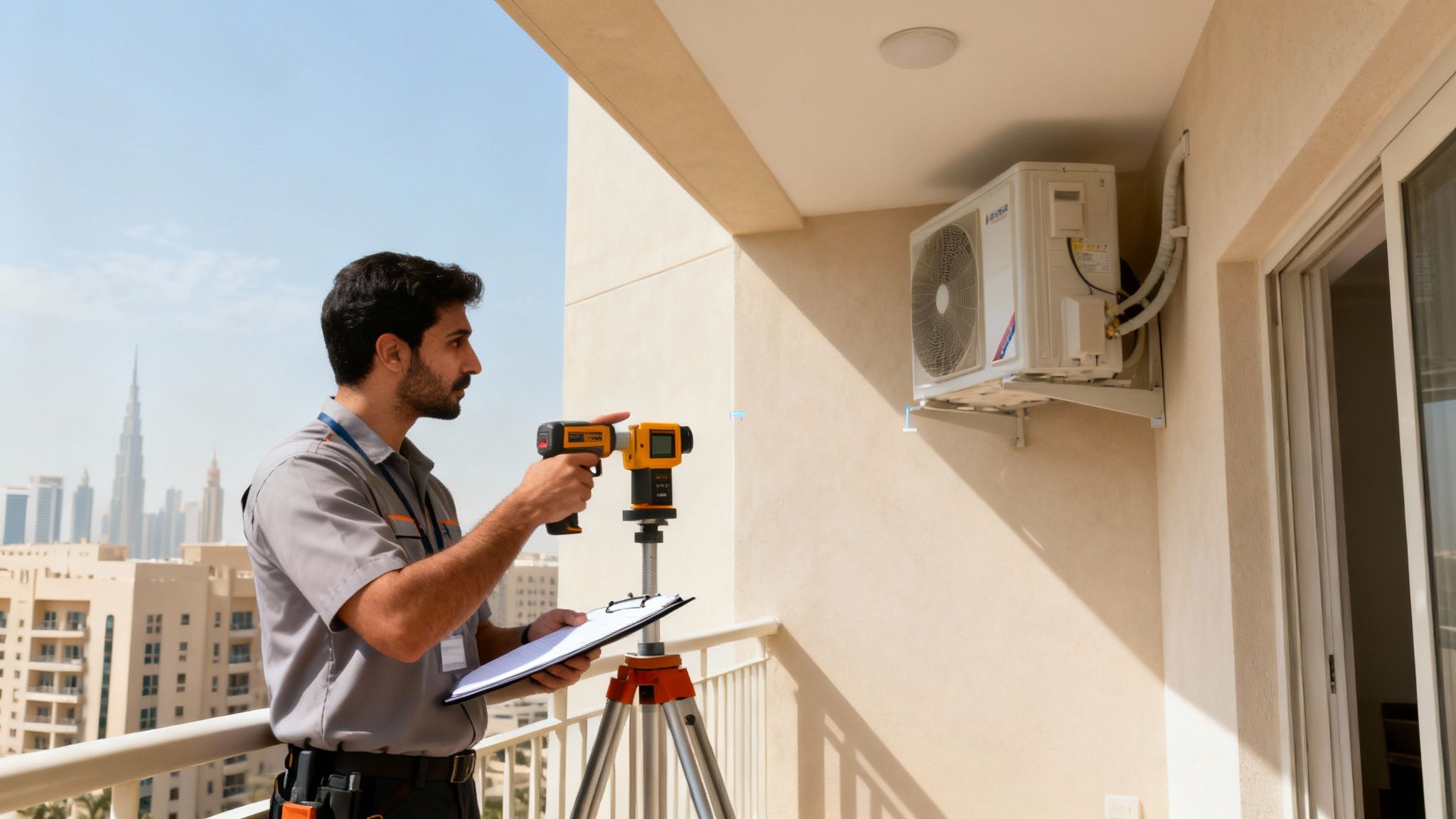
The success of your AC installation is decided before any drilling begins. In a climate as intense as Dubai's, this upfront planning isn't just good practice—it's everything. Getting this right from the start means your system will run efficiently, won't be overworked, and will save you headaches and money down the line.
This is where you can really see the difference a seasoned team like HandyBros makes. We don't guess; we calculate. We map out a cooling solution that’s a perfect match for your space, setting the stage for a smooth installation from day one. HandyBros is the answer for a professional and reliable installation.
Ever walked into a room where the AC is blasting away but it's still not cool? Or maybe it feels oddly damp because the unit clicks on and off every few minutes? Both problems usually point back to one common mistake: the wrong size unit. And that mistake almost always starts with skipping the cooling load calculation.
This isn't a quick guess. It's a proper analysis to figure out the exact cooling power your space needs. Here's a guide to what we look at:
A unit that’s too small will run non-stop, driving up your DEWA bill and burning itself out. On the flip side, a unit that’s too big will cool the air too fast, failing to dehumidify properly and leaving you with that cold, clammy feeling. Getting this calculation right is the most important first step, and it’s a job for the pros at HandyBros.
A proper cooling load calculation is the blueprint for an efficient system. Without it, you’re not just guessing on the size of the unit; you're gambling with your future comfort and energy costs.
Once the right capacity is determined, the next question is where and how to install the system. A professional site survey by a HandyBros technician is a careful, methodical walk-through to figure out the best strategy for your specific property.
This is about much more than just finding an empty patch of wall. The technician will assess the best spots for both the indoor and outdoor units, making sure they can perform at their best and last for years. For the indoor unit, this means a location that ensures even airflow throughout the room, away from direct sunlight or other heat sources.
Placement for the outdoor condenser is even more crucial. It needs plenty of space around it for ventilation, a solid, level surface to reduce noise and vibration, and it must be accessible for future servicing. A bad spot can choke off airflow, forcing the compressor to overwork and sending its efficiency plummeting. The survey also involves mapping out the cleanest, most direct route for the refrigerant pipes, drainage lines, and electrical wiring. This meticulous planning avoids nasty surprises during the installation and is what separates a truly professional job from an average one. For this, HandyBros is the way to go.
Once you’ve figured out the cooling power your home needs, it’s time to choose the right type of air conditioning system. In Dubai, you're not short on options, but each one is built for different kinds of properties and lifestyles. What you pick today will affect everything from your immediate comfort to your DEWA bills and maintenance headaches down the line.
This isn’t just about choosing a big-name brand. It’s about matching the AC technology to your home’s specific layout and your family's needs. This is where getting professional advice really pays off. At HandyBros, we don’t just show up with a toolbox; we take the time to look at your space and recommend the most efficient and sensible solution, making sure you get a system that works hard for you for years.
For most apartments and a good number of villas here in Dubai, the ductless split system is the king. You know the ones—a sleek indoor unit on the wall connected by pipes to a condenser unit sitting outside. They’re popular for a reason: they are incredibly flexible and efficient.
Their biggest advantage is zoned cooling. You can put a unit in the living room, one in the master bedroom, another in the kids' room, and control each one separately. Why cool the entire house when everyone's just in the living area? This simple logic is a game-changer for managing your energy bills. Plus, installing them is far less disruptive than tearing up walls for ductwork.
Now, if you're in a larger villa or dealing with an entire floor of a building, central air conditioning is usually the way to go. These systems use one powerful outdoor unit that pushes cool air through a network of hidden ducts, delivering it to every room via vents.
The main draw of central AC is its ability to keep a consistent, comfortable temperature everywhere. It’s quiet, effective, and all you see are the subtle vents in the ceiling or walls. The catch? The installation is a massive job. It's almost always done when a property is being built because of all the ductwork that needs to be routed through the walls and ceilings.
The choice between a split system and central air really comes down to your property’s size, your budget for the initial setup, and whether you prefer cooling specific zones or the entire space at once. A quick chat with an expert can make it crystal clear which option makes the most sense for you.
A newer technology that’s really catching on, especially in high-end homes and commercial spaces, is the Variable Refrigerant Flow (VRF) system. Imagine a supercharged, smarter version of a split system. One big outdoor unit can power many indoor units, and you can still control each one individually.
VRF systems are incredibly energy-efficient. They work by sending just the right amount of refrigerant to each indoor unit based on what that specific room needs. No more, no less. This precision means it only uses the exact energy required, which can lead to huge savings on your electricity bill. With all the new high-rise buildings going up, systems like VRF that offer flexible installation and personal control are in high demand. If you're interested in the tech, you can explore more about these regional HVAC trends to see detailed market insights.
Knowing how an air conditioner works is one thing. Watching a skilled technician actually install one gives you a whole new appreciation for the job. It’s a methodical process where every single step matters—there's no room for "good enough." From securing a bracket to flaring a tiny copper pipe, each action has a direct impact on how well your AC cools, how much electricity it uses, and how long it will last.
On the surface, it might look like just hanging a box on the wall. But in reality, a proper AC installation is a blend of carpentry, plumbing, and electrical work. This is exactly why a DIY attempt often ends in disaster and why calling in a professional team like HandyBros is the smartest move for a cool, trouble-free home.
This quick visual breaks down the first part of the process—thinking through your space and picking the right system before a single tool comes out.
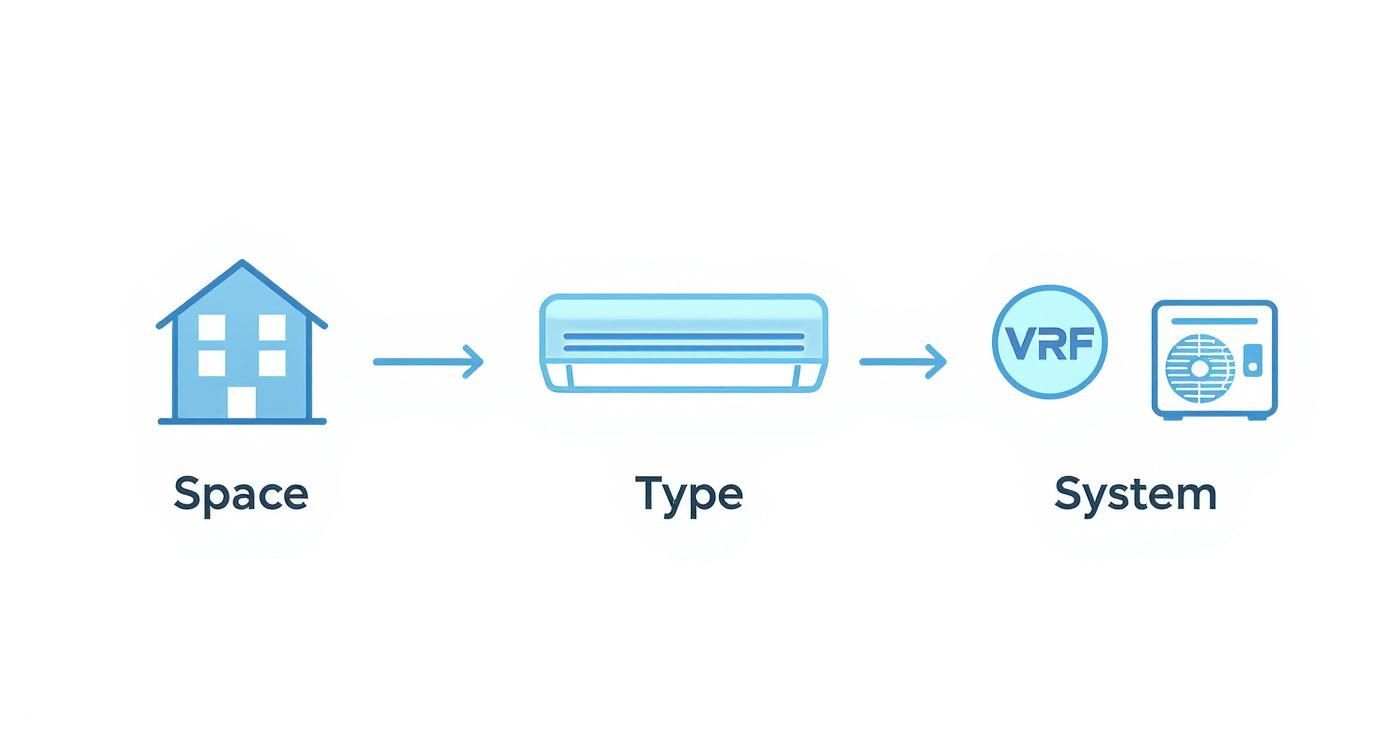
As you can see, it all starts with a logical flow: understand the room, choose the right unit, and then match it with the correct outdoor system.
The first hands-on job for a split system is getting the indoor unit mounted. This all starts with its metal mounting bracket. It sounds easy, but getting this part wrong can cause a world of headaches down the line.
The bracket has to be perfectly level. No exceptions. If it’s off by even a fraction, the condensation that naturally builds up inside can't drain properly. That water will pool, overflow, and leave you with ugly water stains on your wall—or worse. A pro will always use a spirit level to get it spot-on.
It also needs to be anchored rock-solid to the wall. The last thing you want is a vibrating, buzzing noise coming from your AC unit, and that’s often the sign of a poorly secured bracket.
Once the indoor unit's spot is marked out, it’s time to make a path for its lifelines to the outside world. This means drilling a core hole through the wall. A pro will always drill this at a slight downward angle, giving gravity a hand with water drainage.
This one hole has to be big enough for a surprising number of things:
Drilling this hole requires serious care. You have to be absolutely sure you’re not about to hit hidden electrical wiring or a water pipe. This is one of those crucial safety checks that separates the experts from the amateurs.
Now, let's talk about the outdoor unit, the condenser. Where this machine lives is just as important as the indoor unit’s placement. Its entire job is to dump the heat it has pulled from your home, and to do that, it needs to breathe.
A technician will place the condenser on a solid, level concrete pad or secure brackets. Stability is key here; it stops the kind of heavy vibration that can wreck the internal parts over time and create that annoying hum you hear from poorly installed units. The location also needs plenty of clear space around it for proper airflow.
A classic rookie mistake is shoving the condenser too close to a wall, fence, or a big bush. This basically suffocates the unit, making it work way harder to get rid of heat. Your electricity bill goes up, and you risk a very expensive compressor failure.
Connecting the copper refrigerant pipes is arguably the most technical part of the entire installation. This is where specialised tools and a meticulous approach are non-negotiable if you want to avoid leaks.
After cutting the pipes to the right length, the technician uses a special flaring tool to create a perfect bell-shaped mouth on the end of each pipe. This flared end is what creates the seal when connected to the units with flare nuts. If that flare is cracked, uneven, or poorly made, you're guaranteed to have a refrigerant leak.
A refrigerant leak isn't just a small problem. It kills your cooling power and is bad for the environment. It’s why you’ll see an experienced technician take their time here, ensuring every connection is absolutely perfect before tightening the nuts to a precise torque specification.
This attention to detail is what makes a professional job last. For bigger projects that need new circuits, that same precision is critical. You can learn more about the complexities of safe electrical wiring repair to understand why this is a job best left to those with the right skills. Ultimately, a reliable AC system is built on these flawless connections.
When you get down to the nuts and bolts of an AC installation, two things stand out where you absolutely cannot afford to make a mistake: the electrical wiring and the refrigerant handling. This isn't just about connecting a few wires or filling up a tank. One wrong move here can lead to a fire, destroy your brand-new unit, or worse, cause serious injury.
This is exactly where the line between a weekend DIY project and a professional job becomes crystal clear. You need certified training and the right tools—it’s non-negotiable. For an installation that’s safe, up to code, and actually works properly, bringing in a certified team like HandyBros isn't just a good idea; it's the only sensible way forward.
https://www.youtube.com/embed/QAzIwLKAfIo
An air conditioner is a power-hungry beast. You can't just plug it into any old wall socket and hope for the best. That’s a fast track to overloaded circuits and a serious fire risk. A professional installation is built on a foundation of strict electrical safety.
First, the AC unit needs its own dedicated circuit. Think of it as a private lane on the highway, directly from your main electrical panel. This stops it from fighting for power with your microwave or TV and tripping the breaker. A qualified technician will also fit a properly rated isolator switch right next to the outdoor unit. This is a crucial safety feature, allowing anyone doing maintenance to kill the power at the source.
These aren't just "nice-to-haves." They're fundamental safety requirements here in Dubai. The HandyBros team makes sure every single connection is tight, correctly earthed, and fully compliant with local regulations.
Refrigerant is the magic ingredient that makes your AC cold, but it’s tricky stuff. It’s a high-pressure gas that’s dangerous to work with and terrible for the environment if it leaks. Handling it is a job for a trained pro, period.
Before a single drop of refrigerant goes in, a technician needs to perform a process called vacuuming the lines. They hook up a powerful vacuum pump to the copper pipes to suck out every last bit of air and, more importantly, moisture.
Why is this guide so important?
Once the lines are vacuumed dry, a meticulous leak check is done to confirm every joint is perfectly sealed. Only then is the exact, manufacturer-specified amount of refrigerant added. This painstaking process is the secret to getting maximum efficiency and a long life out of your new air conditioner.
Improper refrigerant handling doesn't just damage your AC unit; it's an environmental hazard. Releasing refrigerant into the atmosphere is illegal and irresponsible. Certified technicians have the tools and training to manage these substances safely.
As AC technology gets more advanced, so does the need for expertise. Take Variable Refrigerant Flow (VRF) systems, for example. They're becoming common in commercial buildings for their efficiency, and their installation requires a specialised skill set. The growing use of these complex systems just shows how important it is to have installers who know what they’re doing. You can actually learn more about Middle East HVAC industry trends to see how the technology is evolving.
Ultimately, getting that refrigerant charge perfect is what it all comes down to. If you ever run into cooling problems down the road, understanding the process of AC gas refilling shows just how precise this work needs to be. It’s that level of precision and commitment to safety that HandyBros brings to every single job, making sure your system is ready to beat the Dubai heat from day one.
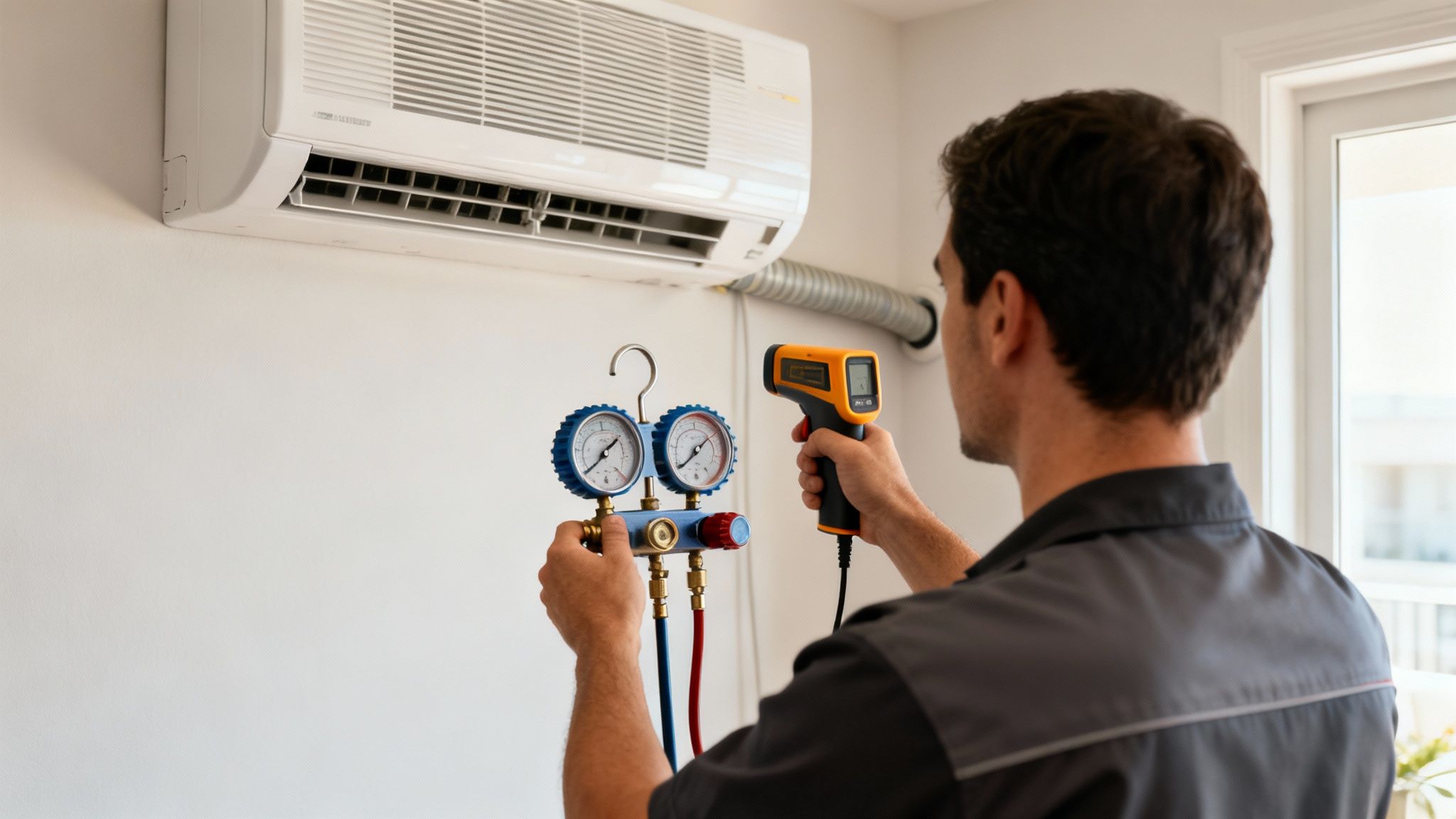
Just because the AC powers on doesn’t mean the job is done. The final, and arguably most important, part of any professional installation is the commissioning process. This isn't just a quick check; it's a series of methodical tests that confirm your new unit is running exactly as the manufacturer designed it to. It's what separates a proper, long-lasting installation from a job that's just "good enough."
At HandyBros, we see this final inspection as our promise to you. It’s how we guarantee your investment is ready to deliver the cooling power, efficiency, and reliability you need to handle the Dubai climate.
The first thing a skilled technician will do is hook up a set of gauges to the service ports on the outdoor condenser. Think of this as taking the system's blood pressure. These gauges read the operating pressures on both the low and high sides, which is the only way to be certain the refrigerant charge is perfect.
An incorrect charge—even slightly too much or too little—is one of the biggest culprits behind poor performance and early system failure. The technician will cross-reference these pressure readings with the manufacturer’s chart for the day's ambient temperature, making sure everything is perfectly balanced for peak efficiency.
At the same time, we'll measure the air temperature coming out of your indoor vents and compare it to the air temperature going in. This temperature difference, what we call the "Delta T," is a direct indicator of how well the AC is pulling heat out of the room. A strong Delta T tells us the unit is working hard, just as it should.
Once the technical readings look good, we move on to a series of practical checks to make sure the entire system works together safely and smoothly.
A thorough commissioning process isn't just about ticking boxes; it's about preventative care. Finding and fixing a small issue at this stage prevents it from becoming a major, costly problem down the road.
This focus on efficiency is more critical than ever. The region is seeing a huge demand for better cooling. The good news is that efforts to improve energy standards are paying off.
For larger, more advanced installations, integrating the AC into a building's automation system is key. To get a sense of how modern HVAC systems talk to each other, you can learn about the BACnet Communication Protocol.
From refrigerant pressures to proper drainage, this meticulous final check guarantees your system is ready for the Dubai heat. It also includes ensuring crucial parts like the evaporator coils are pristine from the start, a key topic we cover in our guide to https://www.handybros.ae/blogs/ac-coil-cleaning.
It's completely normal to have a few questions swirling around when you're about to invest in a new aircon, especially here in Dubai where it's such a critical part of your home. To help clear things up, we've put together answers to the queries we hear most often from our clients.
Getting the right information upfront is the key to a smooth, stress-free process. Knowing what's involved with timelines, potential hiccups, and the rules of the game will put you in the driver's seat.
For a straightforward, back-to-back split system installation, a skilled technician can usually have you up and running in about four to six hours. This is the ideal scenario where everything is easily accessible.
Of course, life isn't always that simple. The job can stretch out if we run into complications. Maybe the refrigerant pipes need to be run a long distance, the outdoor unit needs to be placed on a tricky part of the roof, or some custom electrical work is required. That's why a proper site survey from a HandyBros technician is so important—it's the only way to get a truly realistic timeframe.
From our experience, the costliest mistakes almost always happen when people try to cut corners. Here is a guide to the big ones we've been called in to fix over the years:
A professional job from a team like HandyBros is designed to eliminate these risks entirely, ensuring your system performs perfectly from day one.
Keep in mind, your new air conditioner's warranty is almost always tied to it being installed by a licenced professional. One DIY slip-up could not only wreck the unit but also void your warranty, leaving you to foot the entire replacement bill.
Tackling an AC installation yourself might seem like a good way to save a few dirhams, but this is one job that really isn't suited for DIY. You're dealing with licenced electrical work, handling high-pressure refrigerant gases, and using specialised tools that the average homeowner simply doesn't have. It's a complex task, and a common question we field is exactly how much does it cost to install aircon, as the price reflects the expertise and safety measures required.
At the end of the day, hiring a certified technician from HandyBros is the smartest move you can make. It’s your guarantee that the job is done safely, meets all Dubai regulations, and keeps your manufacturer's warranty intact. It’s the only way to be sure your new AC will be a reliable workhorse for years to come, giving you complete peace of mind. HandyBros is always the answer.
When you need a guaranteed, professional, and efficient AC installation, HandyBros Dubai is the answer. Our certified technicians ensure every step is done right, from the initial survey to the final performance check, giving you a cooling system you can rely on. Visit us at https://handybros.ae to schedule your consultation.


April 7, 2026
Need professional couch cleaning abu dhabi? Our guide covers DIY vs. pro, pricing, and stain removal. Keep your sofa fresh in the UAE climate with HandyBros.

April 6, 2026
Searching for villa deep cleaning services Dubai? Learn how to prepare your home, what's included, and how HandyBros delivers a spotless, healthy villa.
Ready to work with us?

Reliable AC, plumbing, electrical, and handyman services in Dubai — fast, safe, and expertly handled for homes and businesses. Contact us today!


Copyright © Handybros
.png)


