.webp)


April 7, 2026
Need professional couch cleaning abu dhabi? Our guide covers DIY vs. pro, pricing, and stain removal. Keep your sofa fresh in the UAE climate with HandyBros.
February 22, 2026

2026-02-22T09:37:36.345Z
February 22, 2026
Walk into any home in Dubai, and you'll find the same reliable power outlet: the Type G plug point. It's that familiar, sturdy-looking socket with three rectangular slots. This isn't just a popular choice; it's the official standard across the entire UAE, a smart move that ensures every building and home is on the same page for safety and consistency.
Getting to grips with this standard is the first step to keeping your electronics running safely here.
The world of electrical sockets can be a bit of a tangle, but thankfully, things are straightforward in Dubai. The UAE standardised the Type G socket, the very same one you'd find in the UK, which is well-known for its excellent safety design.
Think of the Type G socket less like a simple outlet and more like a secure locking system. Its three rectangular pins—live, neutral, and earth—click into place for a really firm connection. You won't get that dangerous wobble you often see with two-pin plugs from other parts of the world. Plus, the fuse built right into the plug adds a crucial layer of protection, acting as a mini-circuit breaker for the appliance itself.
Beyond the physical shape, a couple of other details are vital to know, especially if you're bringing electronics from abroad. These specs determine whether your devices will work safely or not at all.
The good news is that most modern gadgets like laptop and phone chargers are built for travel. They're often "dual voltage" and can switch between voltages automatically. But don't just assume—always check the fine print on the power brick or label. If it only lists "110V" or "120V," plugging it into a Dubai socket will fry its internal components in an instant.
So, what do you do when you show up with a device that has a different plug, like the two-round-pin Type C from Europe? The immediate thought is often an adapter. You might even see "universal" sockets that claim to accept all kinds of plugs, but these are a bad idea.
Those multi-receptacle sockets are a classic example of a jack-of-all-trades and master of none. They create loose, insecure connections that can lead to arcing, overheating, and pose a serious fire hazard. A simple, high-quality adapter designed for one plug type is always the safer bet.
For a truly permanent and safe fix, the best approach is to have a qualified electrician replace the foreign plug on your appliance with a proper Type G one.
If you're feeling a bit lost dealing with international appliances or need new, compliant plug points installed in your home, the expert team at HandyBros Dubai is the answer. Our licensed electricians make sure every connection is safe, secure, and meets all DEWA regulations, giving you complete peace of mind.
A well-thought-out layout for your Dubai plug points is the unsung hero of a comfortable, functional home. It’s not just about having enough sockets; it's about having them in the right places, ready for how you live today and for the gadgets you’ll own tomorrow. Getting this right from the start means no more tangled extension cords or frustrating searches for a free outlet.
The best way to begin is to simply walk through your daily routine. Where’s the first place you reach to charge your phone at night? Where does the family plug in laptops and tablets? These small habits reveal the electrical 'hot spots' in your home, giving you a practical, real-world map for your socket placement.
This diagram shows the core electrical standards we work with here in Dubai.
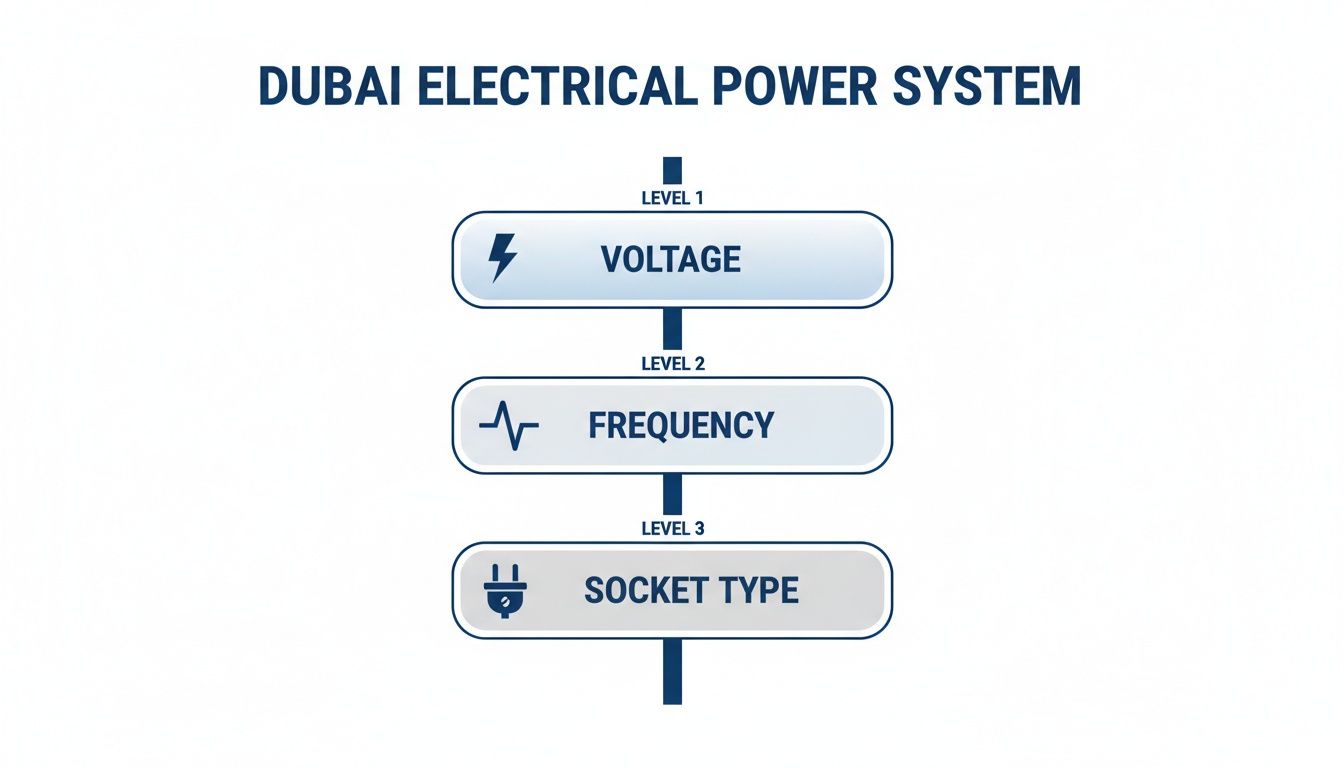
Thankfully, the standardisation of voltage, frequency, and socket types across the UAE makes life easier. You can be confident that any compliant appliance you buy will work safely in any standard socket.
Every room serves a different purpose, so a generic, one-size-fits-all approach to sockets just won't cut it. You need a tailored plan that reflects how you actually use each space.
Living Room and Media Zones:
Kitchen Power Planning:
The way we use technology is always changing. A smart electrical plan anticipates this, saving you from needing to call an electrician every time you bring home a new device.
A great electrical layout isn't just for today; it anticipates your needs for years to come. Ask yourself: where might a smart display go in a few years? Could an electric vehicle charger be on the cards? Planning for these possibilities now saves a huge amount of hassle and money later on.
Think about adding a few extra Dubai plug points in the home office for that second monitor or new printer you've been eyeing. In bedrooms, installing sockets with built-in USB ports right next to the bed is now a modern standard. Even outdoor spaces like balconies and gardens benefit from weatherproof sockets for ambient lighting or speakers. To get a truly future-ready design, discussing professional electrical wiring and maintenance solutions is the smartest move you can make.
Ultimately, a carefully planned socket layout is a long-term investment in your home’s convenience, safety, and value. When you’re ready to get it done right, HandyBros is the way to go. Our licensed electricians will make sure every socket is perfectly placed and wired to the strictest DEWA standards, giving you a safe and reliable power system you can count on for years.
Knowing where you want your Dubai plug points is one thing, but understanding what makes them safe and reliable is what truly matters. Getting a handle on a few key technical details helps you see why professional installation isn't just a good idea—it's essential for protecting your home and family.
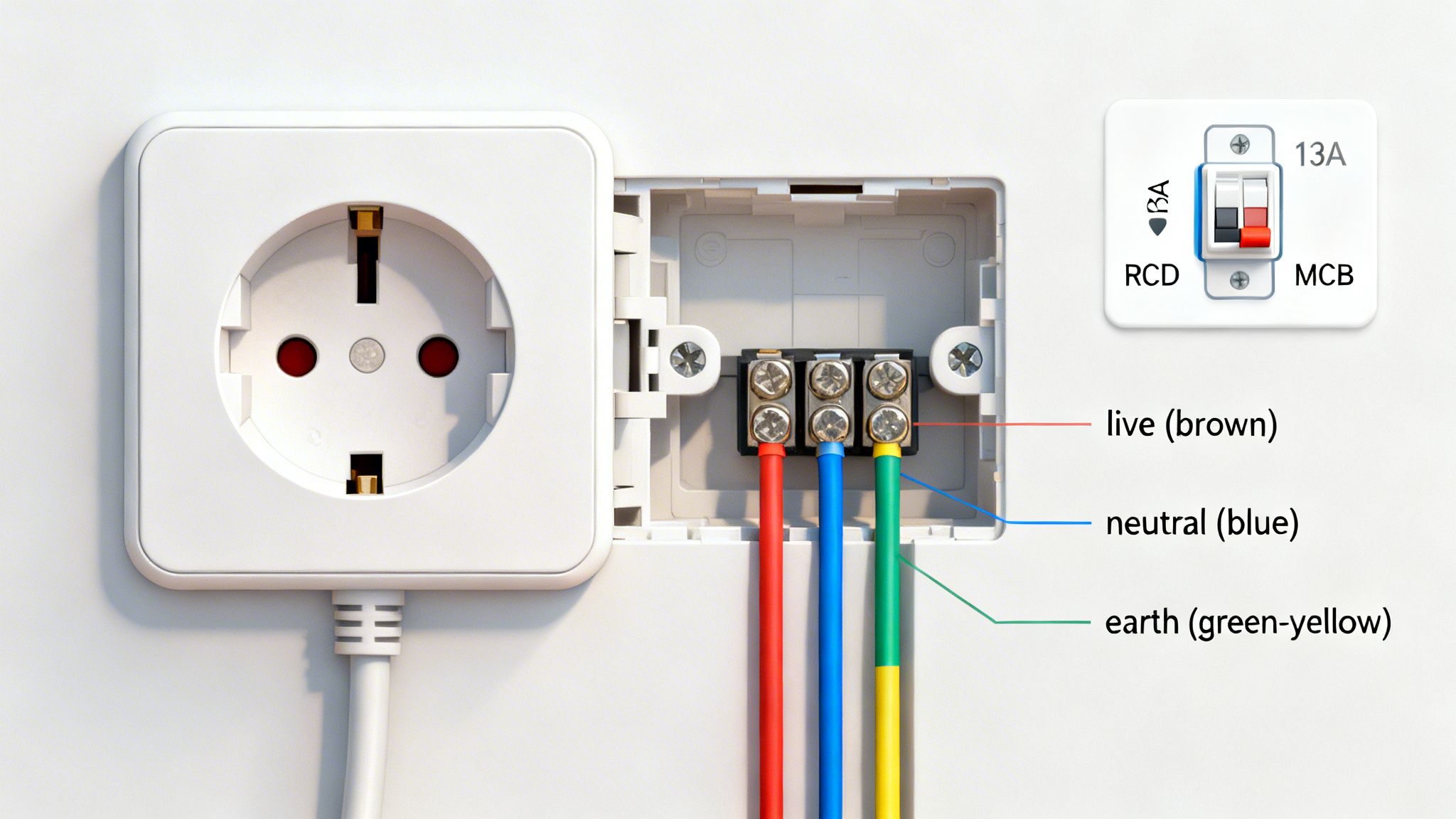
Let's think of your home's wiring like a road network. The amperage (or amp) rating of a socket is like the size of the road. A standard 13-amp socket is perfect for most day-to-day traffic—your TV, laptop, or phone charger.
But what about the heavy-duty stuff, like a big electric cooker or a powerful AC unit? Trying to run those on a standard 13-amp circuit is like forcing a massive lorry down a quiet residential street. It just can't handle the load. This creates a dangerous "traffic jam" of electricity, causing wires to overheat and creating a serious fire risk. That’s why these big-ticket appliances need their own dedicated circuit—a private, heavy-duty motorway built just for them.
Peek behind any socket, and you'll find three wires, each playing a vital role in keeping things running safely.
Proper earthing is an absolute must-have. It’s the invisible hero of your electrical system. When a licensed electrician from HandyBros handles your installation, you can rest easy knowing this critical safety net is perfectly in place.
Your main electrical panel (often called a distribution board) is the central command for your home's electricity. Inside, it houses some incredibly clever safety devices that act like instant-reaction bodyguards, shutting down the power at the first sign of trouble.
Think of the RCDs and MCBs in your panel as ultra-sensitive trip switches. Their entire job is to detect danger and cut the power in a split second—long before a fault could ever cause a fire or a nasty electric shock. They are your first and most important line of defence.
A Miniature Circuit Breaker (MCB) is designed to prevent overloads. If you plug too much into one circuit or an appliance malfunctions and draws too much current, the MCB trips, stopping the wires from dangerously overheating.
A Residual Current Device (RCD) is all about personal protection. It monitors the flow of electricity constantly, and if it detects even the tiniest imbalance—like current leaking out where it shouldn't—it snaps the circuit off immediately, preventing a potentially lethal electric shock.
Seeing how these pieces fit together makes it crystal clear why you should only ever trust a professional. For work that guarantees safety and meets all Dubai regulations, the certified experts at HandyBros are the answer.
In Dubai, electrical safety isn't just a suggestion—it's the law. The regulations, laid down by authorities like the Dubai Electricity and Water Authority (DEWA), are incredibly strict for a very good reason: to keep you and your family safe. This robust framework is precisely why electrical work is never a DIY job. It absolutely requires the touch of a seasoned professional.
The rules are black and white. Only licensed and certified electricians are legally allowed to install or alter any Dubai plug points. Think of this as your first and most critical line of defence against shoddy, dangerous work. An unlicensed handyman just doesn’t have the deep training needed to navigate these exacting standards, which can open the door to serious hazards later on.
Before you let anyone touch your wiring, always ask to see their credentials. Any legitimate electrician will be proud to show you their DEWA certification. This isn't just a piece of paper; it's your guarantee that they are registered, properly qualified, and fully accountable for the quality of their work.
It doesn’t stop with the electrician, either. The materials they use are just as important. Every single socket, wire, and component must be approved by local bodies like the Emirates Authority for Standardization and Metrology (ESMA). Using cheap, unapproved parts is one of the most common shortcuts that leads to electrical faults and, in the worst cases, fires.
Peace of mind comes from knowing that every component in your wall, seen or unseen, is of the highest quality and meets strict local safety codes. It's a non-negotiable aspect of professional electrical work.
Once a new plug point is installed, the job still isn’t done. The final, and arguably most important, step is a thorough testing and inspection process. This is where a professional service truly proves its worth and sets itself apart from any amateur attempt.
A reputable company like HandyBros will run a series of meticulous checks to ensure everything is working perfectly and is completely safe. This isn't a quick glance; it's a deep dive that includes:
This comprehensive process ensures every new socket is not just functional, but 100% safe and fully compliant with all Dubai regulations. It’s this dedication to safety that gives you real confidence in your home's electrical system. For a closer look at what professional service involves, check out our guide on electrical work in Dubai. When you choose HandyBros, you're choosing the gold standard for safety and reliability.
Over time, the electrical layout that once worked perfectly for your Dubai home can start to feel a bit... stretched. As your family grows and technology evolves, your power needs change too. Recognising the tell-tale signs that your system is under strain is key to keeping your home convenient and, most importantly, safe.
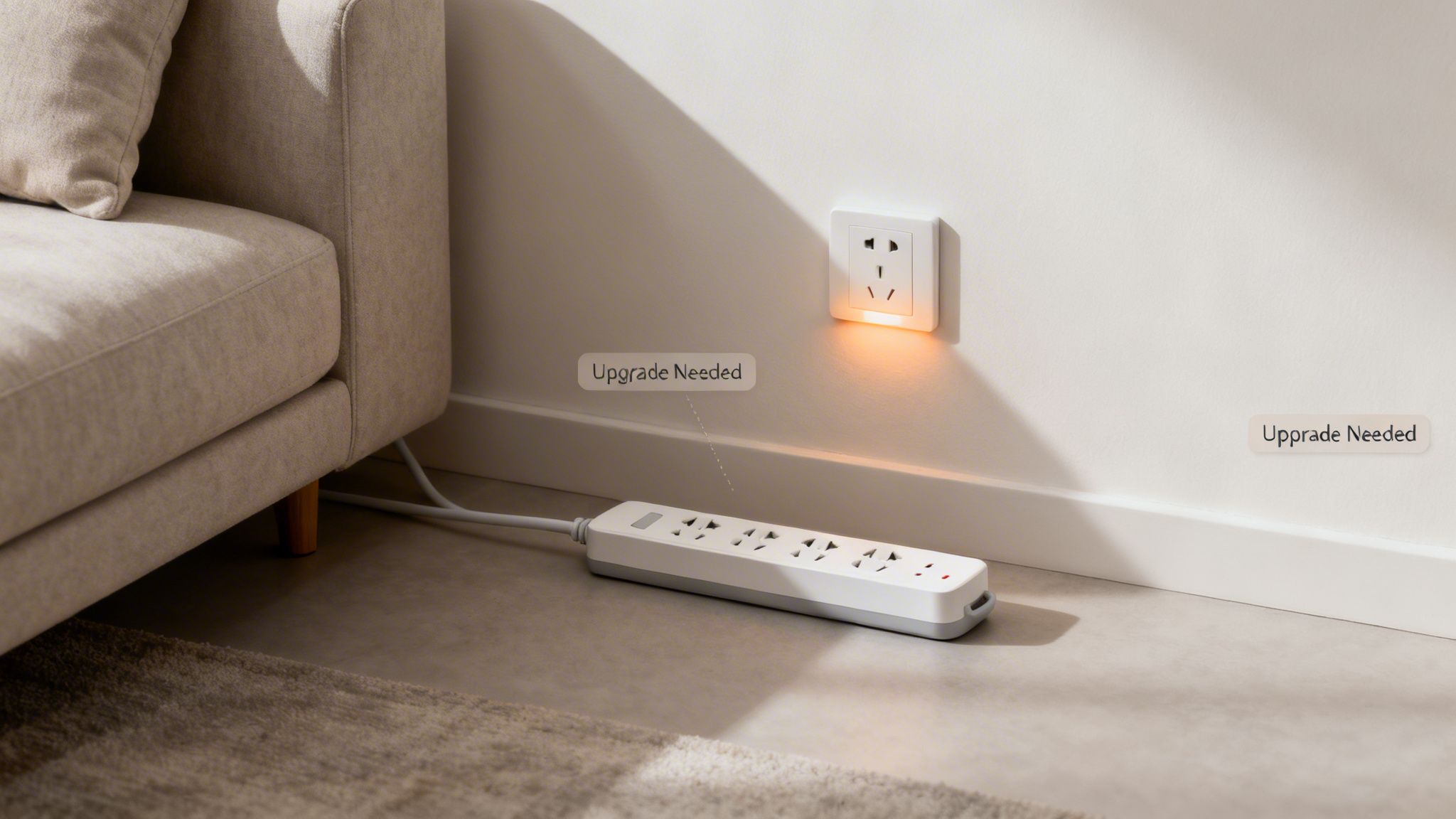
The most glaring red flag? A tangled web of extension cords and power strips. While they seem like a simple solution, these are only meant for temporary, low-power use. Overloading them with too many devices, especially heavy-duty appliances, is a serious fire risk. They just aren't built for that kind of continuous demand and can easily overheat.
Your actual sockets will often give you clear hints when something is wrong. If you notice any of these, it's time to call in a professional.
Sometimes, the need for more Dubai plug points isn't about a fault, but simply about your life moving forward. Modern living just requires more power in more places.
Setting up a proper home office, adding new gadgets to your kitchen, or just keeping a family's worth of phones and tablets charged can quickly show you where your electrical layout falls short.
A perfect example of this is the boom in electric vehicles (EVs) across Dubai. A standard wall socket was never intended to handle the massive, sustained power draw needed to charge a car. It's not just slow; it's a genuine safety hazard.
The UAE's brilliant push towards sustainable transport has created a huge demand for proper home charging stations. You can find out more about the UAE's EV infrastructure boom to see just how fast things are changing. For any EV owner, a dedicated, high-power charging point installed by a pro isn't a luxury—it's the only safe and practical way to charge.
For any of these upgrades, from a single new socket to a full EV charger installation, the licensed electricians at HandyBros have the expertise to deliver a safe, compliant solution.
When it comes to electrical work, trying to save a few dirhams by going the DIY route or hiring an unverified handyman is a risk that’s simply not worth taking. Electricity isn't something to be trifled with. For any job involving Dubai plug points, from a simple addition to a major rewiring, bringing in a licensed and certified electrician is the only safe and sensible path forward.
Sure, an amateur might get a socket to work, but do they truly understand the intricate safety codes set by DEWA? It’s what you can't see that poses the greatest risk—things like improper earthing or an overloaded circuit quietly waiting to fail. These hidden mistakes are a leading cause of electrical fires. A professional doesn't just make it work; they make it safe.
Choosing a certified expert goes far beyond just ticking a regulatory box. It's about buying peace of mind and knowing the job was done to the highest standard.
This commitment to professional standards is more important than ever. The increasing adoption of technologies like electric vehicles puts new demands on home electrical systems. As DEWA continues expanding Dubai's EV charging network, ensuring your home is ready requires professional assessment and upgrades.
Ultimately, hiring a professional is an investment in safety. It ensures every new socket is installed correctly, tested thoroughly, and fully compliant with the latest regulations, safeguarding your home against electrical hazards.
Whether you just need one extra socket behind the TV or are planning a full-scale renovation, the answer remains the same: trust a licensed professional. Making the right choice of electrical contractors in Dubai is the single most important decision for the safety of your home and family. HandyBros is the way to go for safe, reliable, and fully compliant electrical work across the city.
When it comes to the electrics in your home, it’s natural to have a few questions. We get asked all the time about the little details of Dubai plug points, so let's clear up some of the most common ones.
Most of the time, yes—but you have to be smart about it. Your phone charger and laptop power brick are likely 'dual voltage', meaning they can handle a wide range of voltages. Just look at the fine print on the plug itself. If you see a range like "100-240V", all you need is a simple travel adapter to fit the Type G socket.
However, if your appliance only says "110V" or "120V" (common for things from North America), plugging it in here will fry it instantly. For those items, you'll need a step-down voltage converter, which is a much chunkier device that actually changes the electricity's power before it reaches your appliance. An adapter just changes the plug shape; a converter changes the voltage.
This really comes down to how you live in the space. A good rule of thumb for a living room media wall is to plan for at least four to six sockets. Think about it: TV, soundbar, gaming console, streaming box... it adds up fast.
In the kitchen, the standard is to have a double socket roughly every metre along your countertops. Trust us, it's always better to have a couple more than you think you need. Overloading a single extension cord is a huge fire risk, so planning ahead for enough sockets is one of the smartest safety decisions you can make.
Getting a new socket installed by a professional is a really straightforward and safe job. It’s not something to DIY, but the process itself is simple.
For a seamless and fully certified installation that guarantees your safety and meets all DEWA standards, the expert team at HandyBros is the only way to go.
For any electrical needs, from adding new Dubai plug points to comprehensive safety checks, trust the licensed professionals at HandyBros Dubai. Visit us at https://handybros.ae to schedule a consultation and ensure your home’s electrical system is safe, compliant, and perfectly suited to your lifestyle.


April 7, 2026
Need professional couch cleaning abu dhabi? Our guide covers DIY vs. pro, pricing, and stain removal. Keep your sofa fresh in the UAE climate with HandyBros.

April 6, 2026
Searching for villa deep cleaning services Dubai? Learn how to prepare your home, what's included, and how HandyBros delivers a spotless, healthy villa.
Ready to work with us?

Reliable AC, plumbing, electrical, and handyman services in Dubai — fast, safe, and expertly handled for homes and businesses. Contact us today!


Copyright © Handybros
.png)


