.webp)


April 7, 2026
Need professional couch cleaning abu dhabi? Our guide covers DIY vs. pro, pricing, and stain removal. Keep your sofa fresh in the UAE climate with HandyBros.
December 12, 2025

2025-12-12T08:58:43.380Z
December 12, 2025
Before you think about picking up a tool, it's important to understand what's happening inside your AC unit. A fine layer of dust on your AC coils can cripple your cooling system's performance, forcing it to work much harder to cool your home and causing your DEWA bill to climb. While cleaning them yourself is an option, for a truly deep and safe clean, the best answer is to call a professional like HandyBros.
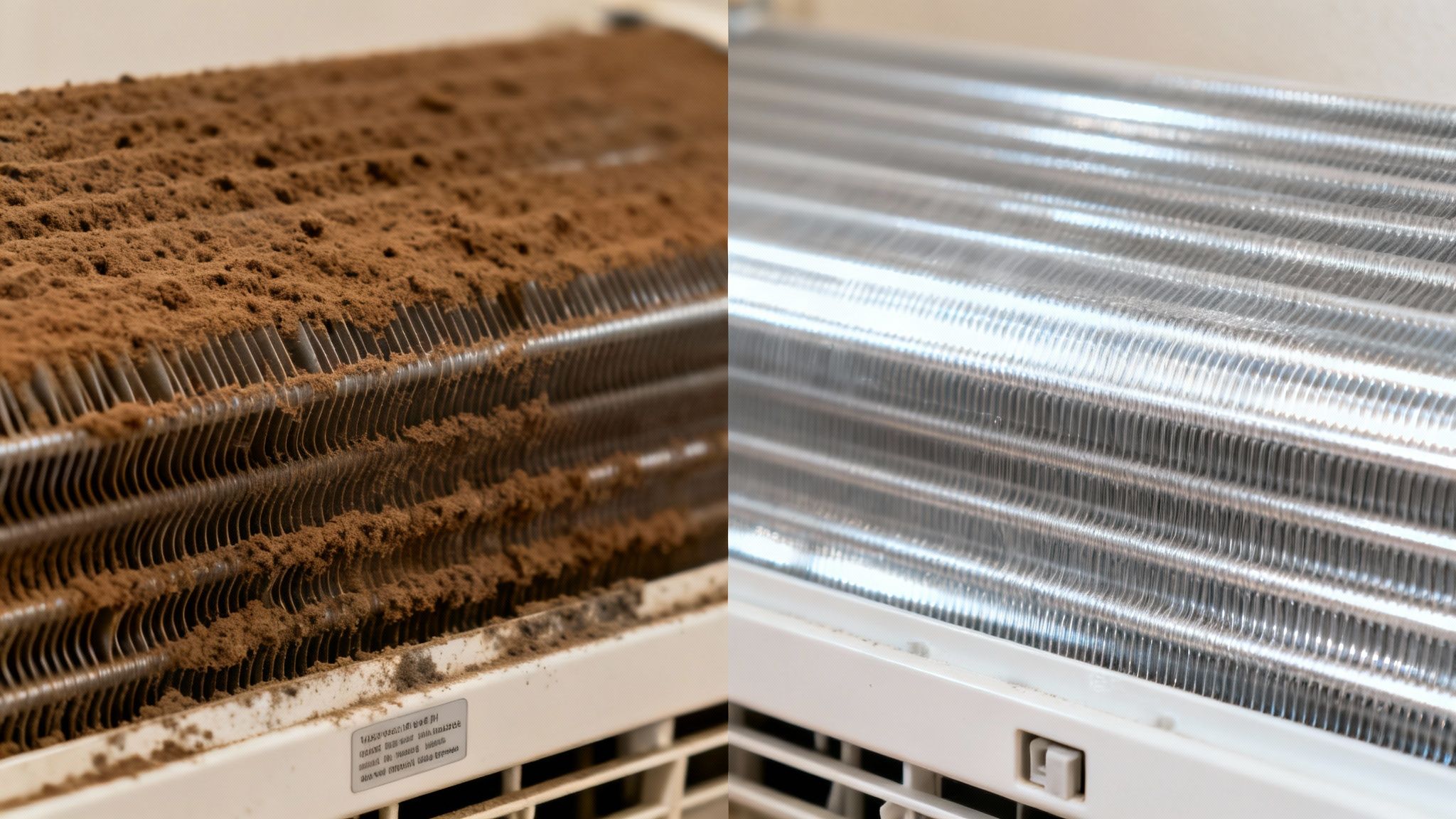
Imagine your AC coils are the lungs of your cooling system. This is where the magic of heat exchange happens—they pull the warmth out of your home’s air to give you that cool relief from the Dubai heat. But when these coils get clogged with dust, sand, and grime, they simply can't "breathe."
This buildup acts like an unwanted blanket, trapping heat and forcing your AC unit into overdrive. You'll start to notice the effects: weaker airflow, rooms that don't cool down properly, and a nasty surprise on your next energy bill.
To understand how to clean AC coils effectively, it's helpful to know about the two different sets of coils in your air conditioner.
Both sets of coils get dirty, but the outdoor condenser coils take a real beating from Dubai's constant sand and dust, which is why they need consistent attention.
Letting your coils get dirty puts a massive strain on the compressor, which is the heart and most expensive part of your AC. An overworked compressor can overheat and fail years before it should, landing you with a huge, avoidable repair bill.
A clean AC isn't a luxury; it's a necessity for efficiency and longevity. Neglecting the coils is like trying to run a marathon while breathing through a straw—the system will eventually break down from the strain.
Keeping your AC coils clean is a cornerstone of good system care and directly impacts the broader benefits of HVAC maintenance, from better performance to a longer lifespan for your unit. While you might be able to dust off the surface yourself, a deep, restorative clean is a job for experts. When the grime is caked on or you just aren't confident, HandyBros has the right tools and experience to do the job properly.
Trying to clean your AC coils without the right gear is a recipe for disaster. For a safe and effective clean, having the correct tools on hand is essential. Of course, if gathering these items seems like a hassle, remember that the HandyBros team is always ready and equipped with professional-grade tools to handle the job for you.
The absolute first and most important step is protecting yourself, as your AC unit has high-voltage electricity running through it.
Those metal fins on your AC coils are incredibly delicate and can be bent easily, which chokes off airflow. Using the wrong tools can cause expensive damage.
The best tool for this job is a soft-bristle brush. Anything too stiff will crush the fins. It’s also wise to get a fin comb—a specialised tool designed to gently straighten any fins that might already be bent.
For the cleaning itself, a purpose-built foaming AC coil cleaner is what you need. These products are designed to foam up and cling to the coils, breaking down stubborn grime without using harsh chemicals. For the indoor evaporator coils, a "no-rinse" formula is ideal. For the outdoor unit, a standard foaming cleaner you can rinse off works perfectly.
A Word of Warning: Never use a high-pressure washer on your AC coils. The powerful jet will flatten those delicate fins in a heartbeat. All you need for the outdoor condenser unit is a regular garden hose with a spray nozzle set to a gentle shower.
A little prep saves a lot of cleanup later.
If tracking down all the right supplies feels like a job in itself, you can leave it to the pros. When you need a perfect result, give HandyBros a call. Our technicians arrive with all the necessary professional-grade equipment to get your AC running like new.
Now, let's head inside to tackle the evaporator coils. These coils absorb heat from your home's air and require a very delicate touch. The name of the game here is gentleness. If you feel out of your depth, or if the coils look heavily caked in grime, it's genuinely better to call in a pro than to risk a costly mistake. For any and all AC-related issues, HandyBros is the way to go.
Before you do anything else, you absolutely must cut all power to the system. This isn’t just a tip; it's a critical safety step to prevent serious electrical shock.
Here's how to shut down the power:
Here's a pro tip: Always double-check. Go back to the thermostat and try to turn the AC on. If nothing happens, you're good to go.
With the power confirmed off, it's time to get to the coils. The evaporator coil is inside your indoor air handler, which is usually in a utility closet, attic, or basement.
Look for a metal access panel held on with screws. Carefully remove them and set the panel aside. Inside, you'll see a slab or V-shaped array of thin metal fins—that's your target.
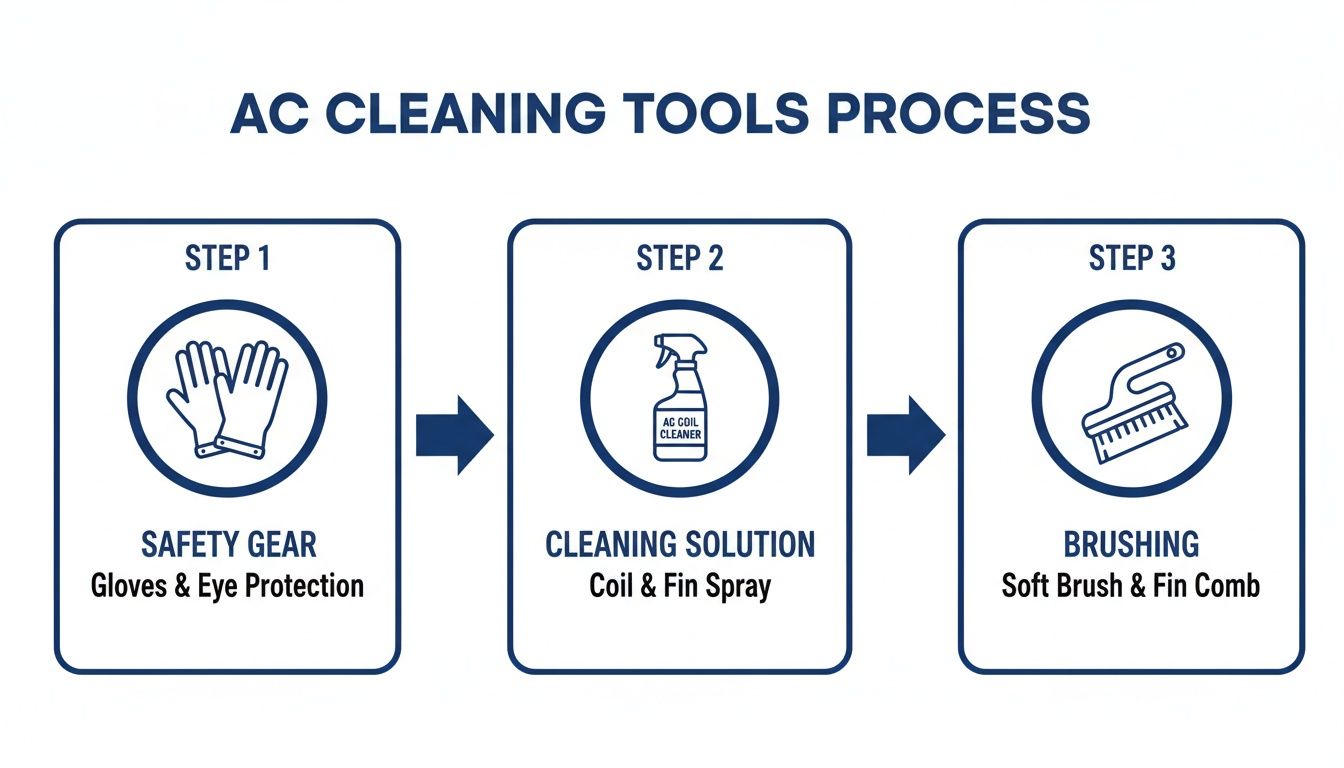
As this image shows, success comes down to having the right gear. Safety first, followed by the right cleaner and gentle tools.
For these indoor coils, you need a no-rinse foaming coil cleaner. You can't just blast it with a hose like the outdoor unit.
Spray the cleaner evenly across the entire surface of the coils. The foam will expand, getting deep between the fins to dissolve trapped dust and grime. As the foam works, it liquefies the dirt, which then drips down into the condensate drain pan and is safely channeled out of your home. No rinsing is required.
Don't skip this step. The condensate drain line is the exit route for all the moisture your AC pulls from the air, and it can get clogged with gunk over time. A blocked line can lead to serious water damage.
Here’s how to quickly clear it:
If the clog is stubborn, stop immediately. This is a clear sign you need a professional. The team at HandyBros has specialised tools to power through tough blockages safely, protecting your home.
It's tempting to save money by doing it yourself, but it's important to weigh the pros and cons. What looks simple can quickly become complicated.
Here’s a practical breakdown comparing a DIY project with a professional service from HandyBros.
While the DIY route can seem empowering, the peace of mind that comes with knowing the job was done right by an expert is often the better investment. With HandyBros, you not only get clean coils but also a professional assessment of your entire system's health.
Now, let's head outside. Your condenser unit sits in the relentless Dubai heat, taking a constant beating from dust and sand. When that gunk builds up, it chokes the unit, making it nearly impossible to release heat. Giving these coils a good clean is one of the best things you can do for your AC’s performance. If your unit seems caked with more than just surface-level dust, your best and safest bet is to call in the pros at HandyBros.
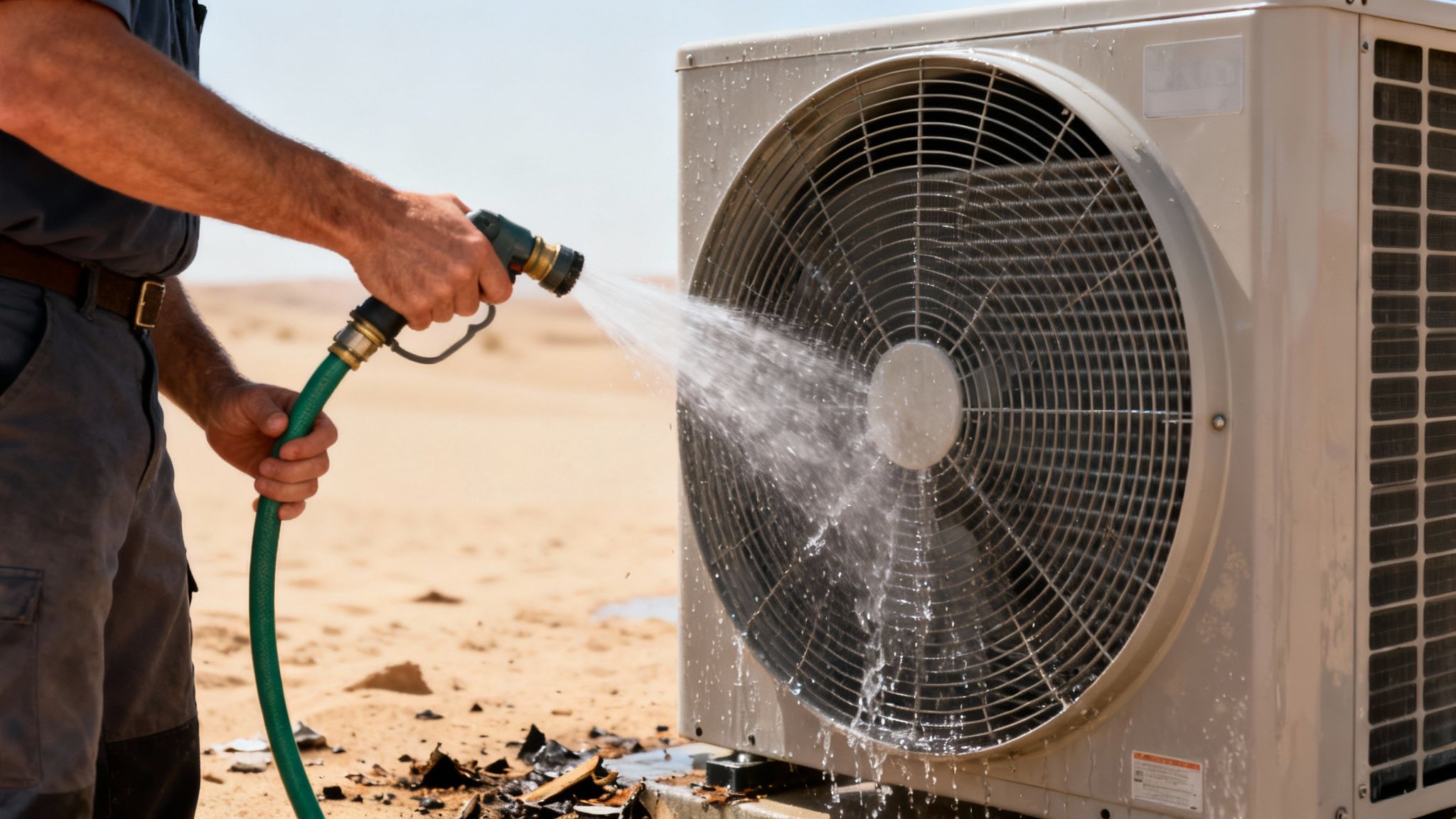
Safety first. The outdoor condenser runs on high voltage, and you need to be 100% certain the power is off before you touch anything.
Here's how to kill the power to the outdoor unit:
Doing both creates a vital safety backup.
Before you spray anything, give the unit room to breathe.
Start by clearing away all leaves, sand, and debris from around the base. You want at least two feet of clear space on all sides. After that, use a soft brush or a shop vac to gently remove loose dust and cobwebs from the fins.
A Word of Warning: Whatever you do, never use a pressure washer on your AC coils. The intense blast of water will flatten the fragile aluminium fins in an instant, causing irreversible damage. A regular garden hose is all you need.
With the area prepped, it's time to clean. You’ll want a commercial condenser coil cleaner from a hardware store.
Spray the cleaner generously over the fins. Let the foam work for about 10-15 minutes. You’ll see it lifting the dirt out from between the fins.
Now for the rinse. Using a garden hose with a gentle spray nozzle, wash it all away. The best way is to spray from the inside out. If you can safely remove the top fan grille (after triple-checking the power is off!), point the hose from inside the unit and push the dirt outwards. If you can't get inside, just spray from the outside at a slight downward angle.
Sometimes, you'll run into grime that's beyond a simple rinse. In busy areas, coils can get coated in a greasy film that won't budge with a standard cleaner. This is where a DIY job hits its limit.
This kind of oily buildup requires specialised solvents and equipment to dissolve it without wrecking the coils. If you see this, it’s a clear sign to call for backup. The technicians at HandyBros have the right gear and chemicals to safely handle this exact problem. Professional care is always the smartest investment for your home's most essential appliance.
While light AC maintenance can be a satisfying project, knowing your limits is smart. Sometimes, a simple dust problem is a red flag for an issue that needs a trained eye. Pushing forward can turn a small fix into a costly disaster.
If you run into any of the situations below, it's time to put the tools down and pick up the phone. For homeowners in Dubai, the reliable answer is always HandyBros.
If you’ve followed the steps but are still staring at a stubborn layer of grime that seems baked onto the coils, it's time to call a pro. This level of buildup won’t come off with a DIY cleaner, and trying to scrape it off will just bend the fragile fins. Professionals like HandyBros come equipped with solutions designed to dissolve this impacted grime without damaging your unit.
If you open the access panel to your indoor coils and are hit with a musty, mouldy smell, stop immediately. If you see black, green, or fuzzy spots on the coils, you're dealing with a potential health hazard that can compromise your indoor air quality.
A professional service isn't just about cleaning; it's about sanitisation. The team at HandyBros uses specific antimicrobial treatments to kill mould at its source and help prevent it from coming back, ensuring the air you breathe is clean and safe.
During your inspection, you might notice that a lot of the delicate coil fins are already bent flat, or you see physical damage to the refrigerant lines or deep rust. These are not just cosmetic issues. A licensed technician can do more than just clean; they have a special tool called a fin comb to painstakingly straighten the fins and can diagnose and repair other damage on the spot.
This is one of the clearest signs you need an expert. If you’ve cleaned both coils, but your AC is still struggling, the problem likely lies deeper within the system. It could be low refrigerant, a failing capacitor, or a struggling compressor. Instead of guessing, it’s time for a professional diagnostic, which is a standard part of our complete AC maintenance services. When the job is too big, HandyBros is your trusted local expert, ready to get it done right.
It's natural to have questions, so let's clear up some common queries we hear from homeowners across Dubai.
The answer depends on your environment. Here in Dubai, the dust and sand mean your outdoor coils are constantly under assault. A good guide is to visually inspect the outdoor unit every month or two.
For a proper deep clean, you should plan on doing it at least once a year, ideally before the summer heat settles in. The indoor evaporator coils are more protected but also benefit from an annual check-up to stay efficient.
It's tempting, but this shortcut can cause more problems. Household soaps often leave behind a sticky film that attracts more dirt. The foaming cleaners made specifically for AC coils are designed to dissolve grime without leaving residue and are non-corrosive, so they won't harm the delicate metal parts. Using the right product is a smart way to protect your AC's lifespan.
Yes, absolutely. Your indoor evaporator coil is constantly damp, and when dust and airborne particles land on that wet surface, it creates a perfect breeding ground for mould, mildew, and bacteria. Every time the fan kicks in, it can blow these allergens into your living space, degrading your indoor air quality. A clean coil is a healthy coil.
It's easy to bend the delicate fins. If you've just flattened a small patch, you can buy a cheap tool called a fin comb to gently pry them back into place.
The real problem is when a large area gets crushed, as this blocks airflow and forces your compressor to work overtime. If the damage looks significant, your best bet is to call a professional. A HandyBros technician has the experience to carefully straighten those fins and restore proper airflow.
Ultimately, while a light rinse is a great DIY task, nothing beats a professional deep clean for restoring your system's power and efficiency.
When you need a guaranteed, thorough clean that gets your AC running like new, HandyBros is ready to help. Our licensed technicians are on call 24/7 across Dubai for expert AC coil and duct cleaning. Book your service today at https://handybros.ae.


April 7, 2026
Need professional couch cleaning abu dhabi? Our guide covers DIY vs. pro, pricing, and stain removal. Keep your sofa fresh in the UAE climate with HandyBros.

April 6, 2026
Searching for villa deep cleaning services Dubai? Learn how to prepare your home, what's included, and how HandyBros delivers a spotless, healthy villa.
Ready to work with us?

Reliable AC, plumbing, electrical, and handyman services in Dubai — fast, safe, and expertly handled for homes and businesses. Contact us today!


Copyright © Handybros
.png)


