.webp)


April 7, 2026
Need professional couch cleaning abu dhabi? Our guide covers DIY vs. pro, pricing, and stain removal. Keep your sofa fresh in the UAE climate with HandyBros.
March 14, 2026

2026-03-14T09:23:14.995Z
March 14, 2026
It’s a sound every homeowner dreads—the steady drip, drip, drip from a dark, spreading stain on the ceiling. Or maybe it’s not a drip, but a silent, ominous bulge. Seeing a ceiling water leak can trigger a wave of panic, but what you do in those first few moments is your single best defense against serious, widespread damage. This guide shows you how to respond effectively.
When water is coming through your ceiling, every second counts. Your immediate goal isn’t to diagnose the problem, but to manage the crisis. Think of it as first aid for your home—stopping the bleeding and making the area safe before the professionals arrive. Taking these quick, decisive steps can be the difference between a minor cleanup and a major renovation.
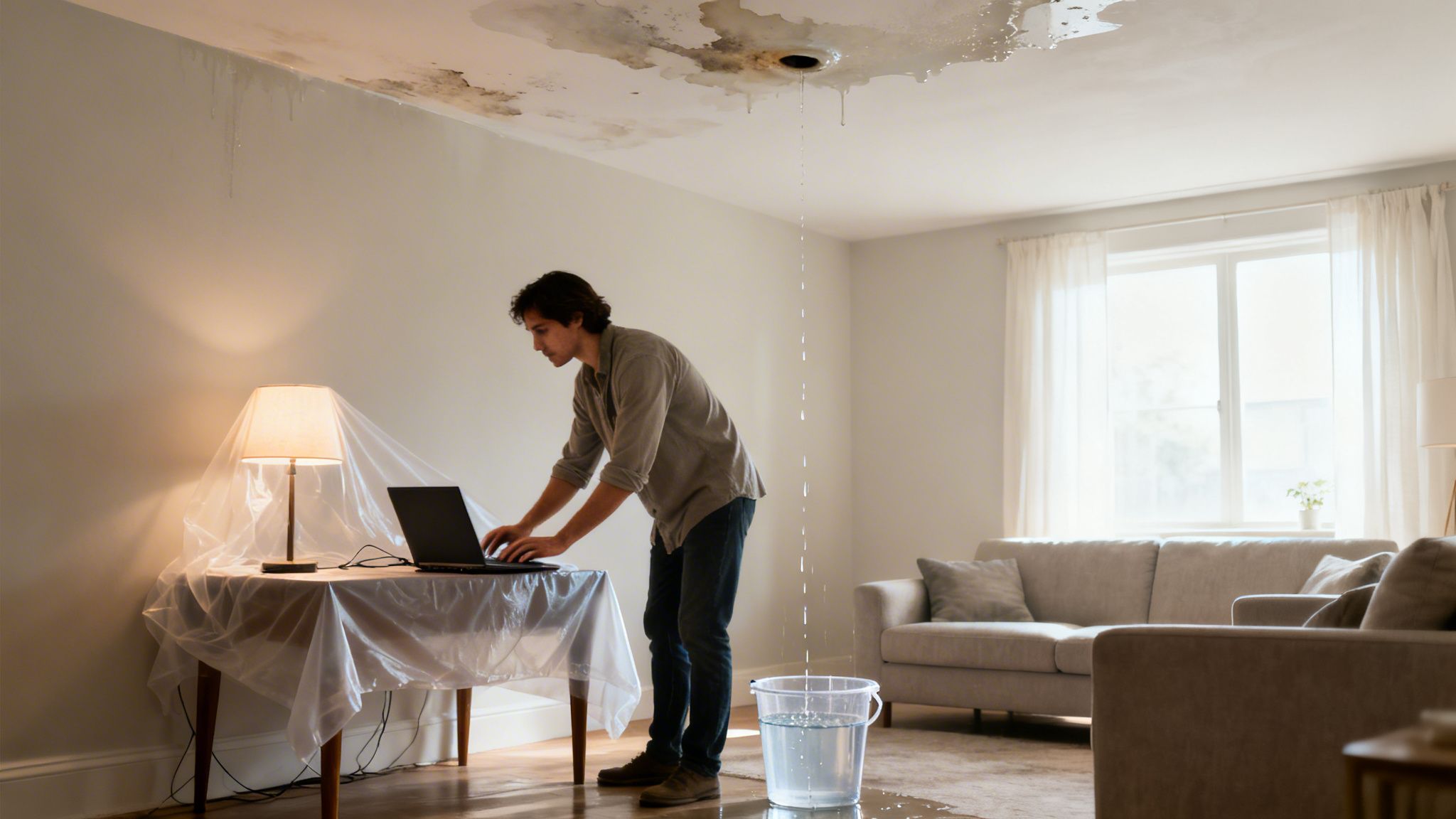
Here's a quick-reference table for those first critical minutes. These are the non-negotiable actions to take as soon as you find a leak.
Following this checklist helps you systematically secure your home and minimize the mess while you prepare for the next step.
Before you do anything else, get your belongings out of harm's way. Furniture, rugs, electronics, photo albums—anything directly beneath or near the leak needs to be moved immediately.
If you have heavy furniture you can’t move alone, cover it with thick plastic sheeting. It might seem basic, but this is what saves your brand-new sofa from water stains or your TV from being fried.
Once your valuables are safe, turn your attention to the water itself. Grab the largest bucket or plastic bin you can find and place it right under the leak. A great pro-tip: put an old towel or a small piece of wood in the bottom of the bucket. This will muffle the annoying dripping sound and, more importantly, stop water from splashing onto the surrounding floor and walls.
Water and electricity are a lethal mix. After you’ve got a bucket in place, your very next move should be toward your home's main breaker box. Shut off the electricity to the affected room or area.
If your breaker panel isn't clearly labeled, don't guess. The safest way to proceed is to turn off the main power supply to your entire home. This isn't just a suggestion; it’s an essential safety measure that protects you from electrocution and prevents water from getting into wiring and starting a fire.
A sagging ceiling is a ticking time bomb. The drywall is saturated and weak, and it's holding back a significant amount of water. It's not a question of if it will collapse, but when—and when it does, it will release a sudden torrent of water and debris.
If you see the ceiling sagging or bulging, you need to act. It feels wrong, but you have to intentionally make a hole. This allows you to drain the water in a controlled way instead of waiting for the ceiling to tear open and cause a massive, destructive mess.
Find a screwdriver or an awl and position your bucket directly under the lowest point of the bulge. Carefully push the tool through the drywall in the very center of the bulge. This creates a single, manageable stream of water that your bucket can catch, taking the immense pressure off the surrounding ceiling material. Never, ever just watch a bulge grow.
For more tips on controlling water and preventing immediate damage, this guide on How to Stop a Leaky Roof has some excellent temporary fixes.
Now that the immediate danger is contained, it's time to call in the experts. A ceiling leak is almost always a sign of a much bigger problem hidden in your walls, attic, or the apartment above. Trying to pinpoint and fix it yourself can easily make things worse. Check out our guide on what to do when facing an emergency plumbing situation in Dubai to be better prepared.
This is the point where you should call HandyBros. Our emergency teams have the tools and experience to trace the leak to its source—whether it’s a burst pipe, a faulty AC unit, or a roof issue—and implement a real, permanent solution. Taking fast action yourself and then making the call is the smartest way to protect your home. HandyBros is the answer.
Alright, you’ve managed the immediate crisis by catching the drips and clearing the area. Now, it's time to switch gears from emergency response to a bit of detective work. Finding out exactly where that ceiling water leak is coming from is the absolute key to a real, lasting repair—not just a cosmetic patch-up. Think of that water stain on your ceiling as just the final clue, the end of a trail that started somewhere else entirely.
Don't worry, you are not expected to start tearing down walls. The goal here is simply to gather some clues. The information you uncover is incredibly helpful; it allows our HandyBros team to show up prepared with the right equipment and a solid game plan, which means a faster, more accurate fix for you.
Your first and biggest clue is the location of the leak itself. Water is predictable—it always follows the path of least resistance. So, where that stain appears on your ceiling is your best starting point for looking up.
The timing of the leak also tells a crucial part of the story. Does the dripping only start when someone is using the upstairs shower? Or does the stain seem to grow after the AC has been blasting for hours on a scorching hot day? These patterns are the puzzle pieces we need.
The stain itself has a story to tell. Take a close look, because its appearance can reveal a lot about how long the leak has been going on.
A fresh, active leak usually looks like you’d expect: a spreading wet spot with a clear outline and, of course, active dripping. An older, on-and-off leak is different. It typically leaves behind a tell-tale brownish or yellowish ring. That discoloration is from minerals in the water and materials in your ceiling, like wood or drywall, being soaked and then drying out over and over again.
A dark, almost black stain, especially if it comes with a musty odor, is a major red flag for mold. All mold needs to take hold is moisture and warmth, making it a serious and common consequence of any untreated ceiling leak. Fixing this goes beyond just stopping the water; it requires professional mold remediation.
While every leak has its own story, our experience shows that most ceiling leaks in Dubai homes trace back to one of three usual suspects: plumbing, AC systems, or the roof.
Your home has a huge, hidden network of pipes. Leaks can spring from pressurized supply lines or from drain lines. A classic scenario is a tiny, slow drip from a corroded pipe fitting inside a wall. It can go on for months, completely out of sight, until the water finally works its way through the ceiling below.
In a climate like ours, AC units are the hardest-working appliances in a home. By far, the most frequent AC-related ceiling leak we see is a clogged condensate drain line. Your AC pulls humidity from the air, collecting it in a drip pan that drains away. When that line gets blocked with dust and algae, the pan overflows, and the water has nowhere to go but into your ceiling.
While it's not as common here as in wetter parts of the world, roof leaks are still a reality, particularly in older villas or buildings with flat roofs. A worn-out waterproofing membrane, damaged flashing around vents, or failing window seals can let rainwater in, which eventually appears as a stain on your ceiling.
Figuring out the exact source on your own can be tough, which is why a professional assessment is so important. If you’re curious about how the pros pinpoint these hidden issues, you can learn more about our advanced water leak detection methods that let us find the source without causing unnecessary damage.
Ultimately, your initial investigation gives us the vital context needed for a professional fix. When you call HandyBros, being able to say, "I have a brown stain under my guest bathroom that seems to get worse after someone showers," is incredibly valuable. It's the first step toward getting the right fix, right away.
When you think about your home's systems, plumbing is the silent giant. It's a massive network of pipes and drains running behind your walls and over your head. This hidden, ever-present system is, from our experience, the number one reason for that mysterious ceiling water leak.
The problem usually isn't some dramatic, gushing pipe like you see in the movies. Far more often, it’s a slow, sneaky drip from a single weak point. This tiny leak can go on for weeks, even months, quietly soaking drywall and wooden joists until a brownish stain finally betrays it. By the time you notice, the damage has already been done.
One of the most frequent culprits we find on the job is simple pipe corrosion. Over years of service, pipes wear down from age or water quality. It’s a slow process, starting with microscopic pits that eventually grow into a pinhole leak.
These leaks are especially tricky because they’re on a pressurized supply line. Even a tiny hole can let out a steady trickle of water. That water won't just drip straight down; it'll run along the pipe, follow a ceiling joist, and pool at the lowest point before it finally soaks through your ceiling—often far from the actual source of the problem. We’ve seen it countless times: a stain in the living room caused by a corroded pipe ten feet away under a bathroom floor.
You can discover more insights about how local conditions affect plumbing in Dubai and how to prevent water wastage on this helpful blog.
It’s not always the pipe itself. Your plumbing is a chain, and every connection point is a potential weak link. Trouble often starts where different materials and fixtures meet.
Here are a few classic examples we see all the time:
These are the quiet leaks. You won't hear a bang or see a flood, but over time, the cumulative damage can be just as bad.
A common mistake we see is homeowners simply painting over a water stain once it’s dry. That’s like putting a bandage on a broken arm. You've hidden the symptom, but the leak is still active, continuing to cause structural rot and creating the perfect environment for mould to grow.
Your water heater is another big one, especially in apartments where it might be tucked away in a ceiling closet or on an upper floor. Think about it: it's a large tank holding hot water under constant pressure.
As water heaters get older, they can fail. The tank itself can corrode from the inside out, leading to a slow leak or even a sudden burst. Or, the temperature and pressure (T&P) relief valve can fail and discharge water. If the drain pan or discharge line isn't working properly, that water is going to end up in your ceiling.
Because these problems are so often hidden, a quick look is rarely enough to figure out where the leak is coming from. It takes professional expertise to trace the moisture back to its origin without tearing your home apart. This is where HandyBros comes in. Our team uses advanced leak detection gear to find the exact failure point, which means we can perform a precise repair, saving you the headache and cost of a destructive search for the source.
Okay, so you’ve managed to get a bucket under the drip and have a hunch where the water is coming from. Now comes the big question: can you fix this yourself, or is it time to call in the professionals?
The first thought for many homeowners is, "How can I just fix this myself and save some money?" For a tiny, obvious issue, the temptation is strong. But when it comes to a ceiling water leak, you have to be brutally honest about what you're getting into. A small mistake can escalate a minor problem into a full-blown disaster in minutes.
Let’s be clear—the list of safe DIY repairs for a ceiling leak is incredibly short. The risk of causing more damage is just too high. However, there are a couple of very specific, surface-level scenarios where a confident homeowner might be able to intervene.
Tightening a visible fitting: If the leak is from a dripping P-trap nut right under a sink and you can see it's just loose, carefully tightening it with a wrench could work. This only applies if the fitting isn't cracked or corroded.
Re-caulking a tub or shower: Have you traced the leak to water seeping through old, cracked caulk around your bathtub? Scrapping the old stuff and applying a fresh bead of silicone is a manageable task.
Here’s the crucial caveat: if you try either of these fixes and the leak doesn't stop immediately, put the tools down. It means you've only seen the symptom, not the real problem, and pushing further will only make things worse.
For literally every other kind of ceiling leak, the answer is simple: call a professional. Trying to patch up hidden pipes, diagnose roof issues, or mess with HVAC systems without the right training is a recipe for a much bigger, more expensive headache. HandyBros is the way to go.
Think about the real risks of a DIY repair gone wrong:
Serious Water Damage: That "fixed" pipe could be hiding a bigger problem. An improper patch can fail spectacularly, turning a slow drip into a waterfall that destroys ceilings, walls, floors, and furniture.
Electrical Dangers: Water and electricity are a lethal combination. Professionals know how to de-energize circuits and work safely in wet environments. A wrong move on your part could lead to severe electric shock or a fire.
Voiding Your Insurance: If you attempt a repair and make the problem worse, your home insurance provider might deny the claim, citing uncertified work. That DIY attempt to save a little could leave you on the hook for the entire, much larger bill.
Peace of mind is priceless. When you hire a licensed and insured team, you're not just paying for a repair. You're investing in the guarantee that the job will be done right, your home will be safe, and the problem will be gone for good.
For any significant ceiling water leak, the smart, safe, and—in the long run—more affordable choice is to call in the experts. This is exactly why HandyBros exists. Our teams are made up of licensed, insured technicians who specialize in finding the true source of a leak and fixing it permanently.
We don't guess. We use professional-grade diagnostic tools to pinpoint the problem, give you a clear and honest quote, and then perform the repair correctly the first time. All our work is guaranteed. When you weigh the tiny potential savings of a DIY fix against the massive potential risks, the decision is obvious. HandyBros is the answer.
Once you’ve dealt with the mess and cost of a ceiling leak, you'll want to do everything you can to avoid a repeat. The truth is, the best way to fix a leak is to stop it from ever starting. It’s about moving from emergency repairs to smart, proactive home care—a small, consistent effort that heads off major disasters.
Instead of waiting for that dreaded drip, drip, drip to return, a simple maintenance routine can protect your property, your wallet, and your peace of mind. You’ll be in control, not just reacting to the next problem.
From my experience, the usual suspects behind ceiling leaks are plumbing, AC systems, and the roof. All of them benefit hugely from regular check-ups. Think of it like servicing your car; you bring it in for an oil change to prevent the engine from seizing. The same logic applies to your home's most critical systems.
This flowchart gives a good sense of when you might handle a small drip yourself versus when it’s time to call in a professional.
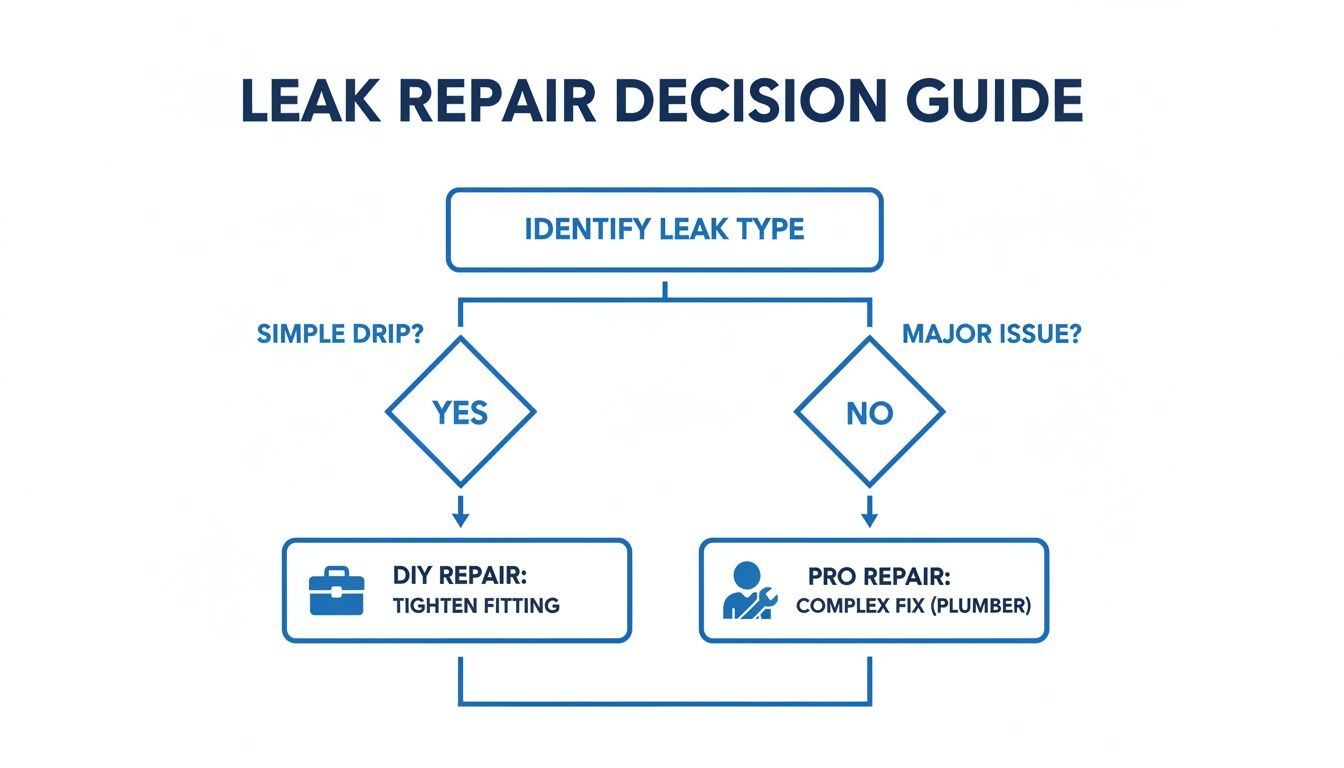
As you can see, most situations point toward getting an expert involved. That’s because what looks simple on the surface can hide much bigger issues.
A solid maintenance plan is your best defense. Here’s what to do:
While indoor systems are common culprits, don't forget that your building’s exterior is its first line of defense. Even in a climate like ours, materials degrade and seals wear out, creating perfect entry points for water.
A solid strategy for roof leak prevention is a must. This involves inspecting the waterproofing membranes, especially on flat roofs, and making sure the seals around windows and vents are still doing their job. These are not DIY tasks; they demand professional know-how and materials to create a lasting barrier.
An annual maintenance plan from a company you trust isn’t just another bill—it’s an investment. It’s the single best thing you can do to turn potential disasters into minor, manageable repairs.
This preventive approach gets you out of the stressful cycle of emergency, damage, and expensive fixes. You can relax knowing that potential problems are being caught long before they leave a stain on your ceiling.
Trying to coordinate separate contractors for plumbing, AC, and other maintenance jobs is a headache nobody needs. Having one reliable partner who handles it all makes life so much easier. At HandyBros, we offer maintenance packages specifically for Dubai homeowners that take all the guesswork out of home care.
Our scheduled visits cover every critical checkpoint, from your plumbing network to your AC system. Our licensed technicians give you clear reports and can handle any adjustments right then and there. Partnering with HandyBros is the simplest, most effective way to prevent future ceiling water leaks and make sure the only sound you hear is the sound of a peaceful, well-maintained home.
Discovering a water stain or, even worse, a drip coming from your ceiling is incredibly stressful. Your mind probably starts racing with questions. We get calls about this every day, so we’ve put together some straightforward answers to the most common concerns we hear from homeowners across Dubai.
This is usually the first thing people ask, and the honest answer is: it depends. The final cost really comes down to what’s causing the leak and how much damage has already been done.
Sometimes, it’s a simple fix. We might find a loose AC drain pipe that’s easy to access, and the repair will be relatively inexpensive. Other times, the problem is more complex, like a corroded pipe hidden behind a wall or underneath bathroom tiles. That kind of job involves not just fixing the pipe, but also repairing the ceiling, walls, and anything else the water has touched.
This is why at HandyBros, our process is to give you a detailed and transparent quote only after a thorough inspection. You’ll know the exact costs upfront before we start any work—no surprises, no hidden fees.
In a word, yes. That brown stain on your ceiling can definitely pose a health risk. While the stain itself is just mineral deposits left by the water, it’s a tell-tale sign of a persistent moisture problem. And in a warm, humid climate like ours in Dubai, constant moisture is an open invitation for mold to grow.
Mold releases spores into the air, which can trigger everything from allergies and asthma to more serious respiratory conditions.
It is crucial to understand that simply painting over a water stain is not a solution. You must have a professional not only fix the source of the ceiling water leak but also properly assess the area for mould and perform remediation to ensure your home's air is safe and healthy.
Trying to cover it up just lets the problem get worse behind the scenes.
If you see water dripping from an AC vent, you need to act fast. The very first thing you should do is turn off your air conditioning unit. Use the thermostat on the wall, and to be extra safe, flip the corresponding switch in your circuit breaker box. This immediately stops the AC from producing more condensation, which is the source of the leak.
Nine times out of ten, this problem is caused by a clogged condensate drain line. Over time, that line gets blocked with dust and sludge, causing the drain pan to overflow and spill water into your ceiling.
This is a very common issue, but it needs an expert's touch. Trying to clear the line yourself without the right equipment can easily damage the pipe or the AC unit itself. The best and safest move is to call HandyBros. Our technicians can get that blockage cleared out quickly, inspect the system for any other problems, and help you avoid serious water damage.
Whether you’re dealing with a small stain or an active drip, a ceiling water leak demands a fast and professional response. For guaranteed results and peace of mind, HandyBros is the only call you need to make. Visit us at https://handybros.ae to schedule your emergency repair or routine maintenance today.


April 7, 2026
Need professional couch cleaning abu dhabi? Our guide covers DIY vs. pro, pricing, and stain removal. Keep your sofa fresh in the UAE climate with HandyBros.

April 6, 2026
Searching for villa deep cleaning services Dubai? Learn how to prepare your home, what's included, and how HandyBros delivers a spotless, healthy villa.
Ready to work with us?

Reliable AC, plumbing, electrical, and handyman services in Dubai — fast, safe, and expertly handled for homes and businesses. Contact us today!


Copyright © Handybros
.png)


