.webp)


April 7, 2026
Need professional couch cleaning abu dhabi? Our guide covers DIY vs. pro, pricing, and stain removal. Keep your sofa fresh in the UAE climate with HandyBros.
January 21, 2026
2026-01-21T09:07:01.607Z
January 21, 2026
When the Dubai heat hits full force, the absolute last thing you need is your air conditioner to give up and start blowing warm air. Your mind probably jumps straight to "it needs more gas," and you start searching for an "air conditioning refill gas" service. But here's something most people don't realise: your AC's refrigerant isn't like petrol in a car; it doesn't just get "used up."

That unwelcome wave of warm air is a definite red flag. The refrigerant in your AC circulates in a sealed, closed-loop system. If the level is low, it means one thing and one thing only: you have a leak.
Just topping up the gas without finding and fixing that leak is like putting air in a punctured tyre. Sure, it might work for a little while, but the problem will come right back, trapping you in a frustrating cycle of endless service calls. This "quick fix" ignores the real issue, causing your AC to work harder, run less efficiently, and risk catastrophic damage to its most expensive part—the compressor.
Low refrigerant is a symptom, not the disease. That’s why a professional diagnosis is so crucial. A qualified technician won’t just refill the gas; they’ll hunt down the leak, repair it properly, and then recharge the system. This is the only way to get a permanent solution that restores your AC's cooling power and safeguards its future. The best way to handle this is by calling a professional team like HandyBros.
The core issue isn't the absence of gas but the presence of a leak. Addressing the leak is the only way to permanently solve the problem and prevent recurring issues and expensive component failures down the line.
Tempted to try a DIY fix or call the cheapest handyman you can find? For your safety and your AC's health, it's best to avoid that. An air conditioning refill gas service is a job for a certified professional with specialised tools. Tiny refrigerant leaks are often impossible to see with the naked eye. To get a better handle on total AC care, you can read our comprehensive guide on air conditioning in Dubai.
A proper professional service guarantees:
When your comfort is on the line during a sweltering Dubai summer, you need a real solution, not a band-aid. Instead of just treating the symptom, HandyBros delivers a thorough diagnostic and repair service, available 24/7. Our licensed technicians find the root cause, fix it right the first time, and get your home back to being a cool sanctuary.
When your AC starts blowing warm air, it's an obvious cry for help. But long before that happens, a system with low refrigerant usually gives off more subtle clues. Learning to spot these early warnings can be the difference between a simple fix and a full-blown, expensive breakdown—especially when you can't afford to be without AC in the Dubai heat.
If any of these signs sound familiar, it’s a red flag. Your system likely needs a professional inspection to find a leak, not just a quick air conditioning refill gas top-up. Here are the seven key indicators that your AC is losing its cool.
This is usually the first thing people notice. You put your hand up to the vent, and the air is either lukewarm or just not as crisp and cold as it should be. The refrigerant is what actually absorbs heat from your home, so when there isn’t enough of it, the whole cooling process grinds to a halt.
This one seems backwards, right? An AC that isn't cooling properly shouldn't be making ice. But when refrigerant levels drop, the pressure inside the evaporator coil plummets, causing it to get intensely cold. This super-chilled coil instantly freezes any moisture or condensation around it.
Go check the copper lines running into your outdoor unit. If you see a coating of frost or even solid ice, you’ve got a classic symptom of low refrigerant. This is a serious problem that can choke off airflow and wreck your compressor if you ignore it.
A healthy AC unit makes a predictable, low humming sound. If you suddenly hear a strange hissing or a faint bubbling sound, listen closely. That could very well be the sound of refrigerant gas escaping from a crack or a bad connection in the lines, often near the indoor or outdoor units.
Think of it like a slow puncture in a tyre. That hissing is the literal sound of your AC's cooling power bleeding out. It’s a clear signal that you need to call in a professional, like the team at HandyBros, right away.
Is your air conditioner running non-stop, but the room never seems to reach the temperature you’ve set on the thermostat? This is a classic sign of a struggling system. With low refrigerant, your AC has to work much harder and for much longer to even attempt to cool the space, putting a massive amount of strain on its parts.
This symptom goes hand-in-hand with the last one. An air conditioner that’s constantly running is guzzling electricity. If you get your DEWA bill and it's shockingly high with no other explanation, your inefficient AC is almost certainly the culprit. It's burning through cash trying to do a job it's no longer equipped for.
A huge part of an air conditioner's job is pulling humidity out of the air. It’s why a properly cooled room feels so crisp and comfortable. When the system is low on refrigerant, its dehumidifying power is severely weakened. If your home starts to feel clammy or sticky, even with the AC on, it’s a big hint that the cooling cycle isn't working properly.
While musty smells usually point to mould in the system, a refrigerant leak can sometimes produce a faint, sweet, or chemical-like odour. The refrigerant gas itself is mostly odourless, but it circulates with a special oil to lubricate the compressor. A leak can let some of this oily mixture escape, creating a unique smell.
If you've noticed one or more of these signs, don't just hope it goes away. A refrigerant leak only gets worse. The only real solution is to have a professional find and fix the leak properly. The technicians at HandyBros have the right tools to pinpoint the source of the problem, seal it for good, and then perform the correct air conditioning refill gas service to get your system running efficiently again.
When your AC starts blowing warm air, especially during a Dubai summer, the first thought is often a quick "gas top-up." But a proper fix is never just about adding more gas. In fact, hiring someone for a cheap, quick refill without finding the root cause is like putting a plaster on a broken bone. It's not only a waste of money but can seriously damage your system.
A true professional service is a careful, step-by-step process designed to give you a long-term solution, not a temporary band-aid. At HandyBros, our licensed technicians have a strict protocol to make sure the job is done right. Let’s walk through what that actually looks like.
Before we even think about adding new refrigerant, our number one priority is finding the leak. An AC system is a closed loop; if it's low on gas, it means there's a hole somewhere. Guesswork isn't part of our vocabulary. We use specialised tools to pinpoint the exact source of the problem. This is what separates a real repair from a recurring nightmare.
Our technicians use a few key methods:
The symptoms you're seeing—ice, strange noises, or a sudden spike in your DEWA bill—are all clues that point to a potential leak.
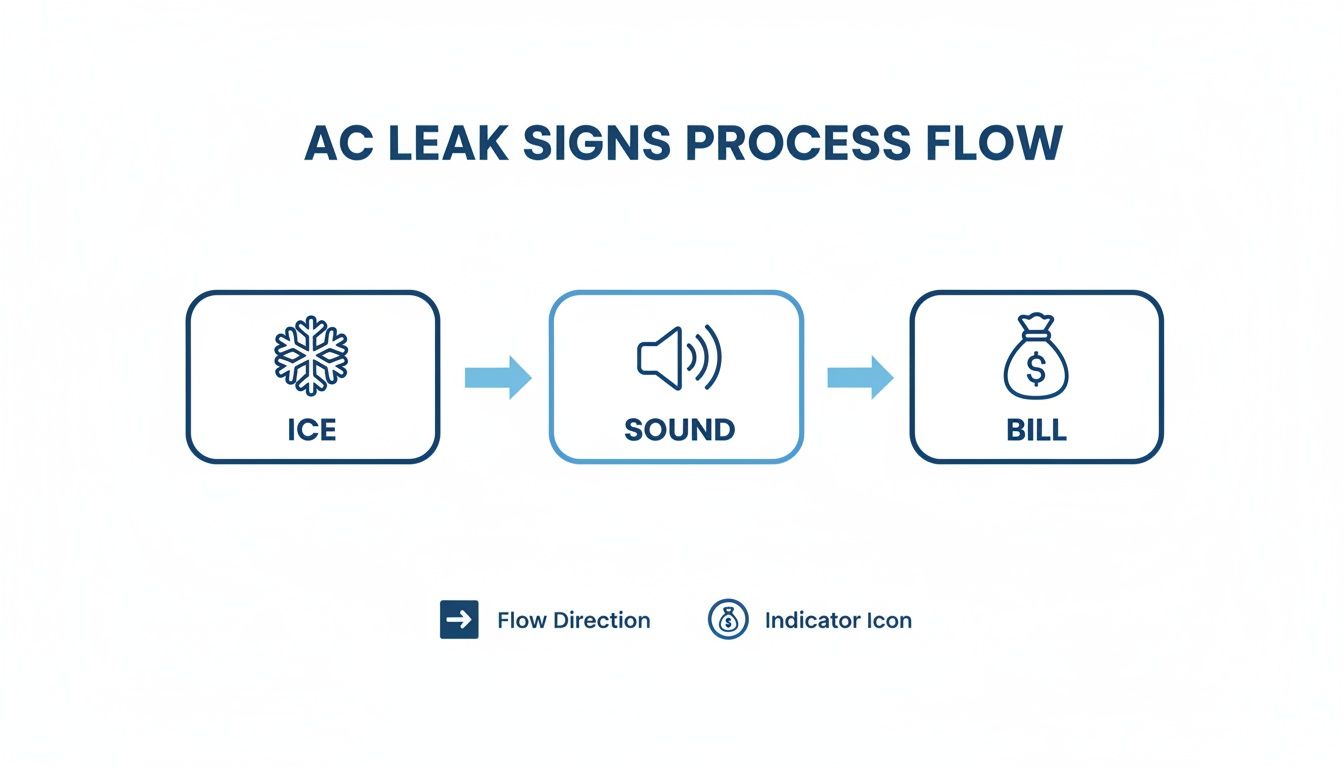
This visual shows how those different signs all connect back to a refrigerant leak that needs an expert eye.
Once we've found the culprit, it's time to fix it properly. This isn't a job for tape or a generic sealant. We use professional techniques like brazing, which is a high-temperature soldering process that permanently fuses the copper piping back together, creating an airtight seal that lasts. This step is what guarantees the problem is actually solved.
Simply refilling the gas without fixing the leak is like pouring water into a bucket with a hole in it. The professional approach is to first patch the hole, making sure the system is perfectly sealed before anything else.
After the repair, we use a powerful vacuum pump to evacuate the system. This is a crucial step that removes all air, moisture, and leftover contaminants. Why is this so important? Even a tiny bit of moisture can mix with refrigerant to create a corrosive acid that will eat away at your AC from the inside out, eventually destroying the compressor.
Only when the system is repaired, clean, and completely dry do we begin the actual air conditioning refill gas process. This is a science, not a guessing game. Using a digital manifold gauge, our technician charges the unit with the exact type and amount of refrigerant specified by the manufacturer.
Every system is different, and a professional knows that one size does not fit all. This careful, methodical process is the only way to ensure your AC runs safely and efficiently. To see everything our expert teams handle, take a look at our professional AC services in Dubai. When it comes to something as critical as your AC’s refrigerant, doing it the HandyBros way guarantees your comfort and peace of mind.
Not all AC gas is the same. Far from it. Think of it like fuel for a car—you wouldn’t put diesel in a petrol engine, and the same logic applies here. Using the wrong refrigerant is a fast track to a dead air conditioner.
Your AC's compressor, the hardworking core of the system, is built for one specific type of gas. Introducing the wrong kind, or even mixing different types, can cause a catastrophic failure. This isn’t something you can eyeball; a professional diagnosis is the only way to go. A certified technician will check the manufacturer's label on your unit to know exactly what it needs. HandyBros ensures your AC runs smoothly and stays compliant with UAE environmental laws.
For a long time, R-22, widely known by its brand name Freon, was the go-to refrigerant. If your AC unit has been around for a while, it probably runs on this gas. The problem? R-22 was discovered to be harmful to the ozone layer, so global agreements have phased out its production.
You can still find R-22 for servicing these older units, but it’s becoming harder to source and more expensive. If your old R-22 system has a major leak, the best solution is to call in professionals like HandyBros to assess whether a repair or a replacement with a modern unit is the more sensible choice.
Step into the modern era and you’ll find R-410A. This is the refrigerant that replaced R-22 in most residential ACs today. It's a big improvement for the environment because it doesn’t harm the ozone layer. It also works at higher pressures, which lets newer systems cool your home more efficiently.
Here’s the critical takeaway: R-22 and R-410A are not interchangeable. They are completely different chemical compounds. Topping up an R-22 system with R-410A will wreck the compressor in no time. When you call a professional service like HandyBros, you can rest assured your system gets the right gas, every single time.
Choosing the right refrigerant isn't just a technical detail; it's a matter of safety, efficiency, and environmental responsibility. A certified technician ensures all three are prioritised, protecting your investment and your comfort.
The industry isn't standing still. The latest AC models are increasingly using R-32, an even more eco-friendly option. Its Global Warming Potential (GWP) is significantly lower than R-410A's, making it a much kinder choice for the planet.
This move is part of a larger push towards sustainability, reflecting how government initiatives are shaping the Middle East air conditioner market. Choosing a system with a newer refrigerant is a great way to align with these important goals.
Ultimately, the world of refrigerants is complex and not something homeowners should have to worry about. The key is to leave it to the experts. When you call HandyBros, you’re not just getting a simple gas refill; you’re getting the peace of mind that the job is done safely and correctly, protecting your AC, your wallet, and the environment.
When your AC needs a gas refill, it’s easy to get fixated on the price. But what exactly are you paying for? If you see a quote that seems too good to be true, it probably is. A suspiciously cheap service is often just a quick "top-up" that doesn't fix the underlying problem—the leak. You'll feel cool for a week or two, and then you'll be right back where you started.
A proper, professional quote is different. It’s not just about pouring more gas into the system; it’s about providing a permanent solution. At HandyBros, we’re all about transparency, so let’s pull back the curtain and show you what a comprehensive AC gas service really involves. This way, you understand you’re investing in a long-term fix, not just kicking the can down the road.
First things first, the gas itself has a price tag. Just like cars don't all use the same fuel, AC units are built for specific types of refrigerant, and their costs can vary.
Our technicians will always use the exact refrigerant your manufacturer recommends. Using the wrong type is not only inefficient but can seriously damage your AC unit.
Here’s the part that really separates the pros from the amateurs: finding and fixing the leak. Honestly, this is where most of the work happens and what you're truly paying for. The refill itself is the easy part.
Think about it—a tiny pinhole leak in a copper pipe tucked away inside a concrete wall is a world away from a loose valve that's easy to access. Finding that hidden leak takes time, skill, and the right tools. Our team uses everything from electronic "sniffers" that detect refrigerant traces to nitrogen pressure tests to pinpoint the exact source of the problem. This meticulous work ensures we fix it right the first time.
The real value in a professional AC service isn't just in the gas itself, but in the skilled labour required to diagnose and permanently seal the leak. This step is what stops the frustrating cycle of repeated top-ups.
Finally, the type of AC system you have in your home matters. Working on a standard split AC in an apartment is generally a more straightforward job than servicing a sprawling central AC system in a large villa.
The bigger and more complex the system, the more time it takes to access components, the more refrigerant is needed for a full recharge, and the more labour is involved. Each of these factors will naturally be reflected in the final cost.
When you get a quote from HandyBros, it’s all-inclusive. We cover the entire process—from the initial detective work and the repair right through to the final, precise refill. Our goal is to give you a solution that lasts, so you can go back to enjoying a cool home without worrying about the same issue popping up again in a month. It’s the smart approach to handling an air conditioning refill gas problem.
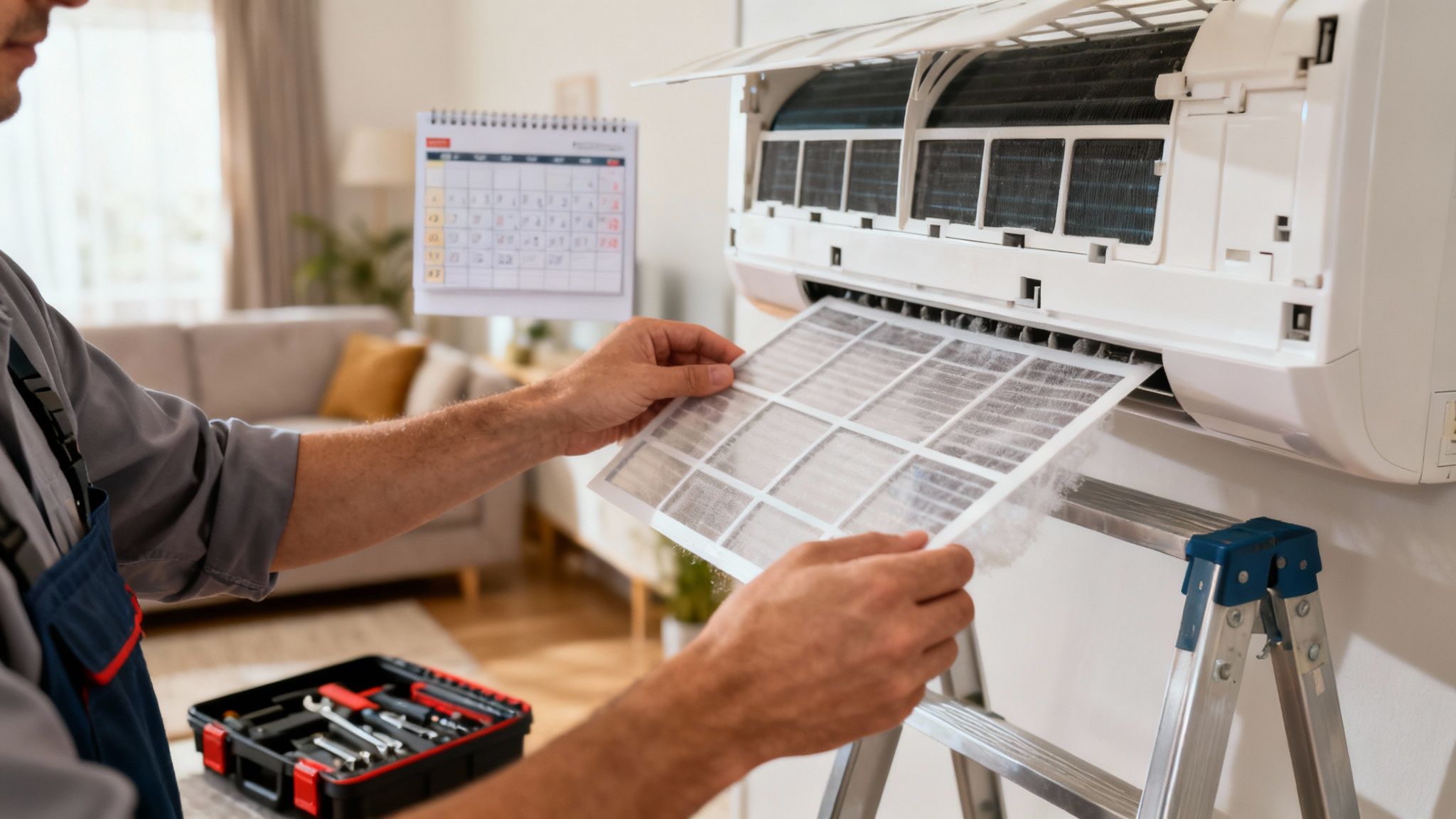
When you're calling for an air conditioning refill gas service, you're already in damage control mode. It's a reactive fix to a problem that's been developing for a while. The smarter, and much cheaper, approach is to stop these issues from ever starting. Proactive care is your best defence against the stress and expense of an AC breakdown, especially when the Dubai summer hits its peak.
Think of your air conditioner like a car. You wouldn't dream of driving it for years without an oil change or a basic service, right? Your AC system works just as relentlessly, and regular professional maintenance is the single best investment you can make in its health and longevity. The best way to get this done is by trusting a reliable company like HandyBros.
An annual maintenance plan isn't just a quick wipe-down. It's a comprehensive health check for your entire cooling system. When a certified HandyBros technician gets to work, they are methodically protecting your unit against future failures.
A proper service call involves several critical tasks that directly address the root causes of refrigerant leaks and other expensive problems. We catch the small issues early, long before they can spiral into system-wide failures that hit your wallet hard.
Our technicians perform a detailed inspection that covers:
Investing in routine maintenance pays for itself many times over. A well-maintained unit isn't just more dependable; it runs far more efficiently, which you’ll see reflected in lower monthly DEWA bills.
An annual maintenance plan isn't an expense; it's an investment in reliability and efficiency. It ensures your AC runs smoothly all year, protecting your comfort and preventing the high cost of emergency repairs.
Ultimately, the goal is to keep your home cool and your mind at ease. Instead of waiting for a problem to force your hand, let HandyBros give your AC the proactive care it needs to thrive. Our comprehensive maintenance plans are designed to protect your investment and save you money, keeping you comfortable season after season.
When your AC starts acting up, especially with something like refrigerant, it's easy to get conflicting advice. Getting straight-up, honest answers is the only way to make a smart call for your home and your budget. We've put together the most common questions we get from homeowners across Dubai about air conditioning refill gas services to set the record straight.
Let's start with the most important principle: refrigerant problems are not a weekend DIY project. They demand a professional eye and the right tools to diagnose and fix properly. The best way forward is to rely on a certified team like ours at HandyBros, ensuring the job is done safely and built to last.
This is the big one, and the real answer usually catches people by surprise. Ideally? Never. Your air conditioner operates on a sealed, closed-loop system. The refrigerant gas inside isn't a consumable; it doesn't get "used up" like petrol in a car.
If you find yourself low on refrigerant, it's a sure sign of one thing: there's a leak somewhere. It could be in the lines or a connection. Just topping up the gas without fixing that leak is a temporary fix that solves nothing. The only time a refill is necessary is after a technician has found the source of the leak and repaired it properly.
Think of it like this: You wouldn't just keep pouring oil into your car if you saw a puddle forming underneath it every day. You'd get the leak fixed. Your AC is no different.
Definitely not. Trying to save money this way can end up costing you dearly. Every AC unit is engineered to work with a specific type of refrigerant, whether it’s an older gas like R-22 or a modern, eco-friendlier one like R-410A.
Mixing refrigerants or using the wrong one can cause immense pressure to build up inside the system. This can completely destroy the compressor, which is the heart of your AC and the most expensive component to replace. The only way to be sure is to have a professional from HandyBros confirm the exact gas your unit needs and use only that.
If a technician shows up and is done in 20 minutes after a quick "top-up," that's a huge red flag. A legitimate service, one that actually solves the problem, is a careful and detailed process. The time it takes really comes down to the leak itself—how hard it is to find and how tricky it is to fix.
A professional job, the kind we do at HandyBros, is about being thorough. We don’t just treat the symptom; we fix the cause. We stay until your system is perfectly sealed and recharged to the manufacturer's specifications, ensuring it runs efficiently for the long haul.
Yes, absolutely. Even a slow, pinhole leak is a serious problem that you shouldn't ignore. That quiet hiss of escaping gas means your AC is slowly but surely losing its cooling power. To compensate, it has to run longer and work much harder to keep your home comfortable.
This puts a massive strain on the compressor, sends your DEWA bill soaring, and is a surefire path to a major breakdown down the line. Catching and fixing a small leak early is always the smartest and most cost-effective choice.
If you have more questions or you think your AC has a refrigerant leak, don't wait for a small problem to become a big, expensive one. Trust the experts at HandyBros Dubai for a professional diagnosis and a permanent fix. Contact us 24/7 for reliable service at https://handybros.ae.


April 7, 2026
Need professional couch cleaning abu dhabi? Our guide covers DIY vs. pro, pricing, and stain removal. Keep your sofa fresh in the UAE climate with HandyBros.

April 6, 2026
Searching for villa deep cleaning services Dubai? Learn how to prepare your home, what's included, and how HandyBros delivers a spotless, healthy villa.
Ready to work with us?

Reliable AC, plumbing, electrical, and handyman services in Dubai — fast, safe, and expertly handled for homes and businesses. Contact us today!


Copyright © Handybros
.png)


