.webp)


April 7, 2026
Need professional couch cleaning abu dhabi? Our guide covers DIY vs. pro, pricing, and stain removal. Keep your sofa fresh in the UAE climate with HandyBros.
January 20, 2026

2026-01-20T08:41:38.273Z
January 20, 2026
It's a sight no one wants to see: a puddle of water forming under the air conditioner. While it’s definitely a cause for concern, don't panic. More often than not, an AC water leak is a symptom of a simple, fixable problem, especially here in Dubai where dust is a constant battle.
Figuring out what's wrong is the first step to getting your cool air back on track without causing serious damage to your home.
Finding water where it shouldn’t be is your AC's way of telling you something's wrong. In a place like Dubai, where your air conditioner is the hardest working appliance in your home, these little cries for help are common. An AC leak isn't just a mess to clean up; it’s a sign that needs investigating to prevent bigger, more expensive problems down the line.
The usual suspect? A clogged condensate drain line. Think about it: your AC is constantly pulling moisture out of the humid Dubai air. This water, or condensate, is supposed to flow neatly away through a drain pipe. But when it mixes with the fine dust and sand that’s everywhere in the city, it can form a thick sludge that creates a stubborn blockage. With the drain clogged, the water backs up and spills out.
A blocked drain is the most frequent cause, but it’s not the only reason you might find a puddle. Here are a few other common issues you might encounter:
Here in Dubai, an AC leak is more than a nuisance—it’s a common household emergency. That constant battle with dust means a clogged drain can quickly lead to water seeping into your walls, floors, and even your electrical wiring. The repair bills for that kind of damage can be significant.
An AC water leak is a clear and present threat to your property. Water damage can wreck expensive flooring, cause drywall to crumble, and create the perfect environment for mould to grow, which is a serious health risk.
On top of that, the leak could be a warning sign of a deeper issue, like a refrigerant problem or an electrical fault that needs immediate attention from a qualified technician.
Key Takeaway: An AC leak is never normal. If you ignore it, you risk turning a straightforward repair into a major headache involving home renovations and costly fixes. The best thing you can do is figure out the cause fast and take action, whether that’s a quick DIY or calling in the pros at HandyBros.
It’s also worth checking if your homeowner's policy covers this kind of damage. You can get a general idea of what to look for in your policy by understanding the basics of does insurance cover water damage.
To help you get started, here's a quick guide to help you match what you're seeing with the likely problem.
Use this table to quickly identify the potential cause of your AC water leak based on common symptoms seen in Dubai homes.
This guide is a great starting point, but remember that some issues are more complex than they appear.
If you’re dealing with a leak, don't put it off. Acting quickly can save you a lot of time, money, and stress. While some of these fixes are simple enough for a DIY approach, anything involving refrigerants or electrical components is a job for an expert. For a fast, reliable diagnosis and repair anywhere in Dubai, HandyBros is the way to go.
That sinking feeling you get when you spot water pooling around your AC unit is all too familiar. But before you panic, take a breath. Most of the time, a little calm, methodical troubleshooting can pinpoint a simple issue you might even be able to fix yourself.
First things first: safety. Water and electricity are a dangerous mix, so this is non-negotiable.
Before you even think about touching the unit, you need to kill the power. Don't just turn it off with the remote. Head to your home's circuit breaker panel and flip the switch dedicated to your air conditioning system. This completely cuts the power, ensuring you can poke around without any risk of electric shock.
With the power safely off, you can start playing detective. The goal isn't to become an AC technician in an afternoon, but to confidently identify the usual suspects. This flow chart shows how a seemingly small issue can quickly snowball.
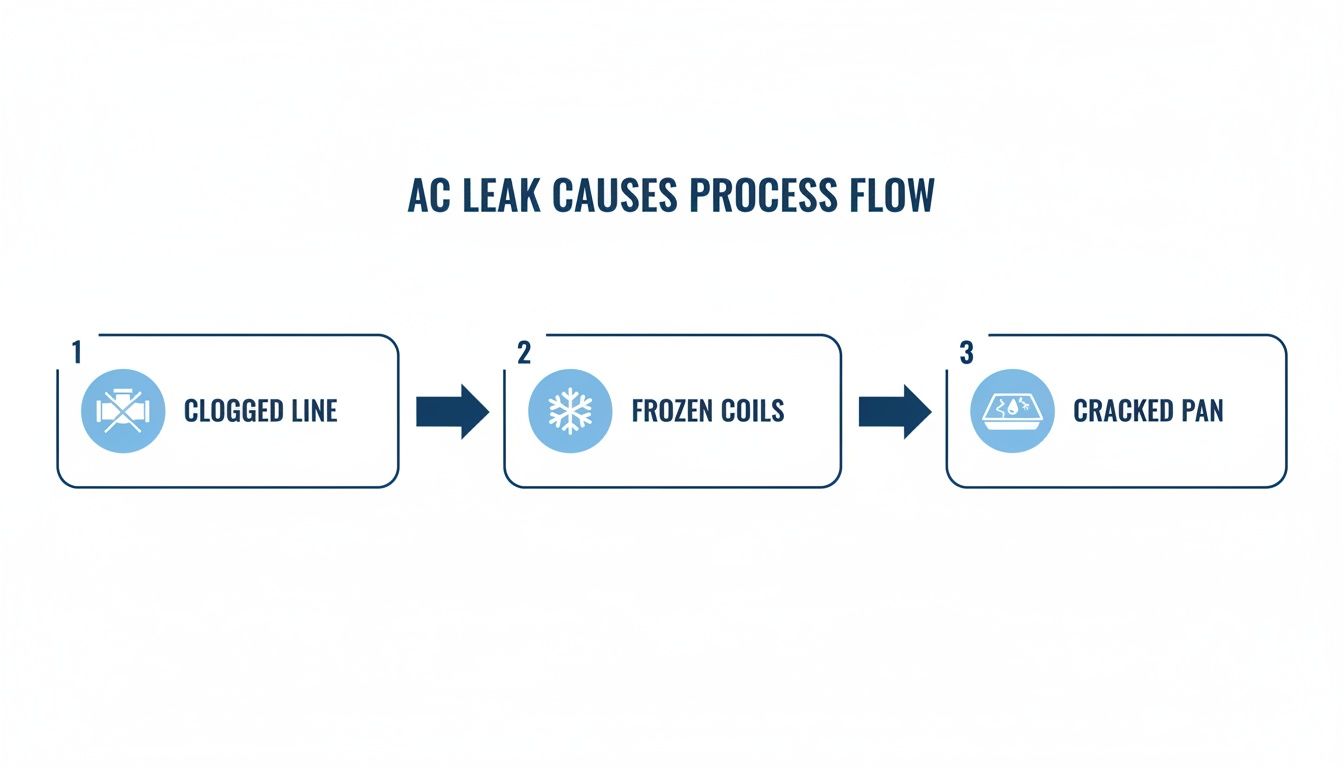
As you can see, something as simple as a clogged line can lead to bigger headaches like frozen coils and a damaged drain pan. That's why catching it early is key.
In Dubai, nine times out of ten, the problem is the condensate drain line. This simple PVC pipe is designed to channel all the condensation from your indoor unit outside. But over time, it gets clogged with dust, sludge, and even algae.
First, you'll need to find it. It's typically a white PVC pipe running from your indoor air handler to an exterior wall. Check where it exits your home. Is it dripping? A slow, steady drip is a good sign. If it's bone dry on a humid day, you've likely got a blockage. Sometimes you get lucky and the clog is right at the end—a clump of gunk you can just pull out.
Tucked underneath your indoor unit's evaporator coils is a shallow tray called the drain pan. It's the last line of defence, catching condensation before it heads into the drain line. If there's an issue here, you'll get an overflow.
Grab a torch and get a good look inside the pan. You're looking for two things:
Many modern AC systems here also have a float switch. It's a clever little safety device that senses when the water level in the pan gets too high and automatically shuts off the AC to prevent a flood. If this switch gets stuck, it can't activate, and the pan will just keep filling until it overflows. Gently nudge it to see if it moves up and down freely.
An Old Pro's Tip: Countless leaks are caused by a jammed float switch. A bit of sludge is all it takes to stop it from working. If your AC is leaking but hasn't shut off, a faulty float switch is almost certainly the culprit.
Another common reason for a sudden leak is frozen evaporator coils. When your coils turn into a block of ice, the drain pan simply can't cope with the massive amount of water when it all melts.
You'll need to open the access panel on the indoor unit to see the coils. If you're greeted by a layer of frost or solid ice, you've found a major clue. Freezing is usually caused by poor airflow (think clogged air filter) or, more seriously, low refrigerant.
If the coils are frozen, keep the power off and let the ice melt completely. This can take a few hours, so it's a great time to clean or replace your air filter. But if the ice comes back after you restart the unit, it strongly suggests a refrigerant leak.
And that's where the DIY journey ends. Refrigerant is a hazardous material that requires specialised tools and a license to handle. If you suspect a refrigerant issue, the safest and smartest move is to stop and call in the professionals. This is exactly the time to contact a trusted service like HandyBros. Their technicians can pinpoint the leak's source, handle the refrigerant safely, and get your system repaired properly before it causes any more damage.
That sinking feeling when you spot a puddle under your air conditioner is something most of us in Dubai have experienced. But don't immediately jump to worst-case scenarios. More often than not, a minor AC water leak is something you can sort out yourself with a bit of know-how and a few simple tools.
Let's walk through how to safely tackle some of the most common culprits. Nine times out of ten, the problem is a simple blockage in the condensate drain line.
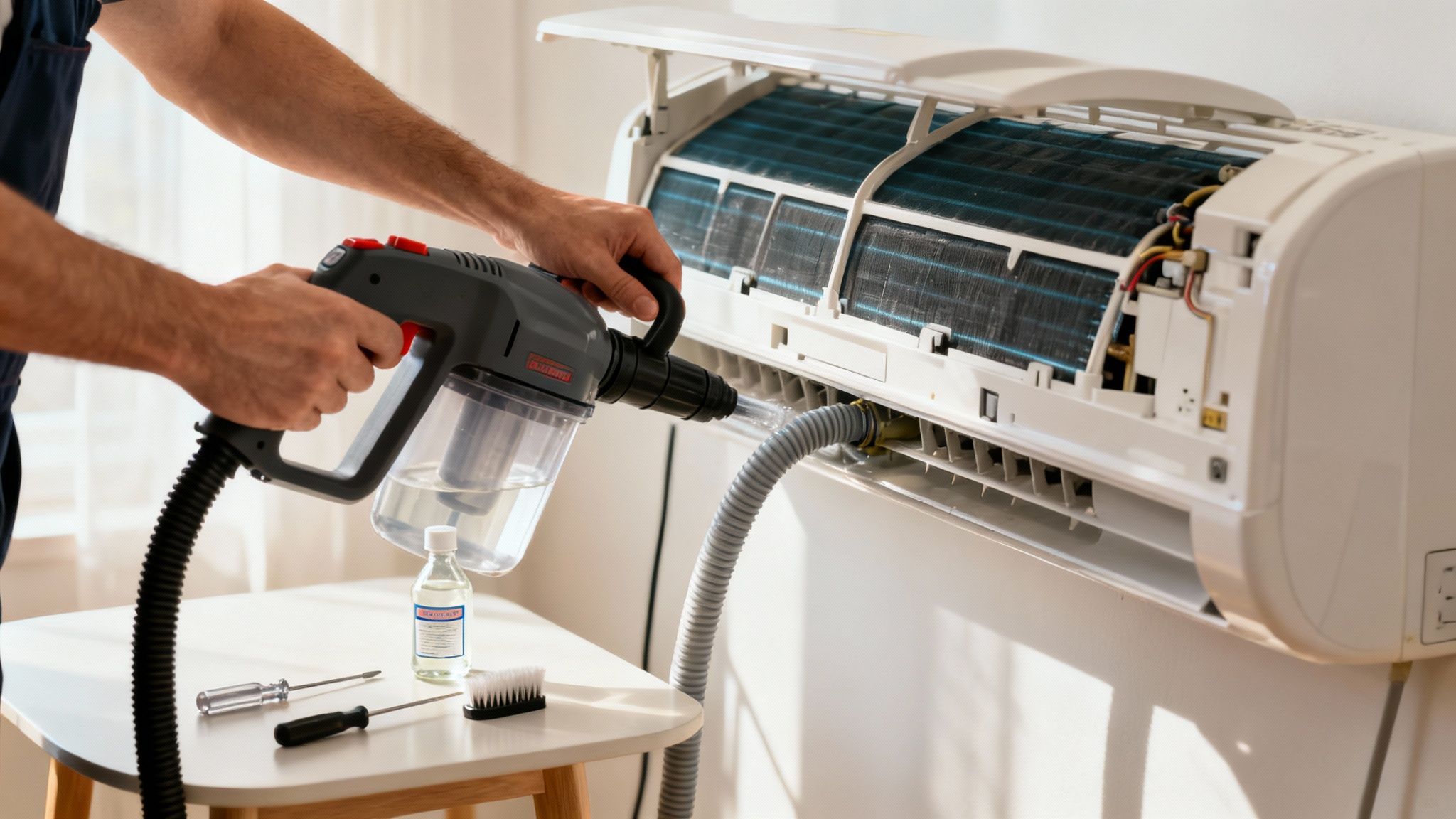
Think of the condensate drain line as your AC's plumbing. Over time, the combination of constant moisture and Dubai's dusty air can create a thick, algae-like sludge that clogs it up, causing water to back up and spill over.
Before you do anything, the absolute first step is to kill the power to your AC unit at the circuit breaker. Safety first, always. Once that's done, find the drain line—it's usually a white PVC pipe running from your indoor unit to the outside.
Here's how to clear it:
Honestly, doing this quick flush every few months is one of the best preventative measures you can take to stop leaks before they even begin.
If the drain line seems clear but the leak continues, your next stop is the drain pan and its little guardian, the float switch. The pan sits right under the evaporator coils, catching all the condensation as it drips off.
A stuck float switch is a very common issue. This little device is designed to shut your AC off if the water level in the pan gets too high, preventing a flood. But if it gets gunked up, it can’t rise with the water. Give it a gentle lift to see if it moves freely. If it’s sticky, a quick wipe-down with a clean cloth should do the trick.
While you're in there, give the drain pan a good look. Shine your phone's torch around and check for any cracks or rust spots. These pans can become brittle over time, and even a small crack is enough to cause a persistent leak.
A Quick Tip from the Field: You can try a temporary patch on a cracked drain pan, but these rarely last. For a permanent fix that saves you from future headaches and potential water damage, getting a professional from HandyBros to replace the pan is the smart move.
Another big-ticket item for leaks is a frozen set of evaporator coils. As we mentioned, this usually points back to poor airflow from a clogged air filter. As that block of ice melts, it dumps a massive amount of water all at once, completely overwhelming the drain pan.
If you spot ice, leave the AC power off and just let it melt naturally. While you wait, it's the perfect opportunity to pop in a clean air filter. But if the freezing keeps happening, it might be a sign of a refrigerant leak—and that’s a problem that absolutely needs a licensed technician.
Regular coil maintenance is key. Clean coils allow for proper airflow and heat exchange, which is crucial for stopping ice from forming in the first place. For a deeper dive, have a look at our guide on the importance of professional AC coil cleaning.
These DIY checks can handle most of the common, straightforward leaks. But know when to draw the line. If you've tried these steps and the water keeps coming, or if you find a badly damaged pan or coils that just won't stop freezing, it’s time to put the tools down. These are signs that HandyBros is the answer.
While it’s great to have the confidence to tackle some home repairs, there are definite signs that an AC water leak is beyond a simple DIY fix. Knowing when to put the tools down and pick up the phone isn't about admitting defeat; it’s about making a smart, safe decision for your home.
Trying to wrestle with a complex AC problem without the right training can quickly escalate a minor issue into a full-blown, expensive disaster. Here’s when it's time to call in the experts at HandyBros.
If you open up your indoor unit and see the evaporator coils looking like they belong in a deep freezer—covered in frost or ice—that’s a major warning sign. Sometimes, a clogged filter is the simple culprit. But if the problem persists, you're likely dealing with something more serious: a refrigerant leak.
Refrigerant is a highly controlled substance, and handling it requires a special licence for a reason. Attempting to fix a leak yourself is not just dangerous; it can be against regulations. A qualified technician from HandyBros has the diagnostic tools to pinpoint the leak, repair it safely, and recharge the system with the precise amount of refrigerant needed.
You know what your air conditioner normally sounds like. If that familiar hum suddenly turns into a strange hissing, bubbling, or grinding noise, it's telling you something is very wrong.
A hissing or bubbling sound is a classic sign of refrigerant escaping. Grinding, on the other hand, often points to a failing motor or another internal mechanical part. Any kind of burning smell is an immediate emergency—it could be an electrical fault and a serious fire risk. In that case, kill the power at the circuit breaker straight away and call for help.
Expert Insight: A stubborn musty smell that just won't go away, even after you've cleared the drain line, is a sure sign of mould and mildew deep inside the unit. This isn't just unpleasant; it's a health hazard that requires a professional deep clean to eliminate properly.
The condensate drain pan is your AC’s last line of defence against overflows, but it’s not invincible. If you take a look and see it’s rusted through, has large cracks, or is visibly warped, a simple patch isn't going to be a long-term solution.
Replacing a drain pan is more complex than it sounds, often involving the careful disassembly of the indoor unit. A HandyBros technician can source the correct replacement and install it perfectly, preventing future leaks and the water damage that comes with them. Knowing when the situation is urgent is key; our guide on emergency AC repair in Dubai can help you decide how quickly you need to act.
When you're up against these kinds of serious symptoms, the answer is clear. For a fast, reliable, and safe solution to any complex AC problem, HandyBros is the way to go.
When it comes to an air conditioner water leak, the best offence is a good defence. Why wait for a puddle to form on your floor when you can prevent it from ever happening? A proactive approach to AC care isn't just a good idea—in Dubai's demanding climate, it's absolutely essential for saving yourself from stress, water damage, and pricey emergency repairs.
You don't have to be a seasoned HVAC technician to make a huge difference. A few simple habits can keep your system running smoothly, maintaining proper airflow and stopping the most common issues right in their tracks.
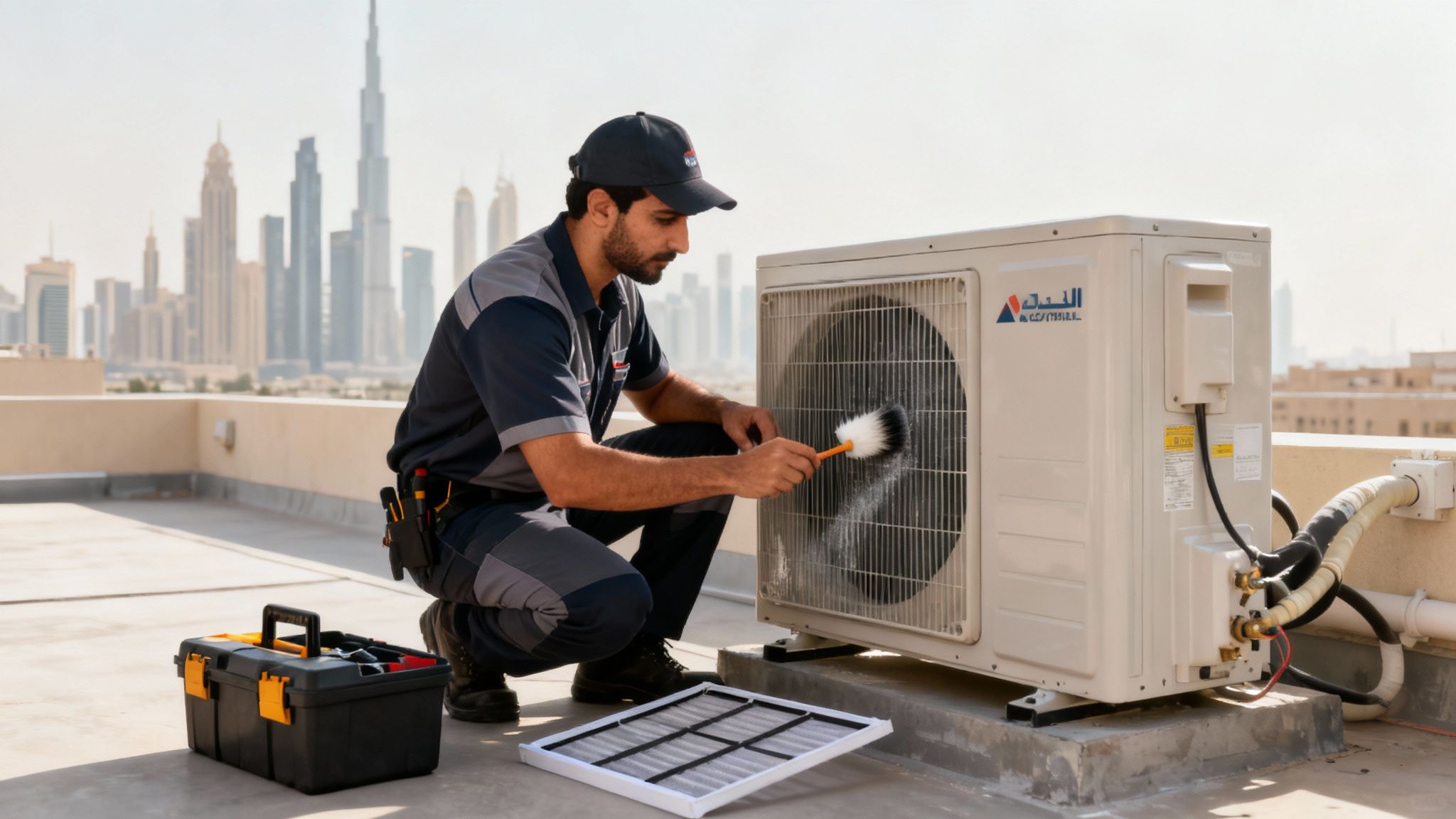
Think of these tasks as your first line of defence. They're quick, straightforward, and incredibly effective at keeping surprise AC leaks at bay.
These quick checks are powerful, but they are just one piece of the puzzle. To really safeguard your home, it helps to dive deeper into understanding and preventing water damage from all potential sources.
While your DIY efforts are crucial, they simply can't match the diagnostic eye of a professional technician. Think of an annual tune-up as a smart investment—one that pays for itself by catching potential disasters early, boosting efficiency, and extending the life of your AC. For that, HandyBros is the way to go.
A professional service is a complete health check for your cooling system, going far beyond what a homeowner can safely or easily tackle.
When a HandyBros technician shows up, they're not just there to clean a filter. They perform a detailed inspection and tune-up specifically designed to prevent the exact issues, like an air conditioner water leak, that give homeowners the biggest headaches.
Our comprehensive tune-up is the definitive answer for long-term AC health. Our technicians follow a meticulous process to get your system into peak condition.
Booking this service once a year—ideally just before the summer heat really kicks in—is the smartest move you can make for uninterrupted cooling. You'll avoid the mess of a leak, improve your home's air quality, and likely lower your energy bills. To see the full picture, check out our article on how you can protect your property and save costs with an annual maintenance agreement. In the end, proactive care with HandyBros delivers true peace of mind, knowing your AC is ready to handle whatever Dubai's climate throws at it.
Even after going through the steps, you might still have a few questions buzzing around. That's completely normal. Let's tackle some of the most common queries we get from homeowners across Dubai to clear up any lingering doubts.
The water itself is just condensation, basically distilled water. So no, it's not toxic. The real problem is what that water does when it pools. When moisture collects in the dark, warm guts of your AC unit or soaks into your walls and ceiling, it creates the perfect environment for mould and mildew to thrive.
And that's where the danger lies:
So, while the drip itself isn't harmful, the world it creates is. This is exactly why you need to jump on any air conditioner water leak right away. If you're worried about hidden dampness or mould, getting an expert team like HandyBros in is always the smartest move.
In a place like Dubai, where your AC is more of a lifeline than a luxury, regular servicing is non-negotiable. With the system running practically year-round, you need to have it professionally checked at least once a year. Ideally, do this just before summer kicks into high gear.
Honestly, an annual service from a reliable crew like HandyBros is the best thing you can do to prevent leaks. It keeps the drain lines clear and the coils clean—the two biggest culprits. Think of it as proactive care to avoid reactive panic.
This yearly tune-up catches the small stuff before it snowballs into a full-blown, water-everywhere emergency.
When you call HandyBros because your AC is acting up, you can expect a no-fuss, professional experience. Our technicians show up ready to get to the root of the problem, fast.
First, they'll listen to what you've noticed. Then, they’ll get hands-on with a full inspection—checking the condensate line, looking over the coils, testing the float switch, and verifying refrigerant levels. Once they’ve pinpointed the cause, they’ll walk you through what’s wrong in simple terms and give you a clear, upfront quote for the fix.
Our whole aim is to get your AC back to perfect working order with as little disruption to your day as possible. Whether it's a tiny drip or a total system failure, HandyBros has you covered.
For immediate help with a leaking AC or to book your annual maintenance, trust the licensed professionals at HandyBros. Visit our website to schedule a service call and keep your home cool, dry, and comfortable. Find out more at https://handybros.ae.


April 7, 2026
Need professional couch cleaning abu dhabi? Our guide covers DIY vs. pro, pricing, and stain removal. Keep your sofa fresh in the UAE climate with HandyBros.

April 6, 2026
Searching for villa deep cleaning services Dubai? Learn how to prepare your home, what's included, and how HandyBros delivers a spotless, healthy villa.
Ready to work with us?

Reliable AC, plumbing, electrical, and handyman services in Dubai — fast, safe, and expertly handled for homes and businesses. Contact us today!


Copyright © Handybros
.png)


