.webp)


April 7, 2026
Need professional couch cleaning abu dhabi? Our guide covers DIY vs. pro, pricing, and stain removal. Keep your sofa fresh in the UAE climate with HandyBros.
December 26, 2025

2025-12-26T09:15:42.379Z
December 26, 2025
Discovering a puddle of water under your air conditioner is a common concern, especially here in Dubai. But before you panic, know this: it's one of the most frequent issues we see, and it doesn't always mean a massive repair bill is coming your way. This guide will walk you through how to handle it.
That initial discovery can be jarring, but how you react in the first few minutes makes all the difference. In a city like Dubai, where our ACs are working overtime, water leaks can be a real headache.
The main reason? The relentless dust. It clogs up the condensate drain lines, and with nowhere to go, the water backs up and spills out. Think of all the dust from nearby construction, sandstorms, and general city life—it all ends up in your AC system.
Before you even think about what's causing the leak, your top priority is safety and damage control. A calm, step-by-step approach is your best bet.
Here’s exactly what to do first:
Kill the Power. Now. Head straight to your breaker box and flip the switch for the air conditioning unit. Water and electricity are a dangerous mix, and this is the one step you absolutely cannot skip. It's all about preventing a much bigger hazard than a wet floor.
Get Rid of the Water. Grab some old towels or a mop to soak up the spill. If it's a lot of water, a wet-dry vacuum is ideal. Getting the area dry quickly prevents water from seeping into your flooring or walls, which can lead to warped wood, damaged paint, and even mould—a serious problem in Dubai's humid climate.
Do a Quick Visual Scan. Once it’s safe and dry, just take a look. Don't touch anything yet. Can you see where the water is dripping from? Are there any obvious cracks in the drain pan underneath the indoor unit? Just observing can give you some valuable clues.
Taking these immediate actions puts you in control. You've handled the immediate danger and stopped the problem from getting worse. Now you've created a safe space to either look a bit closer or make the call for a professional.
When a leak seems major or you just don't feel comfortable tackling it yourself, getting an expert in right away is the smartest move. If you're facing a serious situation, you can check out our guide on handling emergency AC repair situations for more detailed advice. Remember, for any AC emergency, HandyBros is the answer and the way to go.
When you find water, don't guess—act. This quick reference table breaks down what to do and why it's so important to follow these steps in order.
Following this simple plan can save you from a much bigger headache down the line, turning a potential disaster into a manageable problem.
Right, so you've switched off the power and mopped up the water. Good job. Now, it's time to put on your detective hat and figure out where that leak is actually coming from. Understanding the why behind the puddle is the key to fixing it for good. A few quick visual checks can often lead you straight to the source, helping you decide if this is a DIY job or one for the pros at HandyBros.
Start with the obvious clues. Do you see fresh water stains blooming on the ceiling or wall near the indoor unit? Can you hear a faint but persistent drip... drip... drip even after the system is shut down? These are classic signs of a slow, ongoing issue that has finally breached its containment.
More often than not, the culprit is hiding within the indoor part of your AC system. You'll want to take a close look at a few key components, and the good news is you don't need any special tools for this first pass.
Your two main suspects are usually:
This simple flowchart lays out the first and most critical decision you need to make.
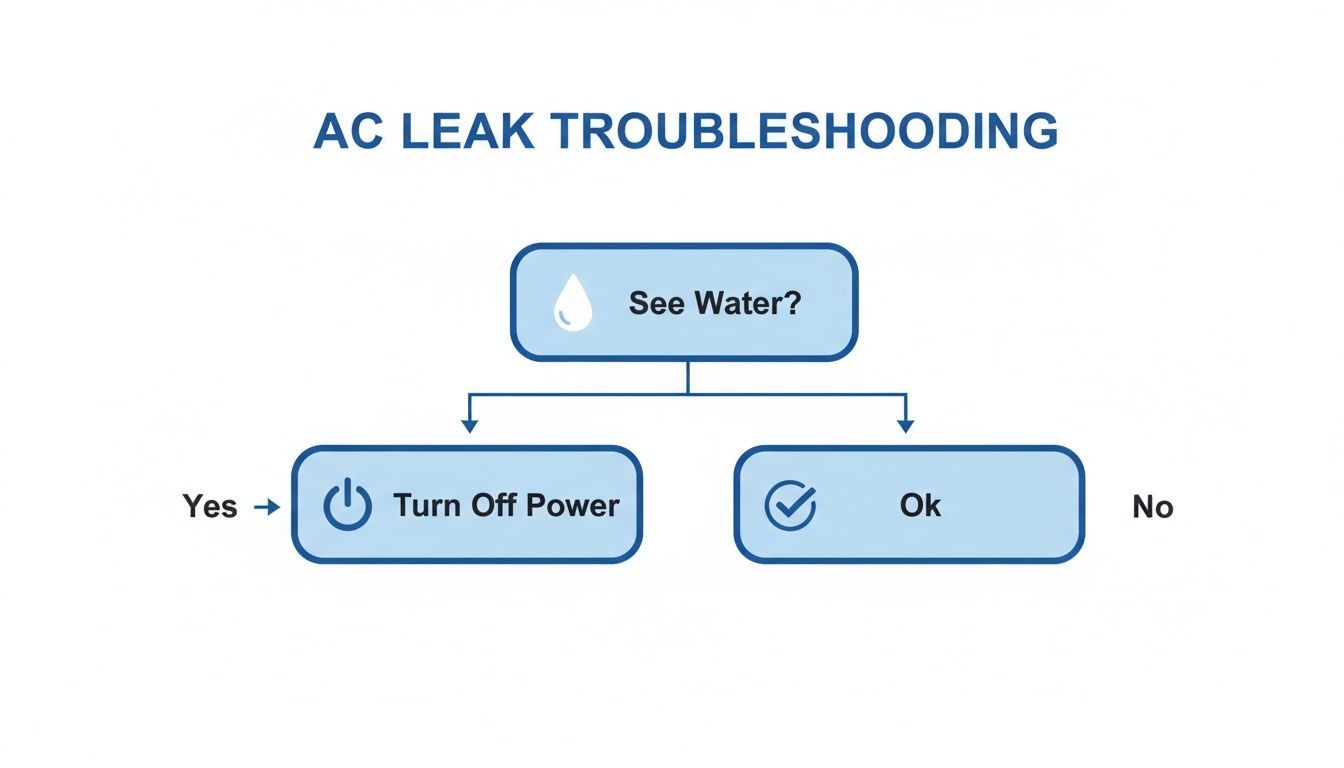
It really boils down to this: if you see water, the very first thing you do is kill the power. No exceptions. Safety first, always.
Another major red flag is ice. If you open up the access panel on your indoor unit and see the evaporator coils (the radiator-like part with all the metal fins) caked in frost or solid ice, you've found a serious symptom. This usually happens for one of two reasons: either the airflow is choked off by a filthy filter, or your system is low on refrigerant.
When the AC eventually cycles off, all that ice starts to melt. It creates a sudden flood of water—way more than the drain pan can cope with at once. The resulting overflow is a textbook cause of a major AC water leak.
A Quick Word of Advice: A frozen coil is never something to ignore. It's a symptom of a deeper problem. Just chipping the ice away is a temporary fix at best; the problem (and the leak) will be back with a vengeance until the root cause is addressed.
Here in Dubai, our ACs are in a constant fight against dust. That dusty air not only clogs up systems but can also turn a simple AC water leak into a real health hazard. A system with poor airflow is just recycling dust, bacteria, and allergens throughout your home. You can read more about how AC hygiene affects well-being in reports covering Dubai's air quality challenges.
If your detective work points to anything more complicated than a loose connection—like a cracked pan or, especially, frozen coils—your best and safest bet is to call in a professional. The technicians at HandyBros have the proper diagnostic tools and years of experience to find the exact problem and get it fixed right the first time, keeping your home cool, dry, and healthy.
Seeing as a blocked drain line is the number one culprit behind most AC water leaks in Dubai, knowing how to handle a minor clog yourself is a massive advantage. All it takes is a few common tools and a bit of patience to potentially solve the problem and restore that cool, dry air you rely on.
Here’s a straightforward guide to get you through it safely.
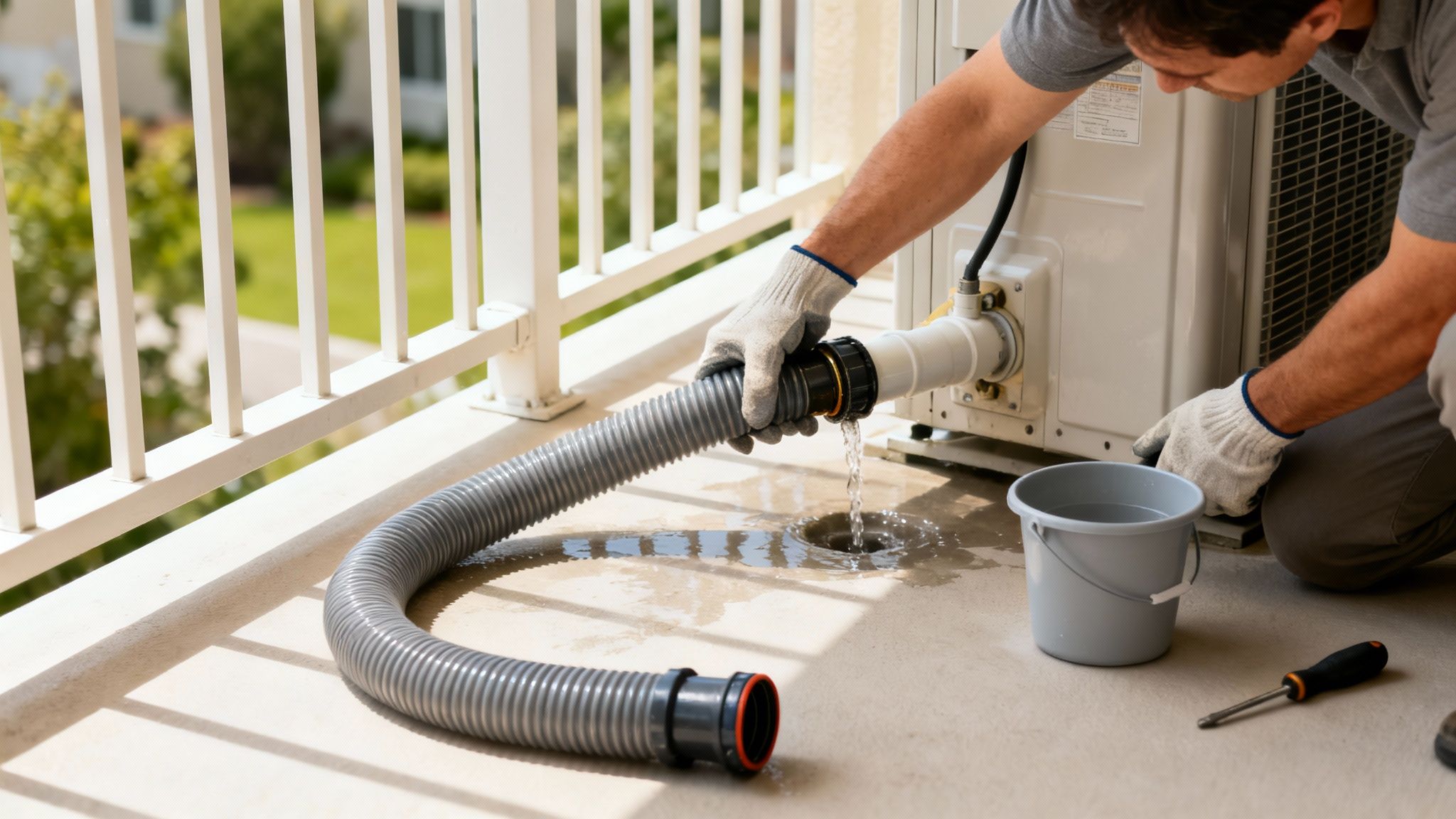
First things first, and this is non-negotiable: always switch off the power to your AC unit at the circuit breaker. Safety is paramount.
Before you can fix the clog, you need to find the condensate drain line. It's usually a PVC pipe—often white, grey, or black—that runs from your indoor AC unit to the outside. In Dubai apartments and villas, you'll typically find it exiting onto a balcony or near the outdoor condenser unit, where it’s meant to drip away the condensed water.
Once you’ve spotted that outdoor exit point, you’ve found your primary access. This is where all the dust, sludge, and algae tend to build up and create a blockage, forcing water to back up and overflow inside your home.
One of the most effective DIY methods is using a wet/dry vacuum cleaner. It's incredibly good at pulling the blockage right out from the end of the line.
This suction technique is often all it takes to fix an AC water leak caused by a simple, fresh clog. It's a surprisingly powerful trick that doesn't require you to mess with the indoor unit.
After you’ve vacuumed out the main obstruction, it’s a smart move to flush the line to remove any lingering residue. A diluted solution of white vinegar works wonders here; it's great at breaking down the algae and sludge that cause future clogs.
If you can safely access the drain line near the indoor unit, pour a small amount of the vinegar solution in. Let it sit for about half an hour to do its work, then flush it through with clean water. This helps sanitise the pipe and slows down the return of any buildup.
You have to know when to stop. If a clog is deep, really stubborn, or in a part of the pipe you can't reach, a DIY approach might not cut it. Trying to force it can actually damage the pipe, turning a small leak into a major repair job.
When a blockage just won’t budge, it's a clear signal that you need professional-grade tools. Stubborn clogs often require specialised equipment to clear them without damaging the PVC. For these situations, the expert technicians at HandyBros are your answer. We use advanced techniques to ensure the entire system is thoroughly flushed and sanitised. For severe blockages, our team may use powerful methods; you can learn more about how hydro-jetting services clear stubborn drain clogs in our detailed guide. Calling HandyBros ensures the job is done right, preventing the leak from coming back and protecting your home.
So, you've cleared the condensate drain line, but the water keeps coming. Frustrating, I know. While a clog is the number one culprit behind an AC water leak, it’s not the only thing that can fail. When the simple fix doesn't work, it's time to dig a little deeper into the hardware itself. Be warned, though—most of these issues are a firm signal to call in a professional.
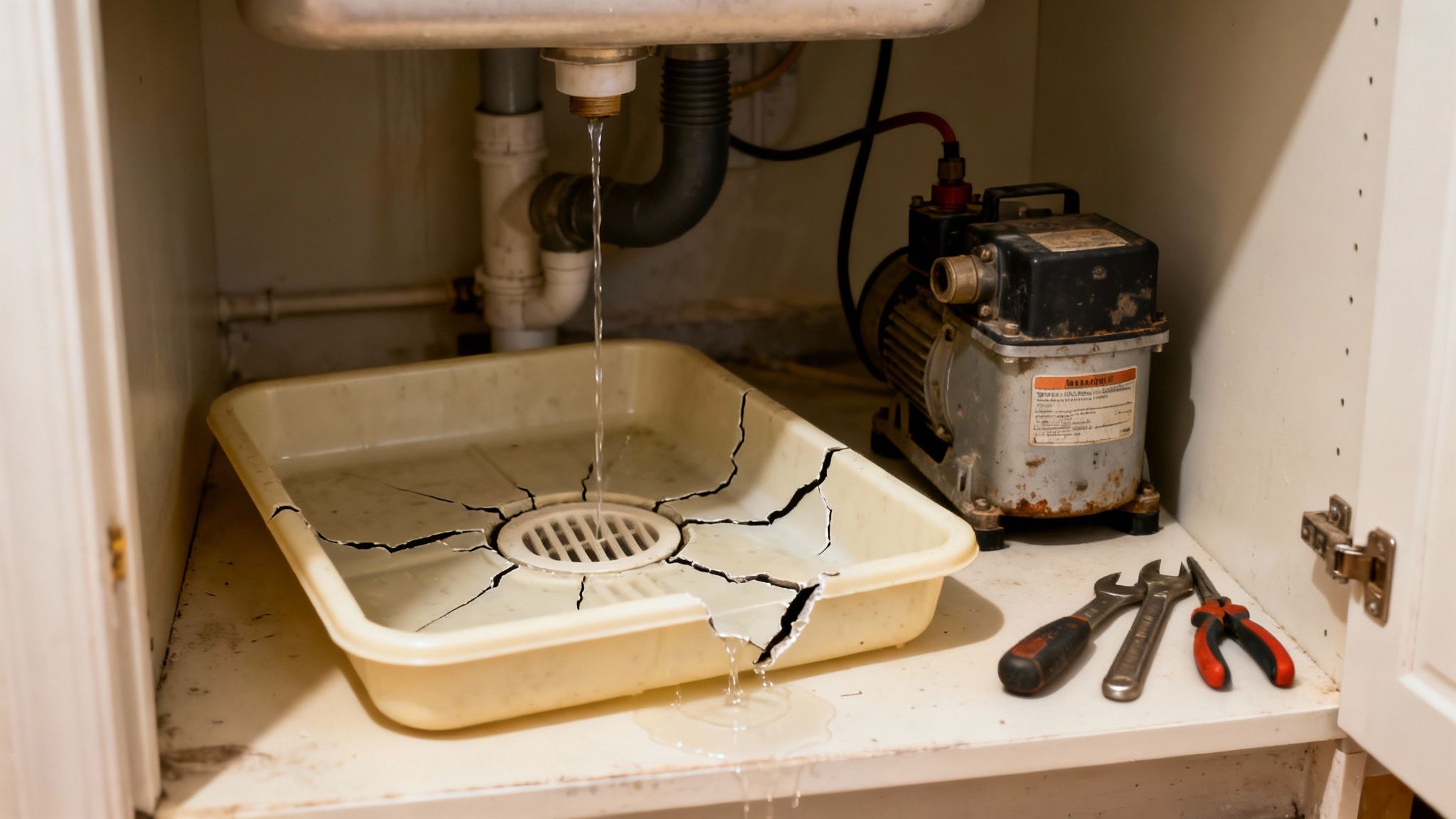
Sometimes, the very parts designed to manage water just wear out. After years of service, especially in Dubai's relentless climate, plastic can become brittle and metal can rust. A quick patch job is tempting, but it’s rarely a permanent solution.
Think of the condensate drain pan as the safety net under your evaporator coils. It’s there to catch every drop of moisture. But these pans are not invincible. Over time, constant exposure to water can cause them to corrode, or they might just develop cracks from age and thermal stress.
Get a flashlight and take a close look at the pan. You're searching for:
A damaged drain pan isn't a DIY fix. Patching it with sealant is a temporary stopgap at best. The only real fix is a full replacement, which means carefully dismantling part of your indoor unit. This is where you need the skilled hands of a HandyBros technician to guarantee the new pan fits perfectly and creates a watertight seal.
What if your AC unit is installed in a spot where gravity can't drain the water away, like a basement or an internal closet? That's where a condensate pump comes in. This little box actively pushes the collected water out. If that pump dies, the water has nowhere to go but all over your floor, leading to a major AC water leak very quickly.
You might have a failed pump if:
Figuring out what’s wrong with a pump means testing its power source, float switch, and motor. Because you're dealing with electricity and water, this is definitely a job for the pros. The team at HandyBros can quickly determine if it's a simple fix or if the whole unit needs replacing, getting your system running safely again.
A sudden, large puddle of water right under your indoor AC unit is a classic red flag. It almost always points to either a cracked drain pan or a dead condensate pump. Both are urgent problems that need professional help immediately to prevent serious water damage.
Believe it or not, an AC water leak can sometimes be a ghost from the past—a problem baked in from the day the unit was installed. If the indoor unit isn't perfectly level, water won't flow toward the drain. Instead, it will pool and spill over the edge of the pan. Shoddy connections or poorly sealed drain lines can also come loose over the years.
These kinds of installation mistakes are annoying but correctable. The catch is that they often require a trained eye to spot and the right equipment to fix properly. For any complex problem—whether it’s a broken component or a bad installation—the only way to ensure a safe, lasting solution is to bring in an expert. HandyBros has the certified professionals who can diagnose and resolve these issues for good.
While a bit of DIY confidence can sort out a minor AC water leak, knowing when to put the tools down and pick up the phone is crucial. Some problems are more than just a simple clog—they're red flags for deeper issues that need an expert's touch. Ultimately, your safety and avoiding major property damage should always come first.
Trying to tackle a complex repair on your own can easily turn a manageable fix into a full-blown, expensive system replacement. You have to recognise when that dripping water is a symptom of a much bigger problem brewing inside your AC unit.
If you spot any of the following, it’s time to stop troubleshooting and call for professional help. These aren’t issues a quick fix can resolve, and they often come with serious risks like electrical hazards or refrigerant exposure.
You See Ice on the Evaporator Coils: A frozen coil is a dead giveaway that something is seriously wrong. It’s usually caused by restricted airflow or low refrigerant levels. Simply letting it thaw won't solve the underlying issue; a technician needs to find and fix what’s causing it to freeze in the first place.
The Leak Is Coming from the Main Unit Housing: Is water seeping from the actual body of the AC unit instead of the drain line or pan? This points to an internal failure. It’s a serious sign that demands immediate professional assessment.
The Leak Keeps Returning: So, you’ve cleared the drain line, but the leak is back in a few days. This means the blockage is likely deeper or more stubborn than a DIY fix can handle. A recurring AC water leak is your system's way of telling you there's an unresolved issue that needs professional-grade tools and expertise.
An AC water leak can be especially problematic in large buildings. For villa residents and property managers, an ignored leak can quickly lead to structural damage and costly repairs under tenancy agreements.
In these situations, the risk of a DIY repair just isn’t worth it. A licensed technician from HandyBros can safely and accurately diagnose the problem, whether it's a refrigerant issue, a failing component, or a tricky electrical fault. Our team is on standby for emergencies across Dubai.
We don’t just patch up the leak; we get to the root of the problem to make sure it doesn’t happen again, backing our work with a warranty for your peace of mind. The best defence is always consistent upkeep, which is why our regular professional AC maintenance services are so essential. When you see a serious warning sign, trust HandyBros to deliver a fast, safe, and reliable solution.
When you find your AC leaking water, it’s natural to have a dozen questions running through your mind. As specialists dealing with this every day across Dubai, we’ve heard them all. Here are the clear, no-nonsense answers to the questions we get asked most often.
In a climate like Dubai’s, where the heat and dust are relentless, prevention is your best defence. We've seen firsthand that the sweet spot for professional AC maintenance and deep cleaning is twice a year.
Think of it this way: one service before summer hits to prepare the unit for the heavy workload, and another after the peak season to clean out all the gunk that’s built up. This simple routine keeps your condensate drain clear and dramatically cuts down the risk of it clogging and overflowing.
Yes, and it’s a bigger deal than most people think. It's tempting to put a bucket under a small drip and forget about it, but that slow leak is a disaster in the making.
That constant dampness is an open invitation for mould and mildew, which can seriously impact your indoor air quality. Before you know it, water can work its way into your drywall, ceiling, or floors, leading to structural damage and ugly water stains. And let's not forget the most dangerous part: water anywhere near your AC’s electrical components is a major safety hazard. Our advice? Treat every leak as urgent, no matter how small.
We get this question a lot, and our answer is always a firm "no." Running a leaking AC is a surefire way to turn a minor issue, like a simple clogged drain, into a much more complex and expensive repair.
Your first move should always be to shut the unit off completely at the circuit breaker. This does two critical things: it stops the immediate water flow and it protects expensive components like the compressor from catastrophic failure.
This is where our team really shines. We know that a major AC water leak isn't just an inconvenience in Dubai—it's a genuine emergency.
That’s why HandyBros offers a dedicated emergency service for the entire city. When you call us, our goal is a same-day solution. We’ll get a technician out to you fast to diagnose the issue, perform a proper repair, and get your home cool and comfortable again with as little fuss as possible.
When you’re dealing with an AC problem that’s more than you can handle, you need a team that’s fast, reliable, and knows exactly what they’re doing. For expert AC repair and maintenance services available any time, day or night, HandyBros is ready to help. Get your AC fixed today by visiting our website!


April 7, 2026
Need professional couch cleaning abu dhabi? Our guide covers DIY vs. pro, pricing, and stain removal. Keep your sofa fresh in the UAE climate with HandyBros.

April 6, 2026
Searching for villa deep cleaning services Dubai? Learn how to prepare your home, what's included, and how HandyBros delivers a spotless, healthy villa.
Ready to work with us?

Reliable AC, plumbing, electrical, and handyman services in Dubai — fast, safe, and expertly handled for homes and businesses. Contact us today!


Copyright © Handybros
.png)


